
The summary
The chilli and allergens shown are common, not guaranteed: each restaurant has its own recipe. Always check on site.
| Dish | What it is | Region | Chilli | To mention |
|---|---|---|---|---|
| Ceviche | Raw fish marinated in lime, onion, chilli | Coast | Medium to hot | Fish, seafood |
| Tiradito | Raw fish in thin slices, chilli sauce, no onion | Lima, nikkei | Medium | Fish |
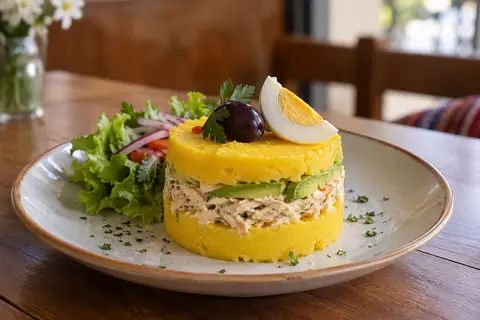
| Causa | Cold purée of yellow potato with chilli, filled | Lima | Mild | Egg (mayonnaise), fish or seafood depending on the filling |
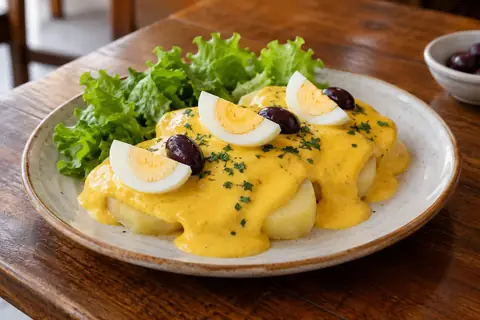
| Papa a la huancaína | Potatoes, sauce of fresh cheese and yellow chilli | Everywhere | Mild | Milk, often gluten (biscuits) |
| Ocopa | Potatoes, sauce of huacatay, chilli and peanut | Arequipa | Mild | Peanut, milk, gluten |
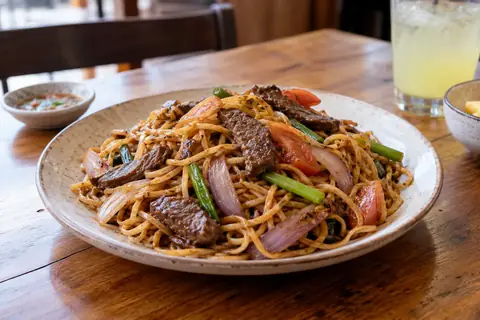
| Lomo saltado | Beef stir-fried in a wok, onion, tomato, chips, rice | Lima, chifa | Mild | Soy, gluten (soy sauce) |
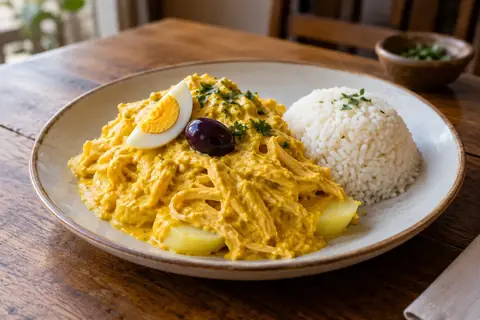
| Ají de gallina | Shredded hen, creamy sauce of yellow chilli and bread | Lima | Mild | Milk, gluten, sometimes pecans and parmesan |
| Anticuchos | Skewers of marinated beef heart, grilled | Lima | Medium (sauce) | Depends on the sauce |
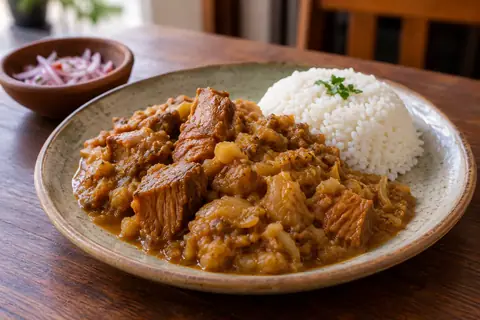
| Cau cau | Stew of tripe and potatoes | Lima | Mild | Offal |
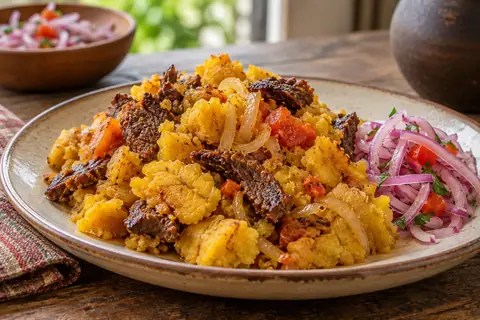
| Tacu tacu | Pan-fried cake of rice and beans | Lima | Mild | Depends on the topping |
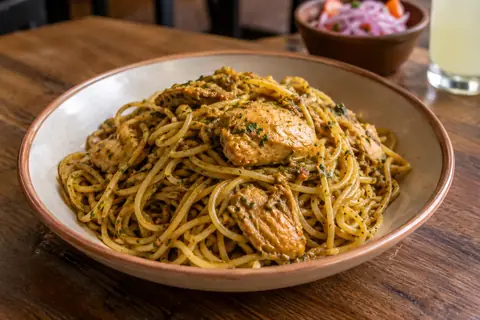
| Carapulcra and sopa seca | Stew of dried potato and peanut; pasta with basil | Chincha, Lima | Mild | Peanut, gluten |
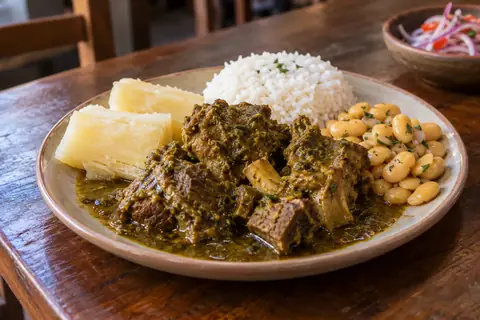
| Seco de cabrito | Kid goat marinated in chicha de jora, simmered with coriander | North coast | Mild | Uncommon |
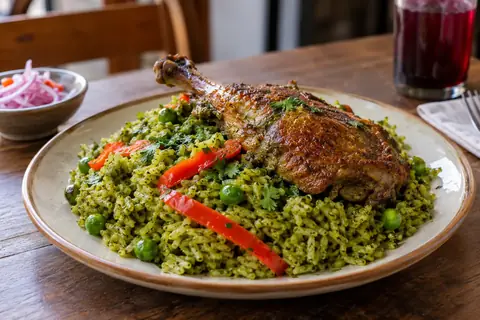
| Arroz con pato | Green coriander rice and duck | Lambayeque | Mild | Uncommon |
| Pollo a la brasa | Marinated chicken roasted on the spit, chips | Everywhere | Sauces on the side | Depends on the sauces |
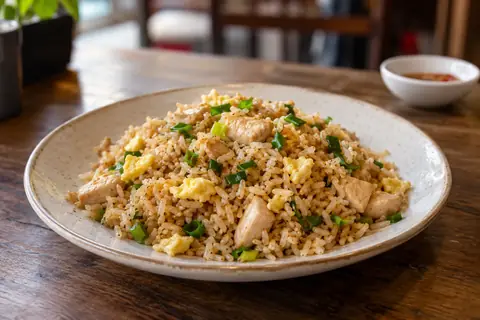
| Arroz chaufa | Rice stir-fried in a wok, egg, spring onion, soy sauce | Chifa | Mild | Egg, soy, gluten |
| Rocoto relleno | Rocoto chilli stuffed with meat, baked with cheese | Arequipa | Hot | Milk (cheese), sometimes peanut |
| Solterito | Salad of broad beans, corn, fresh cheese, onion, rocoto | Arequipa | Light | Milk |
| Chupe de camarones | Thick soup with river prawns, milk, cheese, egg | Arequipa | Medium | Crustaceans, milk, egg |
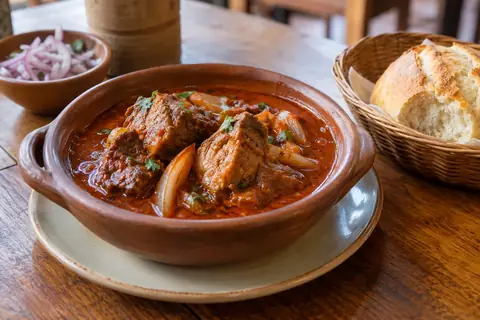
| Adobo | Pork marinated in panca chilli and chicha | Arequipa | Medium | Uncommon |
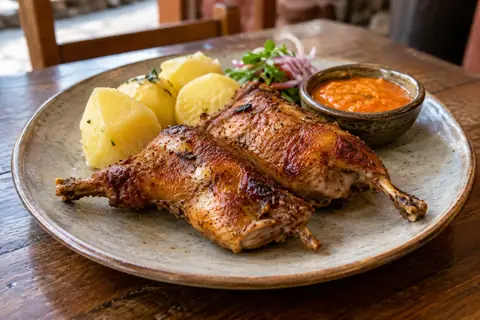
| Cuy | Guinea pig fried (chactado) or roasted (al horno) | Andes | Depends on the sauce | Uncommon |
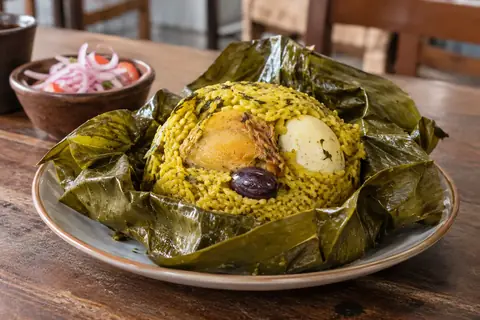
| Juane | Rice and hen in a bijao leaf | Amazon | Mild | Egg |
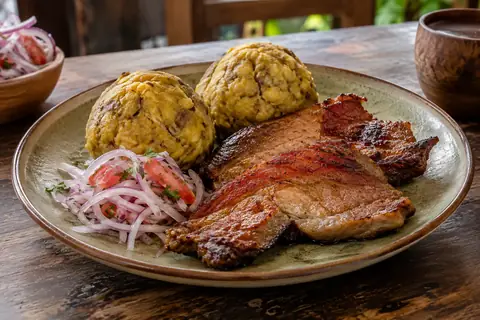
| Tacacho con cecina | Roasted, mashed plantain, dried pork | Amazon | Mild | Uncommon |
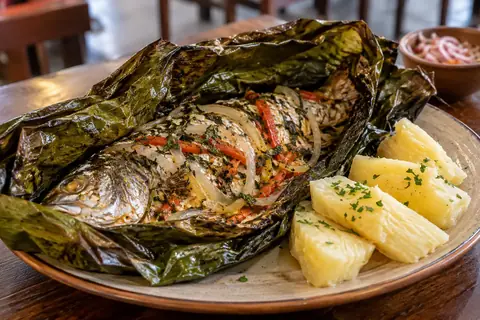
| Patarashca | River fish cooked in a parcel of leaves | Amazon | Depends on the seasoning | Fish |
| Picarones | Squash and sweet potato doughnuts, syrup | Lima | None | Gluten |
| Suspiro a la limeña | Manjar blanco (cooked condensed milk) and meringue | Lima | None | Milk, egg |
| Mazamorra morada | Purple corn pudding and fruit | Lima | None | Uncommon |
Seafood dishes
Ceviche. Raw fish cut into cubes, marinated for a few minutes in lime juice with red onion, chilli (often ají limo) and salt, served with sweet potato and corn. UNESCO has inscribed the practices and knowledge associated with ceviche on the list of intangible cultural heritage. The variants: mixed (with seafood), de conchas negras (black clams from the north), nikkei. The leftover juice, leche de tigre, is drunk from a glass.
Tiradito. Raw fish cut into thin slices, like sashimi, coated with a cold sauce of lime and ají amarillo, rocoto or olives; it has no onion. Wikipedia presents it as an emblematic dish of nikkei cooking.
Hot dishes. Arroz con mariscos (seafood rice), jalea (fried fish and seafood to share), sudado (fish stewed with tomato), parihuela (fish and seafood soup, according to PROMPERÚ).
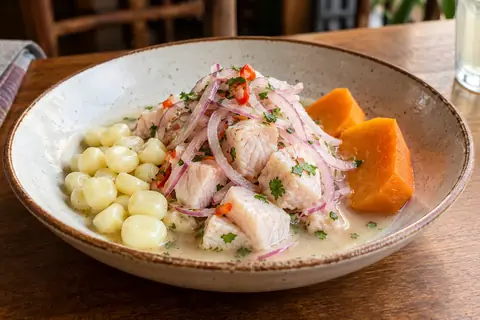
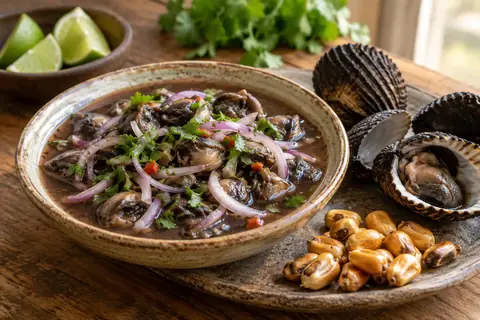
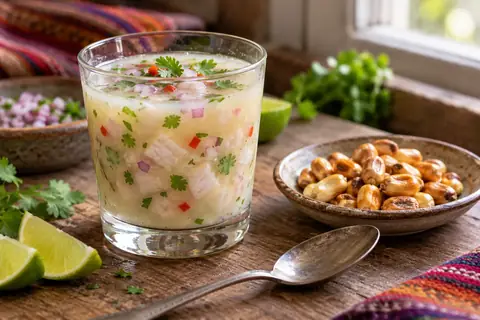
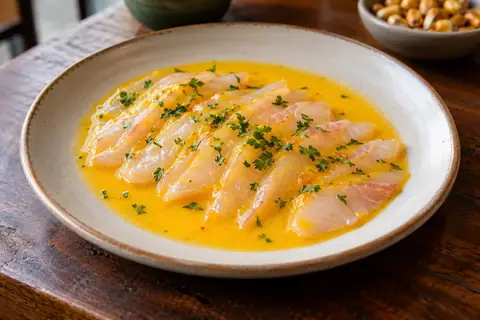
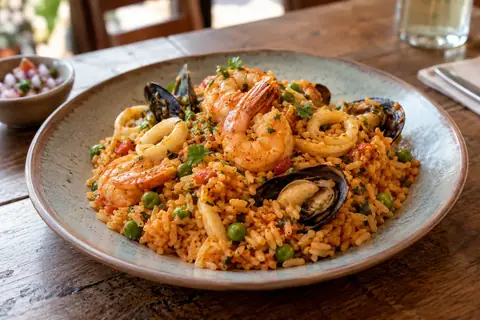
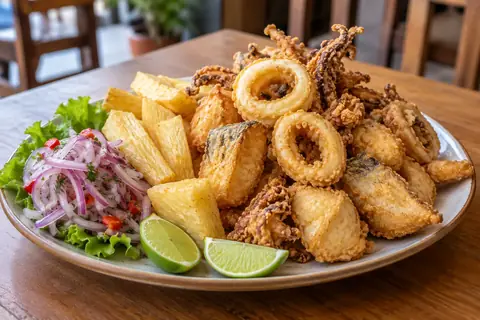
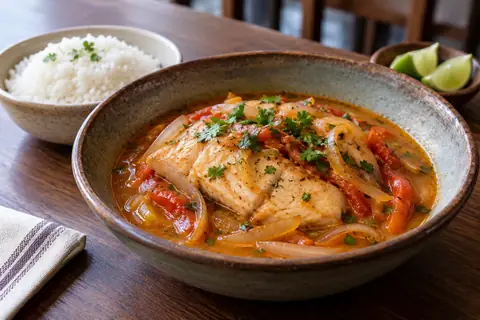
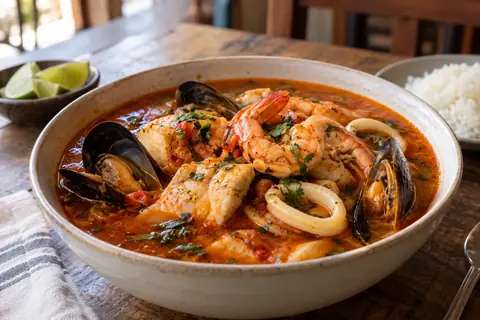
The questions: “¿Cuál es la pesca del día?” and “¿Pica mucho?”. The CDC points out that raw fish carries a risk of food poisoning: see eating out.
Lima’s criollo dishes
- Causa: a purée of yellow potato, seasoned with lime and ají amarillo, served cold in layers, filled with chicken, tuna, crab or avocado. Wikipedia gives it a pre-Columbian origin, enriched with lime in colonial times.
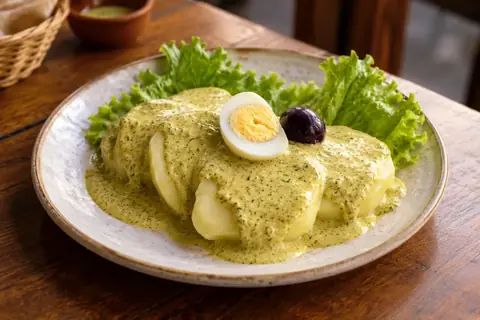
- Papa a la huancaína: slices of potato coated with a cream of fresh cheese, ají amarillo, evaporated milk and oil, with hard-boiled egg and black olive.
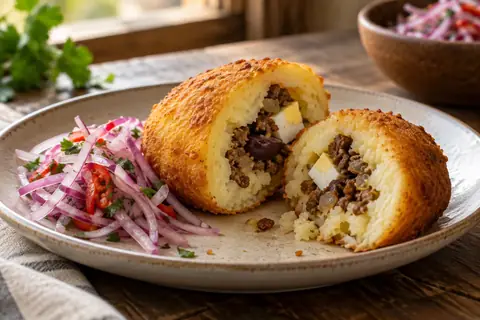
- Papa rellena: a dough of cooked potato, oblong in shape, stuffed with minced beef, red onion, black olives and ají panca, then fried; served with a salsa criolla, according to Wikipedia.
- Ají de gallina: shredded hen in a thick sauce of onion, ají amarillo, bread soaked in stock and evaporated milk; some recipes add pecans and parmesan. Served with potatoes and rice.
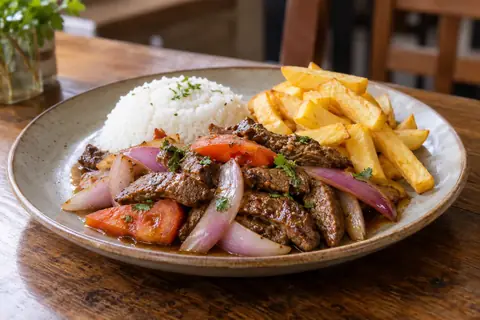
- Lomo saltado: strips of beef stir-fried over a high heat with onion, tomato, ají amarillo and soy sauce, served with chips and rice. According to Wikipedia, it belongs as much to criollo cooking as to chifa.
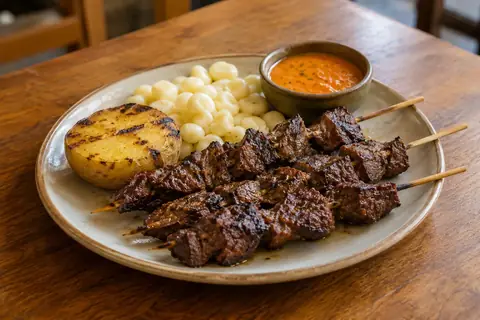
- Anticuchos: skewers of marinated beef heart, often with panca chilli, grilled over charcoal, with potato and corn. PROMPERÚ sees them as an Afro-Peruvian contribution; they are eaten a great deal in October, the month of the Señor de los Milagros.
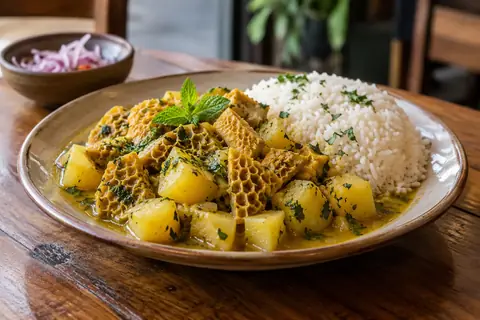
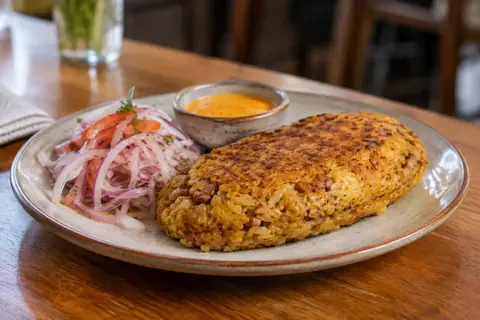
- Cau cau: tripe (mondongo) and potatoes in a stew; tacu tacu: a golden cake of rice and beans, born, according to Wikipedia, of the art of using up leftovers.
South coast and north coast
- Carapulcra and sopa seca (Chincha, Cañete): a stew of dried or fresh potato, pork and peanut, and pasta cooked in a basil stock; together, the “manchapecho” of celebrations. See regional cuisines.
- Seco de cabrito (from La Libertad to Tumbes): milk-fed kid goat marinated in chicha de jora, simmered with coriander, ají amarillo and loche squash, served with cassava, rice and beans; in Piura, with a tamal.
- Arroz con pato (Lambayeque): duck and a green coriander rice, often cooked with dark beer or chicha.
- Seco de chabelo (Piura): beef and mashed plantain.
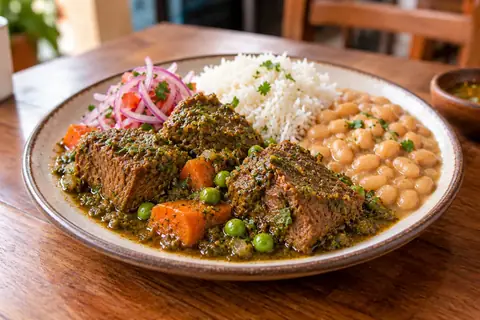
- Seco de res (beef), in Lima and all along the coast: the same coriander stew, with beef, served with white rice and beans; see the beef seco recipe.
Chifa and nikkei
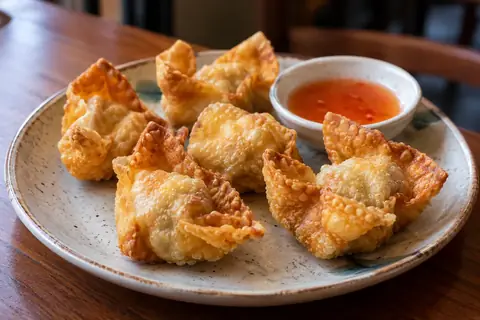
- Arroz chaufa: rice stir-fried in a wok with spring onion, egg, a meat and soy sauce; it is the emblematic dish of chifa, of Cantonese origin. Tallarín saltado does the same with noodles; wantán is served fried or in soup.
- Nikkei cooking: the meeting of Japanese techniques and Peruvian produce. Ceviches and tiraditos seasoned with shoyu or miso. See the story of chifa and nikkei.
Arequipa and the Andes
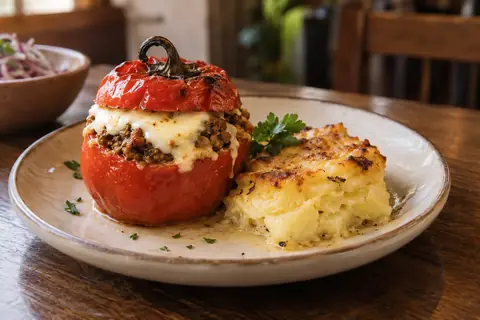
- Rocoto relleno: a hollowed-out rocoto, stuffed with minced meat, onion, peanut, egg and olive, baked with cheese; served with a pastel de papa (potato gratin). Despite the preparation, it stays hot.
- Ocopa: a sauce of mirasol chilli, huacatay, peanut, fresh cheese and biscuit, traditionally ground on the batán, over potatoes.
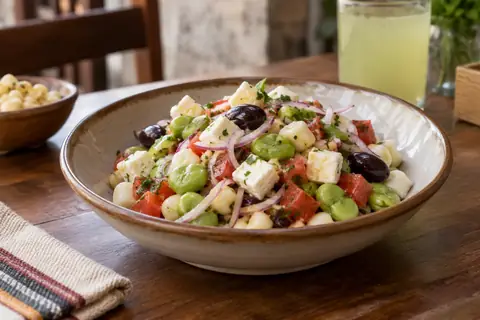
- Solterito: a salad of broad beans, corn, fresh cheese, onion, tomato and rocoto, with vinegar; according to Marca Perú, its name is said to come from the absence of meat.
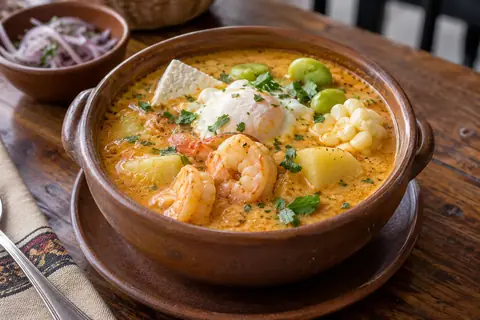
- Chupe de camarones: a thick soup with river prawns, potatoes, milk, cheese, broad beans, corn and egg; its availability depends on the annual closed fishing season.
- Adobo: pork marinated in panca chilli, garlic and chicha, served on Sunday mornings.
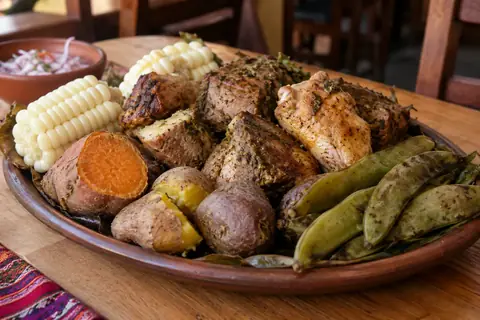
- Pachamanca: meats, potatoes and broad beans cooked on hot stones, underground.
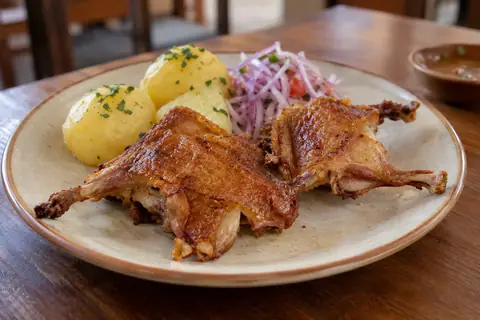
Chactado or al horno: two ways of serving cuy
Cuy chactado, in Arequipa, is fried in plenty of oil under a stone that acts as a lid: the skin becomes very crisp and the animal arrives flattened. Cuy al horno, around Cusco and notably in Tipón, is roasted in the oven, sometimes stuffed. Both often arrive whole: ask “¿Viene entero o en presas?”. Everything is explained on the cuy page.
The Amazon
- Juane: rice and pieces of hen, bound with beaten egg, wrapped in a bijao leaf and boiled; the dish of the San Juan festival, on 24 June.
- Tacacho con cecina: a ball of green plantain roasted and then mashed with lard and pieces of chicharrón, served with dried, smoked pork; mostly at breakfast.
- Patarashca: seasoned river fish, cooked in a parcel of leaves over embers; the word comes from the Quechua for “wrapped”.
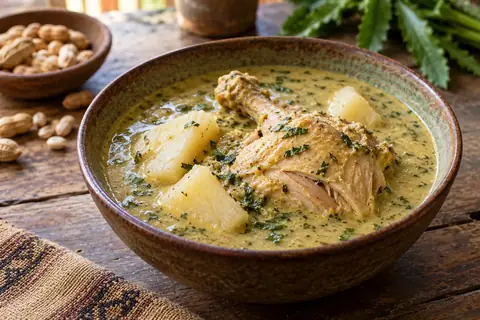
- Inchicapi: a hen soup with peanuts, coriander and cassava, served for birthdays and special occasions.
Soups: from the morning broth to aguadito
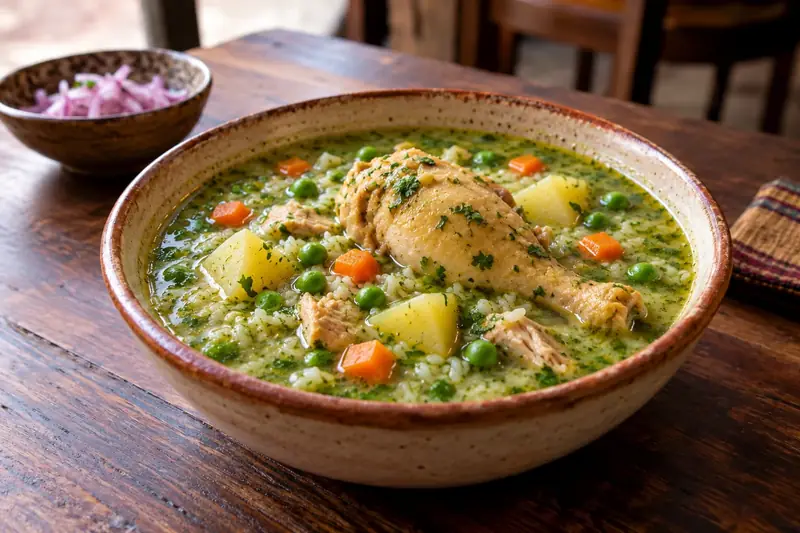
In Lima, soup is eaten at any time of day: caldo de gallina, hen broth with its pieces of meat, noodles or rice and yellow potato, in the morning or on the way home from a night out; sopa criolla, served with an egg and spiced with ají; and aguadito de pollo, a thick soup of rice and chicken, green with coriander, with, depending on the variant, peas, carrot, yellow potato, corn and ají amarillo. According to Wikipedia, it is nicknamed “levantamuertos” (raiser of the dead), because it is happily served in the early hours, after a party; there are versions with duck, fish or seafood. A soup restaurant such as Siete Sopas offered it on Saturdays on its page consulted on 7 October 2026, and Tanta’s menu serves one at breakfast.
Desserts
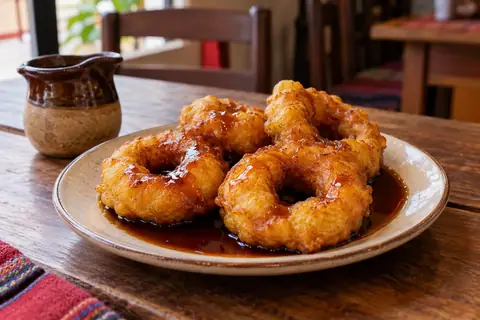
- Picarones: ring-shaped doughnuts, a dough of flour, squash and sweet potato, fried and coated in a scented chancaca syrup.
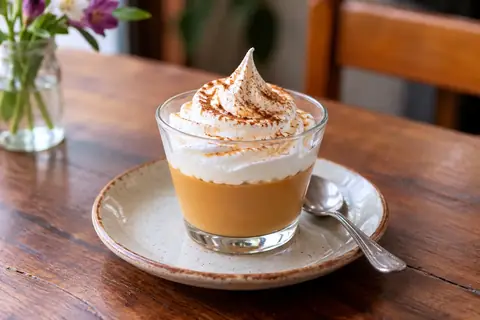
- Suspiro a la limeña: a manjar blanco (condensed milk cooked for a long time) topped with meringue; both arrived in Peru with the Spanish, according to Wikipedia.
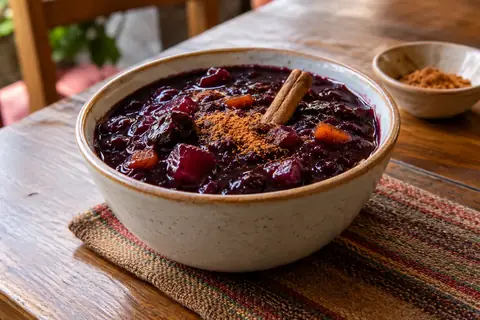
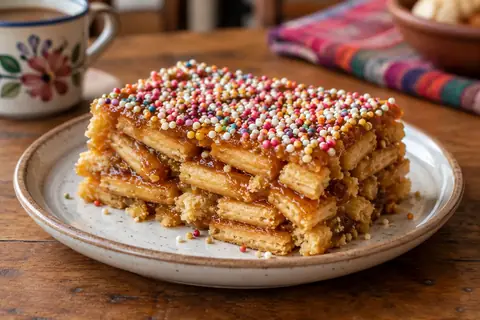
- Mazamorra morada: a purple corn pudding thickened with starch, with dried and fresh fruit; closely linked, like turrón de Doña Pepa (stacked sticks of baked dough, coated in chancaca syrup and decorated with coloured sweets), to the Señor de los Milagros processions, in October.
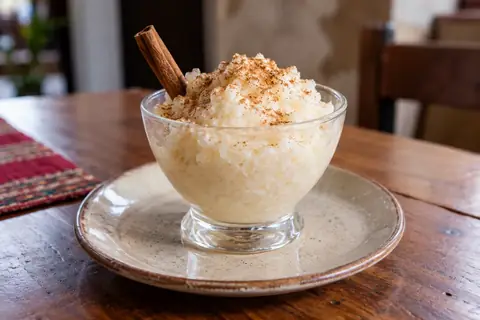
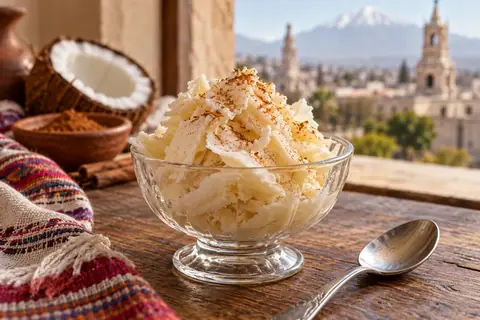
- Arroz con leche, often served with mazamorra in the same bowl (at Panchita, “el favorito”); in Arequipa, queso helado, a frozen milk dessert with no cheese.
Routes to suit your tastes
- You cannot handle chilli: causa, papa a la huancaína (mild sauce), ají de gallina, lomo saltado, arroz chaufa, pollo a la brasa without sauce, juane. Avoid rocoto relleno and table sauces.
- You like fish: a classic ceviche, a tiradito, a trio of ceviches to compare the leches de tigre, then a hot sudado or arroz con mariscos. Preferably at lunchtime.
- You are vegetarian: papa a la huancaína, ocopa, solterito, vegetable causa, choclo con queso, tacu tacu without topping; check stocks and frying oils.
- You want to taste everyday popular food: a pan con chicharrón in the morning, anticuchos in the evening, a menú of the day at lunchtime, a chaufa in a neighbourhood chifa.
- You are travelling beyond Lima: a seco de cabrito in the north, the almuerzo of the day in an Arequipa picantería, a tacacho at breakfast in the Amazon.
Where to taste these dishes in Lima
The restaurant pages give the menu consulted, its date and prices noted. A few examples:
- Ceviche: at La Mar, the classic ceviche with fish of the season costs S/ 86; at Panchita, the cebiche limeño S/ 68; at the counter of Al Toke Pez, near Kennedy Park, S/ 32 according to the press (September 2025).
- Lomo saltado: S/ 44.90 at Siete Sopas, a soup restaurant with late opening hours (daytime menu, see prices in Peru); S/ 55 at the Antigua Taberna Queirolo, S/ 88 at Panchita.
- Ají de gallina: S/ 39 at the Queirolo taberna, S/ 49 at Panchita.
- Northern cooking: cabrito and seco de chabelo at Chulucanas Lima.
- Arequipa: rocoto relleno (S/ 48) and cuy chactado (S/ 76) at La Nueva Palomino.
One name can correspond to several preparations: if you have an allergy, ask for the full list of ingredients rather than relying on the name of the dish. See the allergy card to copy out.
Sources and dates
9 sources
Prices, opening hours and rules change: every piece of information cited links to its source, with the date it was consulted.
Figures and rules cited
- S/ 86 per dish: Classic cebiche, fish of the season (La Mar (Miraflores), Lima) (All customers) . Taxes and service charge included according to the menu.
Price recorded: La Mar, 2026 menu (PDF) (new tab) · consulted on 3 October 2026 - S/ 68 per dish: Cebiche limeño, fish of the day (Panchita (Miraflores), Lima) (All customers) . Taxes and service charge included according to the menu; 78 soles in the mixed version, 88 with corvina.
Price recorded: Panchita, main menu (PDF) (new tab) · consulted on 3 October 2026 - S/ 32 per dish: Fish cebiche (Al Toke Pez (Miraflores), Lima) (All customers) . Price quoted in the press in September 2025, a month after the Miraflores branch opened: have it confirmed on the spot.
Price recorded: El Comercio, “Nuevo barrio, misma esencia: así es el nuevo espacio de Al Toke Pez en Miraflores” (15 September 2025) (new tab) , published on 15 September 2025 · consulted on 4 October 2026 - S/ 44.90 per dish: Lomo saltado (Siete Sopas (menu for Surquillo, Miraflores, Surco and Plaza Norte), Lima) (All customers) . Daytime menu, undated (file created on 8 May 2026); the night menu, which is more expensive, and the menu of the other branches differ.
Price recorded: Siete Sopas, “Surquillo, Miraflores, Surco, Plaza Norte” menu (PDF linked from the official links page) (new tab) · consulted on 4 October 2026 - S/ 55 per dish: Lomo saltado (Antigua Taberna Queirolo (Pueblo Libre), Lima) (All customers)
Price recorded: Antigua Taberna Queirolo, virtual menu (PDF) (new tab) · consulted on 3 October 2026 - S/ 88 per dish: Beef fillet lomo saltado, generous portion (Panchita (Miraflores), Lima) (All customers) . Taxes and service charge included according to the menu.
Price recorded: Panchita, main menu (PDF) (new tab) · consulted on 3 October 2026 - S/ 39 per dish: Ají de gallina (Antigua Taberna Queirolo (Pueblo Libre), Lima) (All customers)
Price recorded: Antigua Taberna Queirolo, virtual menu (PDF) (new tab) · consulted on 3 October 2026 - S/ 49 per dish: Ají de gallina (Panchita (Miraflores), Lima) (All customers) . Taxes and service charge included according to the menu.
Price recorded: Panchita, main menu (PDF) (new tab) · consulted on 3 October 2026 - S/ 48 per dish: Traditional rocoto relleno with pastel de papa gratin (La Nueva Palomino (Yanahuara), Arequipa) (All customers) . Taxes included according to the menu; service not mentioned.
Price recorded: La Nueva Palomino, menu (PDF linked from the official page) (new tab) · consulted on 3 October 2026 - S/ 76 per dish: Cuy chactado: whole fried cuy, onion sarza, potato, corn, broad beans and garlic batido (La Nueva Palomino (Yanahuara), Arequipa) (All customers) . Taxes included according to the menu; service not mentioned.
Price recorded: La Nueva Palomino, menu (PDF linked from the official page) (new tab) · consulted on 3 October 2026
Sources consulted
- Wikipedia (Spanish), Aguadito de pollo (rice, chicken, coriander, variants) (new tab) (consulted on 7 October 2026)
- PROMPERÚ, Lima’s cuisine (dishes and influences) (new tab) (consulted on 3 October 2026)
- PROMPERÚ, the cuisine of the north coast (new tab) (consulted on 3 October 2026)
- PROMPERÚ, Andean cuisine (new tab) (consulted on 3 October 2026)
- PROMPERÚ, the cuisine of the Amazon (new tab) (consulted on 3 October 2026)
- Marca Perú (PROMPERÚ), the cuisine of Arequipa (new tab) (consulted on 3 October 2026)
- Wikipedia (Spanish), Cebiche (UNESCO intangible heritage), Tiradito, Papa a la huancaína, Ají de gallina, Causa a la limeña, Lomo saltado, Papa rellena (new tab) (consulted on 3 October 2026)
- Wikipedia (Spanish), Tacutacu, Carapulcra, Cabrito a la norteña, Arroz chaufa, Inchicapi, Patarashca (new tab) (consulted on 3 October 2026)
- Wikipedia (Spanish), Suspiro de limeña, Turrón de Doña Pepa, Picarón, Mazamorra morada (new tab) (consulted on 3 October 2026)
How we choose and date our information: our method. Has something changed? Let us know.