In short
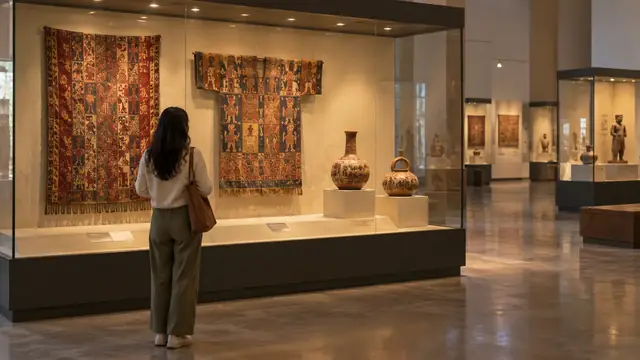
Give it at least two full days: one for the historic centre and the Barrio Chino, one for the Museo Larco in Pueblo Libre and the seafront of Miraflores and Barranco. Add a third day for a market, Callao or Pachacámac. Organise each day by area: in Lima, traffic matters more than distance. The day-by-day programme: Lima in 1, 3 or 5 days.
A desert on the edge of the Pacific
Lima is built in a desert. It almost never rains there (average humidity of 83%, about 6 mm of rain a year), and yet the air is saturated with humidity. The reason lies offshore. The Humboldt Current runs along the coast, bringing cold water up from the south; it cools the air on contact with the sea, which helps make rain rare (without eliminating it: exceptional episodes do occur), and feeds one of the richest fishing seas in the world. From June to September, a layer of low cloud covers the city and leaves a fine drizzle, the garúa: the sky is grey for weeks, and it is about 19 °C by day and 15 °C at night. From December to March, the southern summer brings back sunshine and heat, around about 28 °C by day and 21 °C at night.
The city grew up where the water from the Andes meets the sea: three rivers, the Chillón to the north, the Rímac in the centre and the Lurín to the south, cross the desert and have made irrigation possible for thousands of years. Metropolitan Lima now has about ten million inhabitants spread over 43 districts, and stretches from the coastal cliffs to the arid hills that surround it.
Two thousand years of history, in four stages
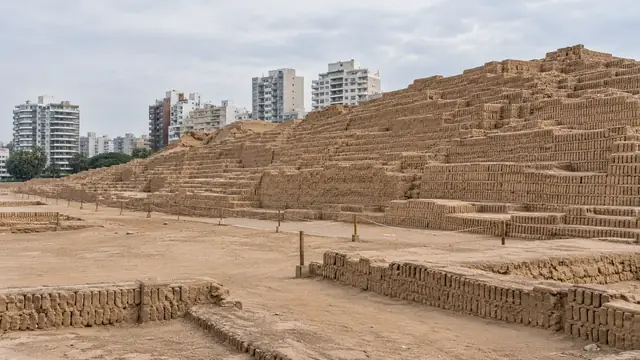
Before the Incas. The valley was inhabited and farmed long before the colonial city. Between about 450 and 650, the Lima culture built ceremonial centres such as Huaca Pucllana, now in the middle of Miraflores. Later, the Ychsma dominated the coast and made the sanctuary of Pachacámac, to the south, one of the great oracles of the Andean world, which the Incas incorporated into their empire.
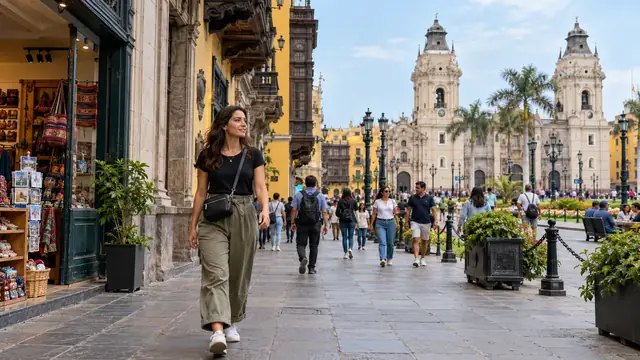
The “City of Kings”. Francisco Pizarro founded Lima in January 1535. For two centuries, it was the capital of the Viceroyalty of Peru and the most important city in Spanish South America: convents, churches, a university, palaces. The earthquakes (1687, 1746) forced rebuilding, hence the light quincha upper floors and the wooden balconies of the historic centre.
Independence and the Republic. José de San Martín proclaimed independence in Lima in 1821. In the 19th century, the city opened up towards the south: the seaside resorts of Miraflores, Barranco and Chorrillos, linked by the railway. The War of the Pacific (1879–1884) hit them hard, with the occupation of Lima by the Chilean army in 1881.
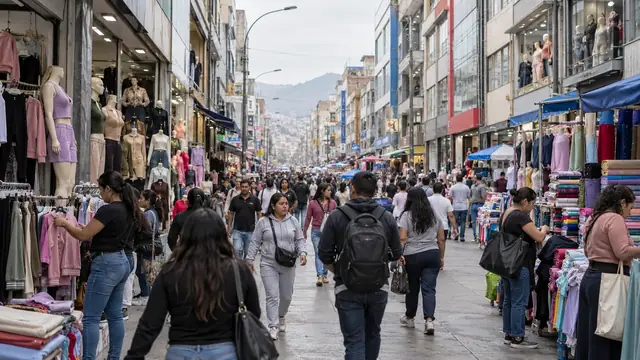
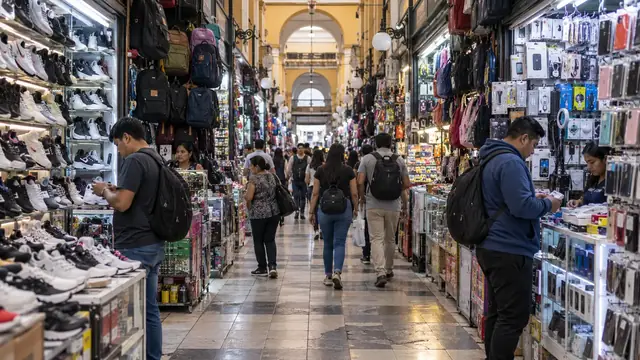
The metropolis. In the 20th century, the mass arrival of people from the Andes and the Amazon, and of communities from China, Japan or Italy, transformed the city. This is the history told by its markets, its chifas, its shopping districts such as Gamarra, and a cuisine that has become one of the most renowned on the continent.
Three faces of Lima
| What you are looking for | Where | Useful pages |
|---|---|---|
| The historic city | The centre and Rímac (World Heritage), Pueblo Libre | Historic centre, Pueblo Libre, Museums |
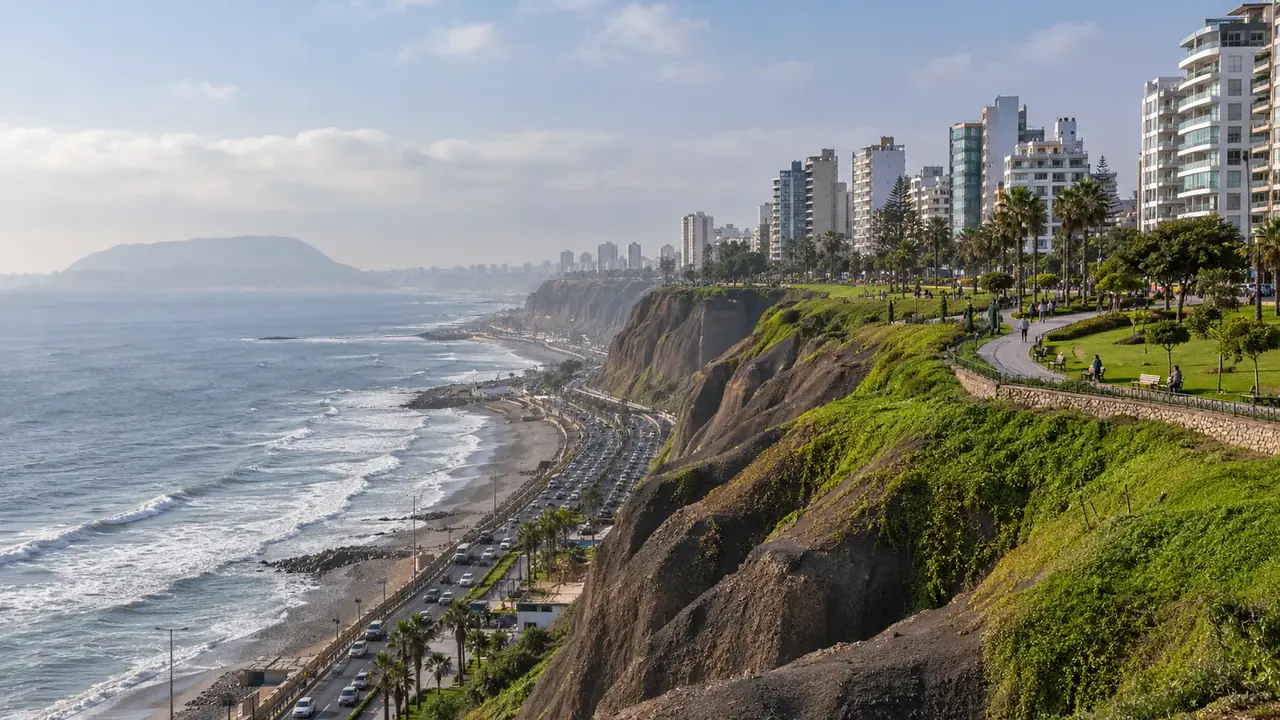
| The city by the sea | Miraflores, Barranco, Chorrillos, La Punta | Miraflores, Barranco, Callao and La Punta |
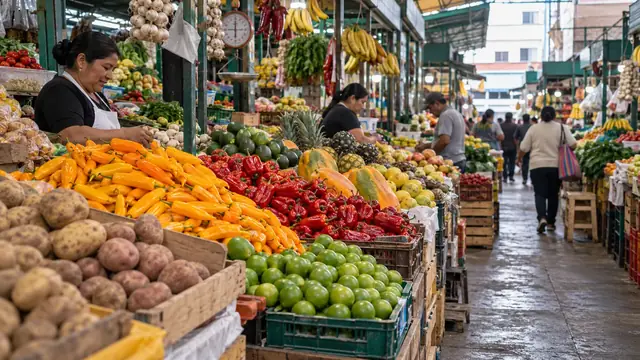
| The everyday city | Markets, Surquillo, Magdalena, Jesús María, Gamarra | Markets, Neighbourhoods, Grocery shopping |
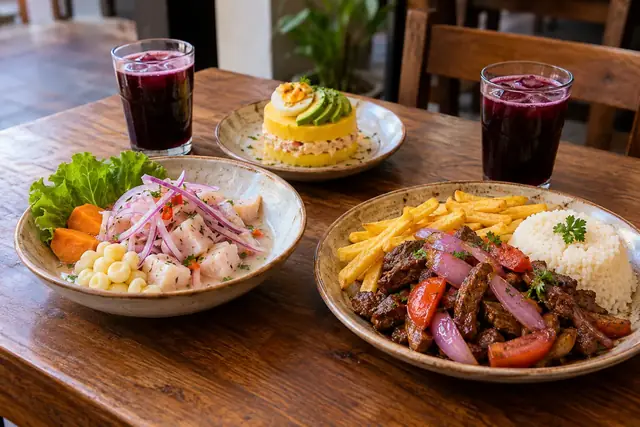
| The city at the table | Everywhere, depending on the time of day | Where to eat, Food in Peru |
One, three or five days
One day. The morning in the historic centre (Plaza Mayor, the San Francisco monastery, the Barrio Chino for lunch), the afternoon on the Miraflores seafront or in Barranco at sunset.
Three days. Day 1: Miraflores on foot and Huaca Pucllana, to recover from the flight. Day 2: Pueblo Libre and the Museo Larco, then Barranco. Day 3: the historic centre and the Barrio Chino. The six themed days describe each one in detail.
Five days. Add a market and neighbourhood food (a food-lover’s day), then Callao or an excursion to Pachacámac and the surrounding area. The itinerary Lima in one, three or five days sets the order and the nights.
Planning Lima in the right order
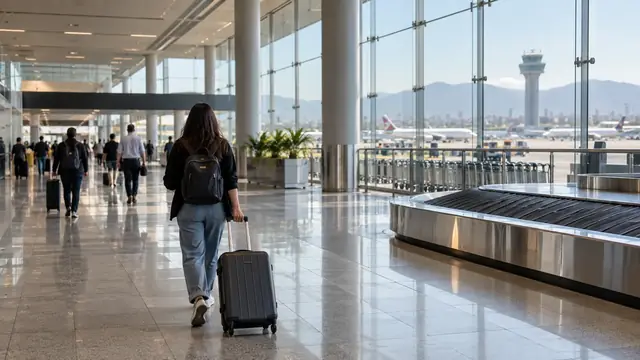
- Arrival: how to get out of the airport depending on the time and the neighbourhood, in Arriving in Lima.
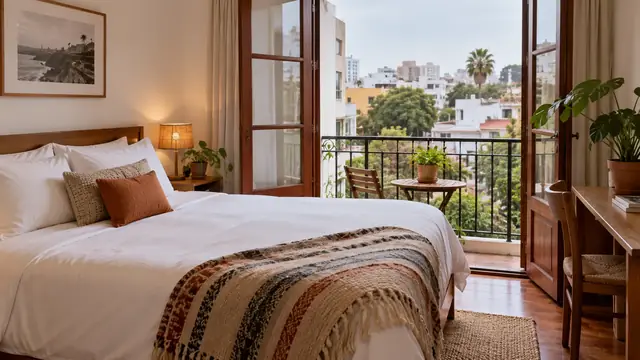
- Accommodation: the area before the hotel, in Where to stay.
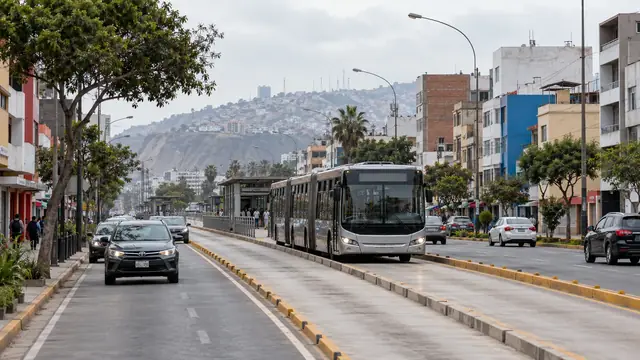
- Getting around: which network for which journey, in Getting around.
- Visits: one area per half-day; one museum a day is enough.
- Meals: the right format at the right time, in Where to eat.
What changes with the season
From June to September, the garúa and the grey sky lend themselves to museums, markets and long lunches; walks by the sea are best in the afternoon, when the mist sometimes lifts. From December to March, the sun returns, the beaches along the coast fill up and evenings on terraces last longer. Lima can be visited all year round; it is the order of activities that changes.
Frequently asked questions
How many days should you spend in Lima?
Two full days for the historic centre, a museum and the seafront; three to five days to add a market, Callao, the lesser-known districts or an excursion to Pachacámac. A single night between two flights only lets you recover.
Should you start or end the trip in Lima?
Starting lets you recover from the flight at sea level and understand the ancient cultures before seeing the sites. Ending leaves a margin before the international flight. Many travellers do both: two days on arrival, one day before departure.
Can you discover the markets without a guide?
Yes: the central market or the Magdalena market can be visited on your own, on a weekday morning, with a simple goal and few valuables. Having someone with you helps above all to understand the ingredients and to strike up a conversation.
Sources and dates
5 sources
Prices, opening hours and rules change: every piece of information cited links to its source, with the date it was consulted.
Figures and rules cited
- average humidity of 83%, about 6 mm of rain a year: Average relative humidity and annual rainfall in Lima (Jorge Chávez airport weather station (13 m))
Press or reseller: Wikipedia (English), Lima, climate (1991–2020 normals of the airport station) (new tab) · consulted on 2 October 2026 - about 19 °C by day and 15 °C at night: Average temperatures in Lima in August (southern winter), 1991–2020 normals (Jorge Chávez airport weather station (13 m)) . From June to September, morning drizzle (garúa) and grey skies are common; sunshine in August is around 28 hours over the whole month.
Press or reseller: Wikipedia (English), Lima, climate (1991–2020 normals of the airport station) (new tab) · consulted on 2 October 2026 - about 28 °C by day and 21 °C at night: Average temperatures in Lima in February (southern summer), 1991–2020 normals (Jorge Chávez airport weather station (13 m))
Press or reseller: Wikipedia (English), Lima, climate (1991–2020 normals of the airport station) (new tab) · consulted on 2 October 2026
Sources consulted
- UNESCO, Historic Centre of Lima (new tab) (consulted on 2 October 2026)
- Wikipedia (English), Lima, climate (1991–2020 normals) (new tab) (consulted on 2 October 2026)
- El Comercio, first results of the 2025 census (29 May 2026) (new tab) (consulted on 2 October 2026)
- Visita Miraflores, Museo de sitio Pucllana (chronology) (new tab) (consulted on 2 October 2026)
- Wikipedia (Spanish), Distrito de Pueblo Libre (independence) (new tab) (consulted on 2 October 2026)
How we choose and date our information: our method. Has something changed? Let us know.