
In short
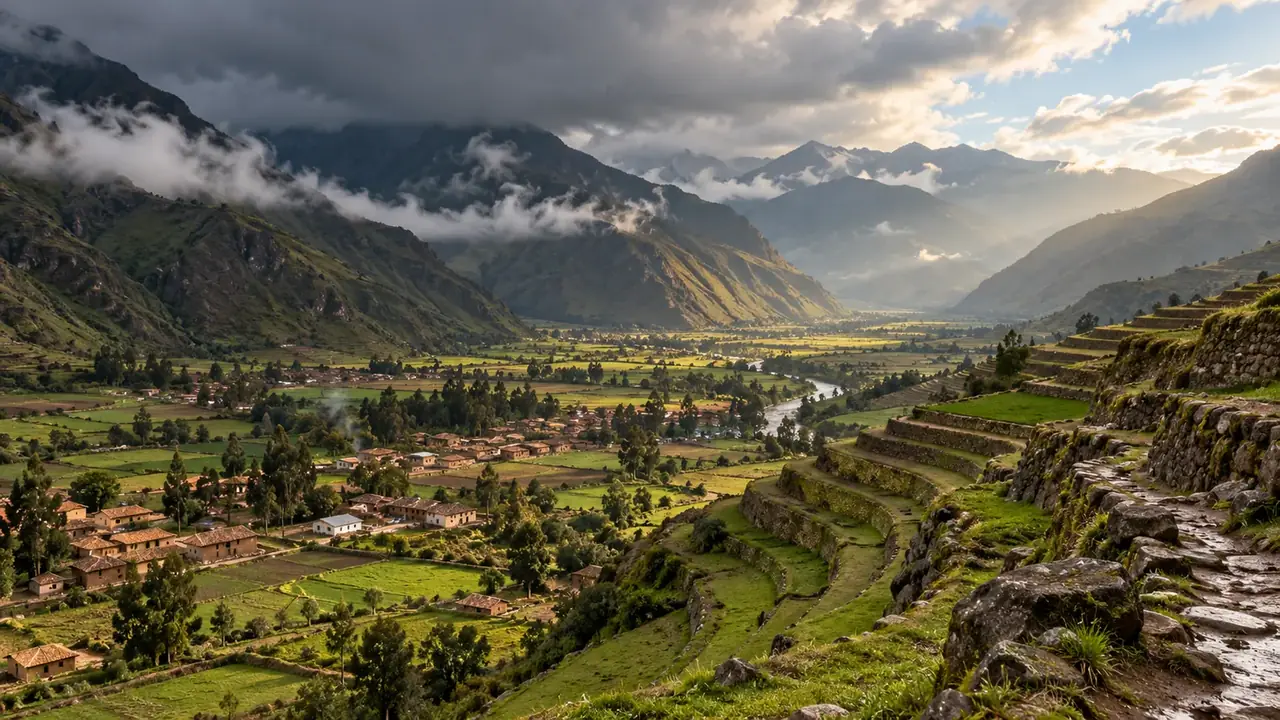
In the Andes (Cusco, Machu Picchu, Puno, Huaraz), the dry season runs from April or May to September: clear skies, cold nights. On the central coast and in Lima, summer from December to April is sunny; from June to September, the sky is grey under the garúa. The north coast is warm all year round. In the Amazon, it rains all year, more from November to April. July and August are the busiest months: book early. Festivals also change the trip: see the festival calendar, then the itineraries by season.
Choose the regions first
A beach stay, a hike in the Andes and a trip on the Amazon rivers are not planned around the same calendar. Our method: choose a main region, look at its seasonal constraints, then add a compatible extension. The effects of rain on a road or a trail often matter more than a city’s average temperature.
Peru is in the southern hemisphere. The southern winter, from June to August, is the dry season in the Andes and the grey season in Lima; the southern summer, from December to March, is the rainy season in the Andes and the sunny season on the coast. The two never coincide: a full trip is always a compromise.
Peru month by month
The rainfall and temperature figures come from the tables further down; they are averages, not a forecast. Festival dates are detailed in the festival calendar.
January
High summer on the coast: in Lima, the sun shines almost every day, and the beaches to the south fill up at weekends, all the more so as Peruvian schoolchildren are on holiday until mid-March. In the Andes, it is the heart of the rainy season: about 150 mm in Cusco and Puno, showers almost every afternoon, peaks often in the clouds. The Machu Picchu train switches to the bus-then-train service. In the southern Amazon, it is one of the wettest months. A good month for Lima, the south coast and the north coast, keeping some flexibility for the Andes.
February
The hottest month in Lima, around 27 °C in the afternoon. The Inca Trail is closed all month; the Machu Picchu site stays open. In Puno, the Virgen de la Candelaria festival lasts several weeks around 2 February: the town is full, so book early. The rain stays heavy in the Andes. On the north coast, usually dry, some rain becomes possible; in El Niño years, it is from February to April that it is heaviest. Depending on the year, carnival falls in February or March.
March
The end of summer and of the Peruvian school holidays: classes start again in mid-March (on 16 March in 2026). The rain eases in Cusco but stays frequent, and March is Huaraz’s wettest month. The Inca Trail reopens at the beginning of March. Holy Week sometimes falls in March: in 2027, Easter Sunday is on 28 March.
April
A month of transition, often very beautiful: the Andean valleys are still green, the rain becomes less frequent (about forty millimetres in Cusco) and the Machu Picchu bus-then-train service ends with the month. Arequipa enters its dry season. In Lima, summer ends gently. Holy Week, when it falls in April, draws large crowds to Ayacucho, and Machu Picchu goes into high season around Easter (from 2 to 5 April in 2026).
May
The start of the dry season in the Andes: clear skies, less than 10 mm of rain in Cusco, nights getting cooler. It is one of the best months: few people, landscapes still green. The season recommended by SERNANP begins for Tambopata, Huascarán and Pacaya Samiria. In Lima, the sky starts to cloud over. In 2027, the Qoyllur Rit’i pilgrimage and Corpus Christi in Cusco fall at the end of May; in other years, often in June.
June
The dry season is well established, and the nights turn cold: about 2 °C on average in Cusco, below 0 °C in Puno. On 24 June, Inti Raymi fills Cusco, and San Juan is celebrated throughout the Amazon. Machu Picchu’s high season begins (on 19 June in 2026). In Lima it is garúa time, but the Lachay lomas start to turn green again.
July
The busiest month: summer holidays in Europe and North America, Fiestas Patrias on 28 and 29 July, and two weeks of Peruvian school holidays at the end of the month (from 27 July to 7 August in 2026). Blue skies and the coldest nights in the Andes: about 1 °C on average in Cusco. It is also the driest month in Puerto Maldonado, sometimes with a cold snap, the friaje. The whale season begins on the north coast. Book tickets and trains as soon as your dates are fixed.
August
Still the height of the dry season in the Andes, and still very busy, because of the European holidays. In Lima, it is the greyest month: fewer than 30 hours of sunshine in the whole month, on average. The southern Amazon stays dry. In Pacaya Samiria, taricaya turtles lay their eggs on the beaches in July, August and early September: SERNANP asks visitors not to go near them in the afternoon and at night.
September
The crowds thin out, the sky stays dry in the Andes and the nights grow milder: one of the best months for a full trip. The whales are still there on the north coast. Lima stays grey. In Huaraz, the trekking season continues until October, when the rain comes back.
October
The first rain arrives in the Andes, often in the afternoon: about fifty millimetres in Cusco, more in Huaraz. Machu Picchu stays in high season (until 2 November in 2026). In Lima, the sky clears and the city turns purple for the Señor de los Milagros processions. The whales stay until the end of October. A good month, with a little flexibility.
November
A quiet month: Machu Picchu goes back to low season at the beginning of November. The rain increases in the Andes (nearly 80 mm in Cusco) but stays irregular; Puno remains fairly dry, with about forty millimetres. Lima gets its sunshine back. The season recommended by SERNANP for Manu comes to an end. A good month for flexible travellers.
December
Summer begins on the coast: sunshine in Lima, warm water on the north coast. The rain sets in over the Andes (about 125 mm in Cusco). Christmas and New Year fill hotels and transport, and Machu Picchu goes back into high season for the last days of the year. The Peruvian school holidays begin at the end of the month (classes ended on 18 December in 2026). In Chincha and El Carmen, the Afro-Peruvian Christmas dances go on until 6 January.
Rainfall, month by month
Average monthly rainfall, in millimetres, rounded to the nearest millimetre: orders of magnitude to compare the seasons, not a forecast. They come from normals published by SENAMHI, NOAA, the German weather service or the World Meteorological Organization, depending on the city; the station and the period for each line are given below the table.
| City | J | F | M | A | M | J | J | A | S | O | N | D |
|---|---|---|---|---|---|---|---|---|---|---|---|---|
| Lima | 1 | 0 | 0 | 0 | 0 | 1 | 1 | 2 | 1 | 0 | 0 | 0 |
| Arequipa | 28 | 36 | 21 | 1 | 0 | 0 | 0 | 2 | 1 | 0 | 1 | 4 |
| Cusco | 153 | 132 | 106 | 38 | 7 | 3 | 6 | 7 | 18 | 55 | 77 | 125 |
| Puno | 159 | 145 | 116 | 51 | 7 | 3 | 3 | 10 | 24 | 44 | 40 | 88 |
| Huaraz | 101 | 124 | 151 | 94 | 34 | 4 | 3 | 3 | 20 | 67 | 70 | 134 |
| Piura (north coast) | 17 | 19 | 32 | 24 | 15 | 5 | 1 | 0 | 0 | 1 | 1 | 1 |
| Tarapoto | 136 | 148 | 163 | 160 | 109 | 80 | 69 | 56 | 89 | 113 | 131 | 125 |
| Iquitos | 283 | 264 | 299 | 275 | 254 | 201 | 170 | 172 | 203 | 246 | 266 | 282 |
| Puerto Maldonado | 343 | 333 | 275 | 154 | 106 | 58 | 57 | 63 | 98 | 164 | 237 | 279 |
| City | Weather station | Period of the normals | Body cited |
|---|---|---|---|
| Lima | Jorge Chávez Airport (13 m) | 1961–1990 | German weather service (DWD) |
| Arequipa | Not specified by the source | Not specified by the source | World Meteorological Organization |
| Cusco | Alejandro Velasco Astete Airport (3,249 m) | 1991–2020 | NOAA |
| Puno | Puno (3,825 m) | 1991–2020 | SENAMHI |
| Huaraz | Santiago Antúnez de Mayolo station (3,079 m) | 1991–2020 | SENAMHI |
| Piura | Piura Airport | 1991–2020 | NOAA |
| Tarapoto | Tarapoto (382 m) | 1991–2020 | SENAMHI |
| Iquitos | Iquitos | 1991–2020 | NOAA |
| Puerto Maldonado | Puerto Maldonado | 1961–1990 | NOAA |
How to read it: the values are those of the climate tables of Wikipedia (English), consulted on 7 October 2026, which cite these bodies; the periods are not all the same, and a single station sums up a whole city. The bodies’ original data have not been recalculated by SwissLima.
This table says the essentials: the coast is a desert; the Andes have a very marked dry season from May to August and a rainy season from December to March; the Amazon gets rain all year round, with a relative lull from June to August, very clear in Puerto Maldonado, barely noticeable in Iquitos.
Temperatures, day and night
Average highs and lows, in °C, rounded to the nearest degree, for four reference months. Same sources and same stations as for the rainfall (Wikipedia tables consulted on 12 October 2026), except for Lima, where SENAMHI’s Campo de Marte station (1991–2020), in the heart of the city, replaces the airport.
| City | January | April | July | October |
|---|---|---|---|---|
| Lima | 26 / 20 | 25 / 19 | 18 / 15 | 19 / 15 |
| Arequipa | 22 / 9 | 25 / 7 | 22 / 5 | 23 / 6 |
| Cusco | 21 / 8 | 21 / 6 | 21 / 1 | 22 / 7 |
| Puno | 16 / 6 | 16 / 4 | 15 / −1 | 17 / 4 |
| Huaraz | 22 / 8 | 22 / 8 | 23 / 4 | 24 / 7 |
| Piura | 34 / 22 | 33 / 22 | 28 / 18 | 30 / 17 |
| Iquitos | 32 / 22 | 32 / 22 | 31 / 22 | 33 / 22 |
| Puerto Maldonado | 31 / 21 | 31 / 20 | 30 / 17 | 32 / 20 |
In the Andes, the days are mild all year round, around 20 °C in Cusco; it is the night that changes, from 8 °C in the rainy season to 1 °C in July. In the dry season, the gap between the afternoon and the end of the night reaches 15 to 20 degrees in Cusco, Puno or Arequipa: dress in layers.
In the Amazon, the heat is constant, but SENAMHI announces several friajes every year: a mass of cold air from the south brings rain, then makes the temperature drop for a few days, especially in the south. In August 2013, for example, it forecast a low of 10 °C in Puerto Maldonado (SENAMHI, warning published by SINIA). A fleece has its place in the bag, even for the rainforest.
In Lima, the contrast is in the sky more than on the thermometer: according to the German weather service’s 1961–1990 normals for the airport, the city gets on average about 185 hours of sunshine in January, and fewer than 30 in August.
Three phenomena to understand
The garúa. From June to September, a layer of low cloud covers Lima and the central coast: the sky stays grey, a fine drizzle dampens the air, it is 15 to 20 °C. The cold Humboldt Current, which cools the air on contact with the sea, contributes to the aridity of the central coast: it rains very little there on average, but the current does not prevent all precipitation, and exceptional episodes (El Niño years, for example) can bring real rain. From December to April, the sun returns, with highs around 27 to 28 °C in Lima.
Altitude. In the Andes, the dry season is also the cold season: in Puno, the lows drop below 0 °C in June and July, in Cusco to around 1 to 2 °C. The sun is strong during the day, the nights icy. In the rainy season, temperatures are milder, but afternoon showers and clouds hide the peaks.
The Amazon rivers. They rise and fall by several metres over the year. At high water, you travel by canoe through the flooded forest; at low water, you walk more and some channels become impassable. SERNANP advises visiting Pacaya Samiria from May to September; PROMPERÚ advises the Alto Mayo from May to November. See Northern Amazon.
Region by region, activity by activity
| Region or activity | Best period | Possible with adjustments | To avoid or plan for |
|---|---|---|---|
| Lima, museums, food | All year | June to September: grey and cool | |
| Lima, beaches to the south | December to April | Winter: cold water, grey skies | |
| South coast (Paracas, Nazca) | All year | Possible morning mist in winter | |
| North coast (Máncora, Punta Sal) | All year; warmer water from December to May | Whale season: July to October | |
| Cusco, Sacred Valley, Machu Picchu | May to September | April, October, November | January to March: rain, bus then train from January to April, Inca Trail closed in February |
| Trek (Inca Trail, Salkantay, Huaraz) | May to September | April, October | December to March: muddy trails, snowy passes, views blocked |
| Puno and Titicaca | May to October | April, November | June and July: nights below 0 °C; February: the Candelaria (town full) |
| Arequipa and the Colca | April to December | January to March | Rain on the Colca and the passes in summer |
| Southern Amazon (Tambopata) | May to October | April, November | December to March: very heavy rain |
| Northern Amazon (Iquitos) | All year | Depending on the season, more boating (high water) or more walking (low water) |
The Inca Trail: the whole of February, for maintenance and safety in the rainy season (1 to 28 February in 2026). The Machu Picchu train: from January to April, departures from Cusco go by bus to a station in the valley.
The seasons recommended by the national parks
SERNANP, the public body in charge of protected areas, gives for each one a recommended visiting season and a rainy season (see for example the Machu Picchu page, in Spanish). Its pages, consulted on 12 October 2026:
| Protected area | Recommended season | Rainy season |
|---|---|---|
| Machu Picchu Historic Sanctuary | April to October | November to March |
| Huascarán National Park (Huaraz) | May to October | October to April |
| Manu National Park | April to November | December to March |
| Tambopata National Reserve | May to October | December to March |
| Pacaya Samiria National Reserve | May to September | October to April |
| Tumbes Mangroves National Sanctuary | April to December | January to March |
| Lachay National Reserve | June to November | June to September |
| Paracas National Reserve | All year | No rain |
At Lachay, the “rainy season” is the garúa season: it is this winter drizzle that turns the hills green again, hence a visit recommended in the middle of winter. See the Lachay lomas.
Festivals and high season: the pressure on bookings
Some periods fill up hotels and transport:
- July and August, the European and North American holidays, and the Fiestas Patrias at the end of July;
- the Peruvian school holidays: the summer break, from late December to mid-March, fills the beaches; the mid-year break, two weeks between late July and early August, adds to the high season (2026 calendar, in Spanish);
- Holy Week and Christmas and New Year;
- the big local festivals: the Candelaria in Puno in February, Inti Raymi in Cusco on 24 June.
At Machu Picchu, the daily limit is 5,600 visitors a day in high season, 4,500 in low season. The 2026 high season covers: 1 January, 2 to 5 April, 19 June to 2 November, 30 and 31 December. In July and August, book your entry ticket, your train and, for the Inca Trail, your permit as soon as your dates are fixed. If the ticket you want is sold out, see the solutions. See also Festivals and calendar and booking.
The low season. From November to March, except for the end-of-year holidays and Holy Week, the Andes are quieter: fewer people at the sites, more availability, green landscapes, in exchange for showers and cloud. It is also the high season on the coast.
Your holidays, their season in Peru
If your dates depend on school holidays, in Europe for example, here is what they mean in Peru:
| Your holidays | In Peru | Our advice |
|---|---|---|
| February (half-term or winter break) | Summer on the coast, rain in the Andes, Inca Trail closed | Lima, Paracas, Nazca, the north coast; Cusco and Machu Picchu possible with flexibility |
| Easter | End of the rains, Holy Week (festivals, crowds) | The Andes still green; book early around Easter |
| Summer (July and August) | Dry season, high season, cold nights in the Andes | The big Andean trip, booked early; the southern Amazon in the dry season |
| Autumn (October half-term) | End of the dry season, first rain, Señor de los Milagros in Lima | A very good compromise for a full trip |
| Christmas and New Year | Summer on the coast, rain in the Andes, high demand | Lima and the coast; book early and keep some margin in the Andes |
What to pack for each season
- In the Andes, all year round: layers (T-shirt, fleece, light down jacket), a woolly hat and gloves for the evening, sun cream and sunglasses, as the sun is strong at altitude. See altitude.
- In the Andes, from November to April: a waterproof jacket, walking shoes that cope with mud, a rain cover for your bag.
- In Lima, from June to September: a jumper and a light jacket for the grey skies and the 15 to 20 °C.
- In the Amazon: light long-sleeved clothes, insect repellent, a rain jacket, and a fleece for a possible friaje.
- On the coast: swimwear and sun protection; in the centre and the south, the sea stays cool, even in summer.
Average climate, forecast, alert
Three different pieces of information, to check at three different times:
- The average climate (these tables): to choose the period, months in advance.
- The forecast: from a week before, to adjust the order of the days. SENAMHI publishes the official forecasts.
- The alert: the day before a journey, to find out whether a road is closed. The FDFA points out that heavy rain causes floods and landslides; your provider and the local authorities know which roads are passable.
One year is not like another: an El Niño episode can bring very heavy rain to the usually dry north coast. See El Niño in Peru.
For a trip between December 2026 and April 2027, this is the point to follow: an El Niño episode was under way in October 2026, with above-normal rain forecast on the north coast and the central coast. The summary below is dated; the authorities publish new forecasts several times a month.
Closed roads and trails, and fallback plans
In the rainy season, landslides (huaicos) cut mountain roads, and sometimes the Machu Picchu railway. Keep:
- a day in hand before the international flight;
- a fallback activity for each outdoor day: a museum, a market, a workshop, a town;
- bookings you can change for the exposed stages.
A stay organised entirely around a photo of a summit has few fallback options. A stay that also includes a workshop, a town, a market and a free day has many more. When booking, ask what happens if the main activity becomes impossible: another route, a postponement, a refund or a lost day?
Four trips, four calendars
- An Andean trip (Cusco, Machu Picchu, Puno, Huaraz): May to September, avoiding the July and August crowds if possible.
- A beach trip: the north coast all year round, Lima and the south from December to April.
- A rainforest trip: from May to October for the south (Tambopata, Manu), all year round in the north, choosing between boating and walking.
- A mixed trip: May, June, September and October, the best compromise between dry Andes, an acceptable coast and a less rainy Amazon.
Frequently asked questions
What is the best month for a first trip?
For a trip that combines Lima, the Andes and Machu Picchu, May, June, September and October offer a good compromise: dry season in the Andes, fewer people than in July and August. July and August are still excellent for the weather, but Cusco and Machu Picchu are then at their busiest.
Can you go to Machu Picchu in the rainy season?
Yes. The site stays open; it often rains in the afternoon and the clouds come and go. However, the Inca Trail closes every year in February for maintenance, and from January to April the train from Cusco becomes a bus journey followed by the train.
Does it rain in Lima?
Very little in normal times: a few millimetres a year on average. From June to September, the sky is overcast and a fine drizzle, the garúa, dampens the pavements. Exceptional episodes do happen, especially when the sea warms up as in an El Niño: an average does not guarantee there will be no rain on a given day.
What is the low season in Peru?
In the Andes and at Machu Picchu, from November to March, except for the end-of-year holidays and Holy Week: fewer people, more availability and green landscapes, in exchange for showers and cloud. On the coast it is the other way round: December to March is the season of sunshine and of Peruvians’ holidays.
Is it cold in Cusco?
During the day, no: around 20 °C all year round. At night, yes, especially in the dry season: the average low drops to about 1 °C in July, against 8 °C in January. In Puno, higher up, it falls below 0 °C in June and July. Bring layers, a woolly hat and a warm jacket for the evening.
Is Peru in August a good idea?
Yes for the Andes, Machu Picchu and the southern Amazon, in the middle of the dry season; it is also one of the busiest months, so book early. Lima is then grey and cool, and the sea cold: keep the beaches for another trip, or head for the north coast.
When should you go to the Amazon?
It rains all year round, but SERNANP recommends Tambopata from May to October, Manu from April to November and Pacaya Samiria from May to September. In the north, around Iquitos, you can travel all year: at high water you go by boat more, at low water you walk more.
When can you see whales?
On the north coast, between Piura and Tumbes, the humpback whale watching season runs from July to the end of October. No sighting is guaranteed; choose an operator that keeps its distance from the animals.
Sources and dates
7 sources
Prices, opening hours and rules change: every piece of information cited links to its source, with the date it was consulted.
Figures and rules cited
- from July to the end of October: Humpback whale-watching season on the Piura and Tumbes coast (El Ñuro, Cabo Blanco, Los Órganos (Piura), Punta Sal (Tumbes)) . No sighting is guaranteed.
Press or reseller: Infobae (agencies), whale watching in the Mar Tropical de Grau reserve (25 June 2026) (new tab) , published on 25 June 2026 · consulted on 2 October 2026 - the whole of February, for maintenance and safety in the rainy season (1 to 28 February in 2026): Annual closure of the Machu Picchu Inca Trail network (Machu Picchu Inca trail network) . Closure announced every year by the Cusco Directorate of Culture; the Machu Picchu site stays open.
Press or reseller: Infobae, network reopening on 1 March (26 February 2026) (new tab) , published on 26 February 2026 · consulted on 2 October 2026 - from January to April: Period of the “bimodal” service (bus then train) from Cusco (Cusco (Wanchaq station), via Pachar or Ollantaytambo)
Site management: PeruRail, frequently asked questions (new tab) · consulted on 1 October 2026 - 5,600 visitors a day in high season, 4,500 in low season: Daily capacity of the site (Llaqta de Machu Picchu)
Press or reseller: PeruRail, Tickets to Machu Picchu and New Visit Circuits 2026 (new tab) · consulted on 1 October 2026 - 1 January, 2 to 5 April, 19 June to 2 November, 30 and 31 December: High-season days in 2026 (maximum capacity and routes 1-C, 1-D, 3-C, 3-D open) (Llaqta de Machu Picchu) . Calendar announced by the state news agency; the rest of the year is low season.
Press or reseller: Andina, “Planning to visit Machu Picchu in 2026?” (3 November 2025) (new tab) , published on 3 November 2025 · consulted on 2 October 2026
Sources consulted
- Climate normals (SENAMHI, NOAA, DWD, WMO) used in the climate tables of Wikipedia (English): Lima, Cusco, Puno, Huaraz, Arequipa, Iquitos, Puerto Maldonado, Tarapoto, Piura; stations and periods detailed below the rainfall and temperature tables (new tab) (consulted on 12 October 2026)
- PROMPERÚ, the climate of Peru (new tab) : general trends, not a forecast for your stay. (consulted on 26 September 2026)
- SERNANP, visitor pages of the protected areas (recommended season and rainy season, in Spanish): Machu Picchu, Huascarán, Manu, Tambopata, Pacaya Samiria, Tumbes mangroves, Lachay, Paracas (new tab) (consulted on 12 October 2026)
- Infobae, Inca Trail reopening on 1 March (26 February 2026) (new tab) (consulted on 2 October 2026)
- La República, the Ministry of Education’s 2026 school calendar (22 June 2026, in Spanish) (new tab) (consulted on 12 October 2026)
- SENAMHI, weather warning “Friaje intenso en la selva peruana” (13 August 2013, published by the Ministry of the Environment’s SINIA, in Spanish) (new tab) (consulted on 12 October 2026)
- FDFA, Conseils pour les voyages – Pérou (travel advice, in French: heavy rain, landslides) (new tab) (consulted on 1 October 2026)
How we choose and date our information: our method. Has something changed? Let us know.