
In short
The “menú” is a set meal of the day at a fixed price, starter and main course, sometimes a drink; the “carta” lists dishes served separately. Ask whether a portion is individual or for sharing and what it includes, mention any allergy before ordering, with a card written in Spanish, and check on the bill whether a service charge is already included.
Menú or carta: two ways of eating
The menú is, according to the Real Academia’s dictionary, a “comida de precio fijo” (fixed-price meal) with a limited choice: in Peru, a lunchtime set meal with a starter (often a soup or a small cold plate), a main course and sometimes a drink of the day. The carta is the list of dishes served separately, each with its own price. The same restaurant may offer both, the menú only on weekdays and at lunchtime.
The example menus below were written for this guide, without prices: they follow the structure of real menus, not that of a particular establishment. For prices noted on site, see the guide’s restaurants.
Example menu 1: the menú of the day
Menú del día
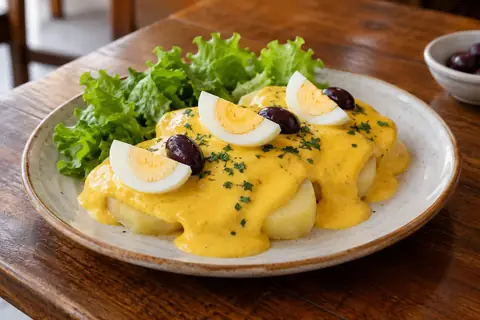
Entradas: sopa de verduras · papa a la huancaína · ensalada de fideos
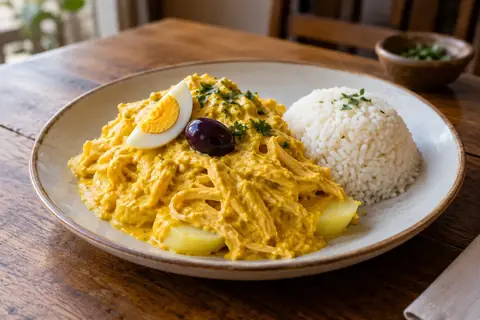
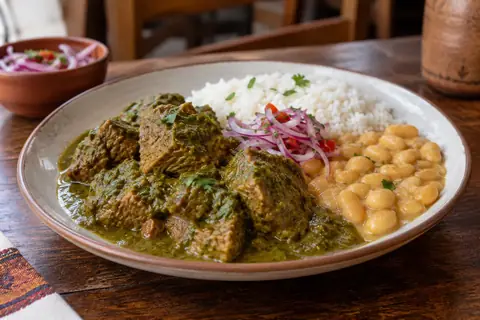
Segundos: ají de gallina · pescado frito con arroz · seco de res con frejoles · tallarines verdes con bistec
Incluye refresco del día
How to read it. You choose a starter and a “segundo” (the main course). The “refresco del día” is a homemade drink, often a chicha morada or a lemonade. Three questions before ordering:
- “¿El refresco está incluido?” Is the drink included?
- “¿Qué lleva el seco?” Seco is a coriander stew: ask about the meat and the side dish.
- “¿Queda pescado?” Is there any fish left? The dishes on the menú run out as service goes on: an “agotado” dish is no longer available.
A menú is the simplest way to eat on your own and cheaply, but it is served at lunchtime, and rarely in the evening.
Example menu 2: the cebichería
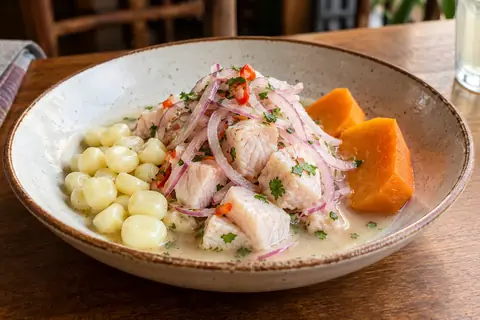
Cebiches: clásico de pescado · mixto · de conchas negras · trío
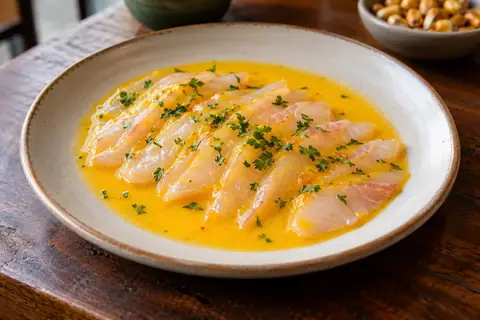
Tiraditos: al ají amarillo · al rocoto
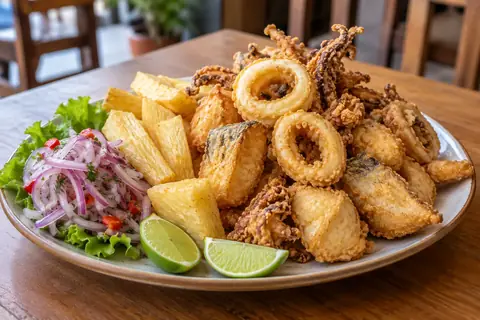
Calientes: chicharrón de pescado · jalea mixta · arroz con mariscos · sudado de pescado
Pesca del día según disponibilidad · Leche de tigre
How to read it. Ceviche is raw fish marinated in lime, served with onion, sweet potato and corn. Tiradito is cut into thin slices, coated with a chilli sauce, without onion. “Mixto” adds seafood and octopus. On the hot side, chicharrón de pescado is fried in pieces, jalea is a large platter of fried fish and seafood to share, sudado a fish stew with tomato (the Real Academia’s definition). Leche de tigre is the marinade juice, served in a glass.
Three questions:
- “¿Cuál es la pesca del día?” What is the fish of the day?
- “¿Pica mucho?” Is it very spicy? A ceviche with rocoto is hotter than a ceviche with mild ají limo.
- “¿El trío alcanza para dos?” Is the trio enough for two?
Cebicherías work mainly at lunchtime: raw fish is eaten at lunch, and many close in the afternoon. The CDC points out that raw fish or meat dishes (ceviche, tiradito, carpaccio) carry a risk of food poisoning: see eating out.
Example menu 3: the table for sharing
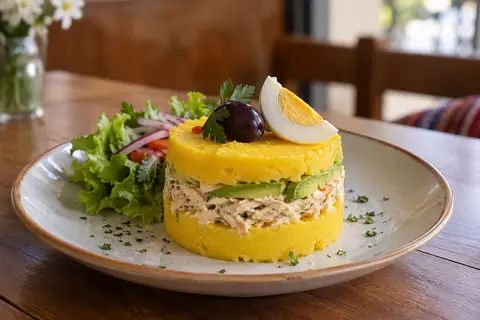
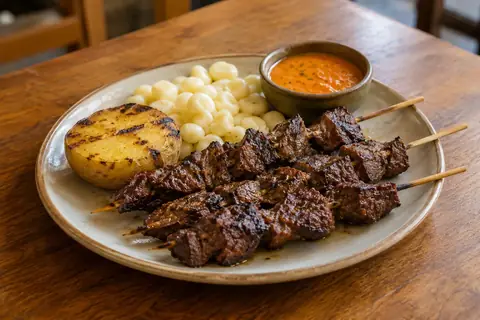
Para compartir: piqueo criollo · causa grande · anticuchos (3 palitos)
Fondos: lomo saltado · arroz con pato · cabrito
Personal / Media fuente / Fuente
How to read it. The three formats indicate the size: personal for one person, media fuente (half-dish) and fuente (large dish) for sharing. The Chulucanas restaurant, for example, shows its dishes as P, MF and F, without saying how many people each size serves: you have to ask. The piqueo is a platter of bites; anticuchos are counted in skewers (“palitos”).
Two questions:
- “¿Para cuántas personas es la media fuente?” How many people is the half-portion for?
- “¿Nos recomienda un fondo y dos entradas para cuatro?” Would you recommend a main course and two starters for four of us?
A “para compartir” price is the price of the dish, not the price per person. To compare two restaurants, compare the same portion.
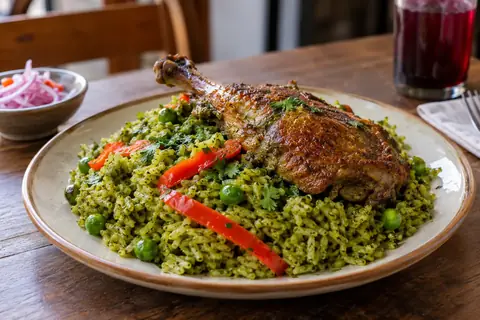
Portion, side dish, extra
- Guarnición (side dish): white rice, potatoes, fried cassava, beans, salad. Many dishes come with rice and potatoes: it is not a mistake.
- “A elegir”: you choose the side dish, or the meat (“pollo o lomo”), at two different prices.
- Extras (“adicional”): a fried egg, a portion of rice, a sauce, bread. They are paid for separately; ask the price.
- “Con hueso / sin hueso”: with or without the bone; “pierna / pecho”: chicken leg or breast.
Cooking methods and meats: a short glossary
| On the menu | What it is |
|---|---|
| Saltado | Stir-fried over a high heat in a wok, with onion, tomato and soy sauce (lomo saltado, tallarín saltado) |
| Chicharrón | Pieces of pork, fish or chicken, fried; in Peru, pork with its fat, fried in its own fat |
| Apanado | Coated in breadcrumbs |
| Sudado | Fish or seafood stew with tomato |
| Seco | Coriander stew, with beef, lamb or kid goat |
| Sancochado | Boiled dinner of beef, cabbage, corn and cassava |
| Chupe | Thick soup, often with milk and cheese |
| A la plancha / a la parrilla | On the hotplate / on the grill |
| A lo macho | Coated with a spicy seafood sauce |
| Encebollado | With softened onions |
| A la chorrillana | With a sauce of sautéed onion and tomato |
| Tacu tacu | Pan-fried cake of rice and beans |
The meats: res (beef), lomo (beef fillet), chancho or cerdo (pork), pollo (chicken), pato (duck), cordero (lamb), cabrito (kid goat), cuy (guinea pig), alpaca. Offal is common in criollo cooking: mondongo (tripe, in cau cau), corazón (heart, in anticuchos), sangrecita (pan-fried chicken blood), menudencia (poultry giblets). A menu that says “pescado” without specifying the species serves the fish of the day.
Chilli: ask, do not assume
Chilli is not only in the sauce on the side: it is often in the base of the dish, the “aderezo” (onion, garlic and chilli paste fried together). Asking for “sin ají” in an ají de gallina makes no sense: yellow chilli is its main ingredient, more fragrant than fiery. It is better to say what you can handle, and ask for advice:
- “No como picante. ¿Qué plato no pica?” I do not eat spicy food. Which dish is not spicy?
- “El ají aparte, por favor.” The chilli on the side, please: useful for salsa criolla, rocoto and table sauces.
Without meat, vegetarian, vegan
Three different requests, to be worded precisely:
- Sin carne: “without meat” is sometimes understood as “without red meat”; chicken or fish may remain.
- Vegetariano: no meat, poultry, fish or seafood. Also ask about the stock: many soups and rice dishes are cooked in caldo de pollo, and fried dishes may be fried in the same oil as the fish.
- Vegano: no animal products, no milk, egg or cheese. Cold sauces (huancaína, ocopa) contain fresh cheese and milk.
Dishes that are often vegetarian, provided you ask the waiter: papa a la huancaína, solterito, vegetable causa, tallarines verdes without meat, choclo con queso. The useful phrase: “Soy vegetariano. ¿Este plato lleva carne, pollo, pescado o caldo de pollo?”
Allergies: a card to copy out
If you have a severe allergy, a card written in Spanish, shown before ordering, is better than a translated word. Copy out this template, filling in the blanks, and keep a copy on your phone:
Tengo una alergia grave a ________.
Si como ________, aunque sea en poca cantidad, puedo tener una reacción grave.
¿Puede confirmar con la cocina si este plato contiene ________, o si se prepara con el mismo aceite o los mismos utensilios?
Si no está seguro, prefiero no pedirlo. Muchas gracias.
Common allergens in Peruvian cooking: maní (peanut: ocopa, anticucho sauce, pepián), nueces and pecanas (tree nuts: desserts), leche and queso (huancaína, chupes, causa), huevo (mayonnaise, causa, pisco sour with egg white), mariscos (crustaceans and shellfish), trigo (wheat: bread, pasta, the soy sauce in saltado). No kitchen can guarantee there is no cross-contamination: if the answer is hesitant, choose another dish. Keep your emergency medication with you.
Two dialogues
At the counter, for a menú
You: Buenas tardes. ¿Qué hay de menú hoy?
Waiter: De entrada, sopa o papa a la huancaína; de segundo, ají de gallina, pescado frito o seco.
You: ¿El seco es de res o de pollo?
Waiter: De res, con frejoles.
You: Entonces la sopa y el seco, por favor. ¿El refresco está incluido?
Waiter: Sí, es chicha morada.
At a table for sharing
You: Somos cuatro. ¿La media fuente de cabrito alcanza para dos?
Waitress: Para dos o tres, depende del hambre.
You: ¿Y el arroz con pato es personal?
Waitress: Es personal, pero es grande.
You: Entonces una media fuente de cabrito, un arroz con pato y dos causas para compartir.
Possible answers worth knowing: “Se acabó” or “Está agotado” (there is none left), “Demora veinte minutos” (it takes twenty minutes), “Es para compartir” (it is for sharing).
Drinks
When you order, you will be offered a drink. Chicha morada (purple corn, non-alcoholic), limonada, fruit juices (“jugos”) and Inca Kola are common; pisco sour and chilcano are pisco cocktails, and chicha de jora a fermented drink. By the glass (“vaso”), by the jug (“jarra”) or by the litre: ask how much it holds before comparing. The CDC advises avoiding tap water and ice; drinks in sealed bottles are generally safe. See drinks.
The bill, service, the receipt
- Asking for the bill: “La cuenta, por favor.” Ask for it: it does not always come by itself.
- The displayed price: according to Indecopi, restaurants must display outside a list of final prices, IGV included, and may not charge any additional amount, except a service charge announced visibly. A surcharge depending on the payment method must also be displayed.
- Service: some menus state that their prices include taxes and the “recargo al consumo”; others do not. If a “servicio” appears on the bill, tipping is optional; otherwise, it is at your discretion.
- Bank cards: in small places, ask before ordering: “¿Aceptan tarjeta?”
- The receipt: ask for a boleta (till receipt); it is your proof of payment if you need to make a complaint. See the libro de reclamaciones.
And the “food tour”?
Tasting several small portions can be a lovely way into a city’s food, provided that the content, the quantities, dietary adaptations and the price are stated in writing. A “food tour” should not hide three stops where everyone pays for their meal again: ask what is included, and whether drinks are.
Sources and dates
4 sources
Prices, opening hours and rules change: every piece of information cited links to its source, with the date it was consulted.
Sources consulted
- Indecopi, rights of restaurant and hotel customers (29 June 2022) (new tab) (consulted on 3 October 2026)
- CDC Yellow Book, Peru (food, water, raw fish; updated 23 April 2025) (new tab) (consulted on 3 October 2026)
- Real Academia Española, Diccionario de la lengua española: menú, sudado, sancochado, apanado, chicharrón (new tab) (consulted on 3 October 2026)
- Chulucanas Lima, menu and set lunch menu (P, MF, F sizes) (new tab) (consulted on 3 October 2026)
How we choose and date our information: our method. Has something changed? Let us know.