
Flagship itinerary
The southern classic in 21 days
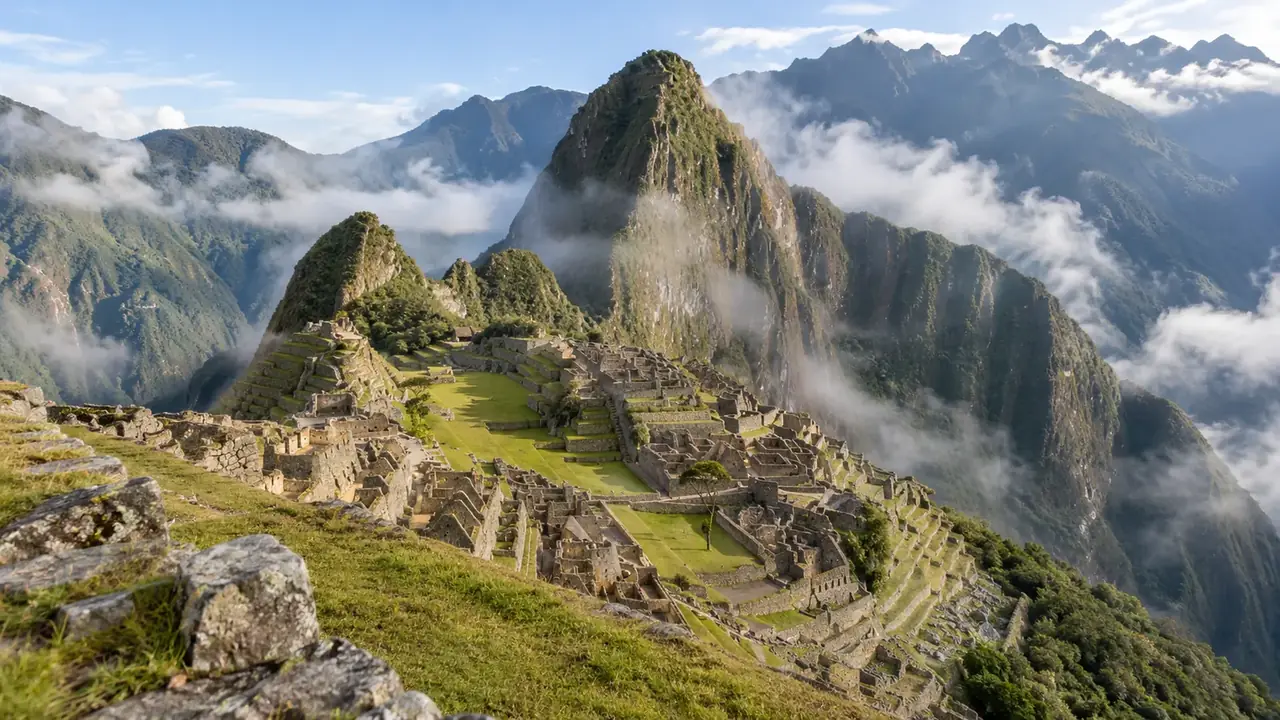
Three weeks to link the great contrasts of the south: Lima, the desert of Paracas and Nazca, Arequipa at the foot of the volcanoes, the Colca Canyon, Lake Titicaca, Cusco and Machu Picchu. The route climbs in stages, with three nights in Arequipa before going above 3,000 metres. In two weeks, choose a first trip to Peru in 15 days instead.
- Length
- 21 days, 20 nights
- In the country
- 21 days, 20 nights, including 3 transfer days
- Pace
- Brisk: twelve changes of accommodation, three transfer days and two long days on the road
- Regions
- Lima and around · South coast · Arequipa and the far south · Cusco and the Sacred Valley
Who is it for? Those who want to link the great contrasts of the south in a single trip, accept changing accommodation often and go up to altitude with no known health problem.
The trip in four parts
- Days 1 to 3
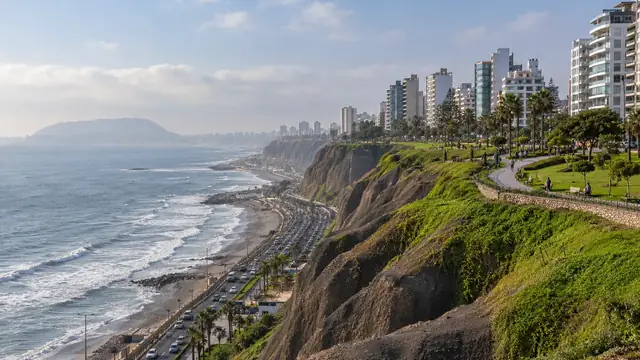
Lima and around
Lima
- Days 4 to 8
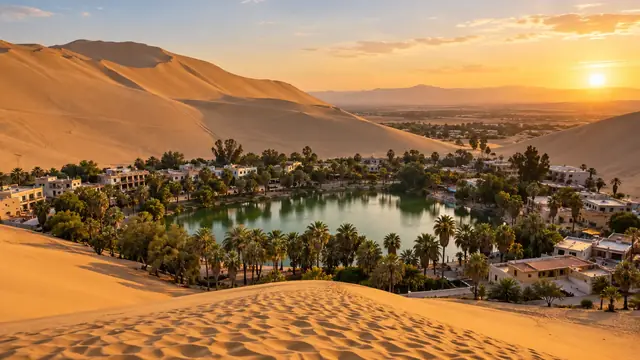
South coast
Paracas · Ica · Huacachina · Palpa · Nazca
- Days 9 to 14
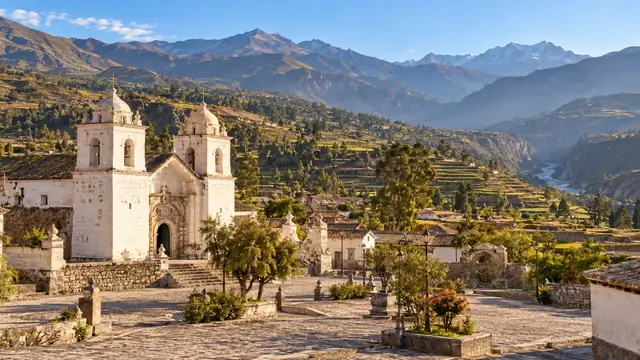
Arequipa and the far south
Arequipa · Colca · Puno
- Days 15 to 19
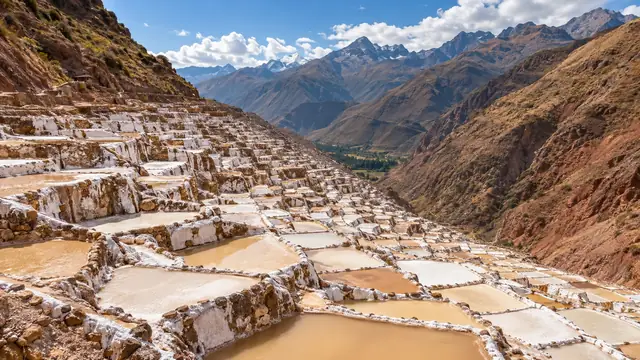
Cusco and the Sacred Valley
Cusco · Pisac · Urubamba · Ollantaytambo · Machu Picchu
Days 20 and 21: back to Lima. Each day is detailed below.
A route to adapt to your dates, excluding international flights. Keep a day in hand before your flight home.
Day by day
ArrivalSightseeingMixed dayTransferBuffer
-
Day 1
-
Day 2
Lima, historic centre Sightseeing
Plaza San Martín, Plaza Mayor, San Francisco monastery, Barrio Chino
Night: Lima
-
Day 3
Lima, Pueblo Libre and Barranco Sightseeing
The Museo Larco to place the cultures of the trip, then Barranco facing the Pacific
Night: Lima
-
Day 4
Paracas Mixed day
Morning bus (3 hr 15 min to 4 hr 10 min), Paracas National Reserve in the afternoon
Night: Paracas
-
Day 5
Ballestas Islands, Tambo Colorado Sightseeing
The boat trip in the morning, the Inca site of Tambo Colorado in the afternoon
Night: Paracas
-
Day 6
Ica and Huacachina Mixed day
A spare morning for the sea, road to Ica (1 hr to 1 hr 30 min), a bodega, the dunes at sunset
Night: Huacachina or Ica
-
Day 7
Ica, Palpa, Nazca Mixed day
The Ica regional museum, then Palpa and the lines viewing tower on the way to Nazca
Night: Nazca
-
Day 8
Nazca, then Lima Mixed day
Overflight or ground programme in the morning, then a daytime bus to Lima (7 hr to 8 hr 30 min for most services)
Night: Lima
-
Day 9
Arequipa Transfer
Lima–Arequipa flight (about 1 hr 30 min), a quiet afternoon on the Plaza de Armas
Night: Arequipa (about 2,335 m)
-
Day 10
Arequipa, Santa Catalina Sightseeing
The Santa Catalina monastery, the sillar-stone centre, lunch at a picantería
Night: Arequipa
-
Day 11
Arequipa, museums and Yanahuara Sightseeing
The Santuarios Andinos museum, San Lázaro, the Yanahuara viewpoint facing El Misti
Night: Arequipa
-
Day 12
Colca, Chivay Mixed day
Road via the Patapampa Pass (about 3 hr to 3 hr 30 min for some 160 km), terraces and villages of the valley
Night: Chivay (about 3,600 m)
-
Day 13
Cruz del Cóndor, then Puno Mixed day
The condors at the viewpoint in the morning, then a tourist bus to Puno (about 6 hr with stops, leaving at around 13:00 and arriving at around 19:15 to 19:45; about 5 hr on a direct service)
Night: Puno (about 3,830 m)
-
Day 14
Lake Titicaca Sightseeing
The floating islands of the Uros, then Taquile and its textile art
Night: Puno
-
Day 15
Cusco Transfer
Daytime bus from Puno to Cusco (usually 7 to 8 hr, from 5 hr 15 min to over 11 hr depending on the service) via the La Raya Pass, or train
Night: Cusco (about 3,400 m)
-
Day 16
Cusco Sightseeing
The Inca city beneath the colonial city: Qorikancha, Hatun Rumiyuq, San Blas, San Pedro market
Night: Cusco
-
Day 17
Pisac, then Urubamba Mixed day
Road to the Sacred Valley, the site and village of Pisac
Night: Urubamba (about 2,870 m)
-
Day 18
Ollantaytambo, then Machu Picchu Pueblo Mixed day
The site and village of Ollantaytambo in the morning, train in the afternoon (about 1 hr 30 min)
Night: Machu Picchu Pueblo (about 2,040 m)
-
Day 19
Machu Picchu, then Cusco Mixed day
Morning entry according to your ticket, afternoon train, road to Cusco
Night: Cusco
-
Day 20
Lima Transfer
Cusco–Lima flight in the morning (about 1 hr 25 min), a free afternoon by the sea
Night: Lima
-
Day 21
Lima Buffer
A buffer before the international flight: nothing essential is planned
Why this order
The trip begins at sea level, in Lima and then on the south coast, giving you time to recover from jet lag. It then climbs in stages: three nights in Arequipa, at about 2,335 m, before the first night above 3,000 metres, in Chivay (about 3,600 m). Puno (about 3,830 m) is the highest night; Cusco (about 3,400 m) comes afterwards, lower, then the Sacred Valley and Machu Picchu, lower still.
This progression does not guarantee acclimatisation. Above 3,000 metres, the CDC recommends not increasing your sleeping altitude by more than 500 metres per night: the move from Arequipa to Chivay, the biggest climb of the trip, adds about 1,300 metres of sleeping altitude in a single day. The three nights in Arequipa mean you start lower; they do not make up for this jump: an effortless evening in Chivay, a spare morning, and going back down if symptoms set in. If symptoms appear, the page when the altitude means turning back offers solutions.
Where you sleep, and what you cross
| Nights | Base | Sleeping altitude | Highest point of the journey |
|---|---|---|---|
| 1 to 3 | Lima | sea level | |
| 4 and 5 | Paracas | sea level | |
| 6 | Huacachina or Ica | about 400 m | |
| 7 | Nazca | low altitude | |
| 8 | Lima | sea level | |
| 9 to 11 | Arequipa | about 2,335 m | |
| 12 | Chivay | about 3,600 m | Patapampa Pass, about 4,900 m, on day 12 |
| 13 and 14 | Puno | about 3,830 m | Patapampa again, then Lagunillas (about 4,200 m), on day 13 |
| 15 and 16 | Cusco | about 3,400 m | La Raya Pass, about 4,320 to 4,340 m, on day 15 |
| 17 | Urubamba | about 2,870 m | |
| 18 | Machu Picchu Pueblo | about 2,040 m | |
| 19 | Cusco | about 3,400 m | |
| 20 | Lima | sea level |
Total: twenty nights. A pass is crossed in a few minutes; it is the sleeping altitude that matters most for acclimatisation.
Three transfer days, two long days on the road
The schedule includes three transfer days: the Lima–Arequipa flight (day 9), the Puno–Cusco road (day 15) and the Cusco–Lima flight (day 20). No major visit is added to them.
Two other days combine a visit and a long journey: day 8 (Nazca in the morning, then 7 hr to 8 hr 30 min for most services by bus to Lima) and day 13 (the condors at dawn, then about 6 hr with stops, leaving at around 13:00 and arriving at around 19:15 to 19:45; about 5 hr on a direct service). They are long; these are the two days when you have to accept spending the afternoon on a coach.
Why go back through Lima after Nazca? The direct Nazca–Arequipa bus travels overnight (9 to 12 hr, with departures between 15:15 and 23:50: a journey made at night), and the FDFA advises avoiding intercity journeys at night. Going via Lima and flying gets you to Arequipa on the same day, day 9, with no night journey, at the cost of a night in Lima and a flight.
Day by day
Days 1 to 3: Lima, to understand before you see
Arrival, then the historic centre (Plaza San Martín, Plaza Mayor, San Francisco monastery, Barrio Chino) and, on day 3, the Museo Larco: its Paracas, Nasca, Moche and Inca collections give meaning to the whole trip. Details in Lima in one, three or five days.
Days 4 to 8: the desert coast
Paracas for two nights, to keep a second chance if the sea is closed for the Ballestas; Tambo Colorado, an Inca adobe site whose walls are still painted; Ica, its bodegas and its museum; Huacachina at sunset; Palpa and Nazca, its geoglyphs seen from a plane or from the ground. On day 8, back to Lima by daytime bus. Details in the south coast in five days.
Days 9 to 11: Arequipa, the white city
The plane arrives during the day; the rest of the day stays calm, on the Plaza de Armas and its arcades of sillar, the white volcanic stone. On day 10, the Santa Catalina monastery (S/ 50), a city within the city with colourful alleys, then lunch at a picantería, where each day has its own soup. On day 11, the Santuarios Andinos museum and Juanita, a child sacrificed by the Incas on the summit of Ampato (on display from May to December; from January to April, another mummy, “Sarita”, from the Sara Sara volcano, takes her place for conservation reasons), then San Lázaro, the first neighbourhood, and the Yanahuara viewpoint facing El Misti. See Arequipa.
Days 12 and 13: the Colca Canyon
The road climbs to the Patapampa Pass, at around about 4,900 m, before going back down to Chivay: the stop at the volcano viewpoint is short, because of the altitude. In the afternoon, the terraces and villages of the valley, and a bath in the hot springs. On day 13, departure before dawn for the Cruz del Cóndor, where the condors make the most of the warm morning air currents, with no guarantee of seeing them. The Colca ticket costs S/ 70 for a foreigner. Then the tourist bus to Puno, which goes back over Patapampa and passes the Lagunillas lakes. See the Colca.
Day 14: Lake Titicaca
A day on the lake, at about 3,810 m: the floating islands of the Uros, built from totora reeds, then Taquile, about 45 km away, whose textile art is inscribed by UNESCO; you walk up to the village (main village at around 3,950 m, highest point at around 4,050 m). See Puno and Lake Titicaca.
Day 15: from Puno to Cusco
The daytime bus crosses the altiplano and goes over the La Raya Pass (about 4,320 to 4,340 m). Some tourist buses stop at sites along the way; the train from Puno to Cusco takes about 10 hr 30 min and does not run every day. Arrival in Cusco at the end of the day.
Days 16 to 19: Cusco, the Sacred Valley, Machu Picchu
On day 16, Cusco: the Qorikancha beneath the Santo Domingo convent, the twelve-angled stone, San Blas, San Pedro market. On day 17, the road goes down to Pisac, its ridge-top site and its village, then Urubamba. On day 18, Ollantaytambo, a village with an Inca layout and a terraced site, then the train to Machu Picchu Pueblo. On day 19, Machu Picchu at the time on your ticket, the afternoon train and the road to Cusco. See Machu Picchu and the Sacred Valley.
Days 20 and 21: return and buffer
The morning flight takes you back to Lima; day 21 serves as a buffer before the international flight.
The bookings that depend on one another
- The Machu Picchu ticket sets day 19; book it first.
- The trains on day 18 (outward) and day 19 (return) depend on it.
- The nights in Urubamba (day 17) and Machu Picchu Pueblo (day 18) depend in turn on those.
- The flights on day 9 and day 20 frame the trip: keep them changeable.
- The Chivay–Puno bus on day 13 and the Ballestas trip on day 5 are booked a few days beforehand.
Budget: the items to add up
| Item | Basis of calculation | Known amount |
|---|---|---|
| Domestic flights | 2 flights per person | Your quote |
| Coast buses, Nazca–Lima, Chivay–Puno, Puno–Cusco | Per person | Variable depending on the company |
| Accommodation | 20 nights, per room | Your quote |
| Paracas Reserve and Ballestas Islands | Per adult, plus the boat | S/ 11 and S/ 11 |
| Santa Catalina monastery | Per adult | S/ 50 |
| Colca ticket | Per foreign adult | S/ 70 |
| Titicaca excursion | Boat and island entry fees | Your quote |
| Boleto Turístico del Cusco | Full ticket, per adult | S/ 130 for 16 sites, valid for 10 days |
| Machu Picchu | Ticket and SERNANP fee, per foreign adult | S/ 152 + S/ 11 |
| Trains and shuttle bus | Per person | Variable depending on the time and class |
| Meals, local transport, margin | Per person and per day | Your choice |
Enter these items in the budget calculator.
Slower variant, without the south coast
Rather than squeezing the schedule, remove a region. Without the south coast, the twenty-one days stay in the Andes, with more time at each stage.
| Day | Programme | Night |
|---|---|---|
| 1 to 3 | Lima | Lima |
| 4 | Lima–Arequipa flight | Arequipa |
| 5 and 6 | Arequipa | Arequipa |
| 7 | Road to the Colca | Chivay |
| 8 | Cruz del Cóndor, villages, hot springs | Chivay |
| 9 | Chivay–Puno tourist bus | Puno |
| 10 | Uros and Taquile | Puno |
| 11 | Amantaní, a night with a family | Amantaní |
| 12 | Back to Puno, Sillustani | Puno |
| 13 | Puno–Cusco | Cusco |
| 14 and 15 | Cusco, Sacsayhuamán | Cusco |
| 16 | Pisac | Urubamba |
| 17 | Chinchero, Moray, Maras | Urubamba |
| 18 | Ollantaytambo, train | Machu Picchu Pueblo |
| 19 | Machu Picchu, return | Cusco |
| 20 | Cusco–Lima flight | Lima |
| 21 | Buffer |
Variant with the Nazca–Arequipa night bus
The bus leaves Nazca in the evening and arrives in Arequipa in the early morning (9 to 12 hr, with departures between 15:15 and 23:50: a journey made at night). It avoids going back to Lima and the flight, but does not save a single day: you arrive on the morning of day 9, after a night without proper sleep. If you choose it, take a higher-category company, keep your valuables on you, and plan a quiet day on arrival. See everyday safety.
What to arrange in advance
- Machu Picchu first: ticket, circuit and entry time for day 19; then the trains (outward on day 18 from Ollantaytambo, return on day 19), then the nights in Urubamba and Machu Picchu Pueblo.
- The domestic flights Lima–Arequipa (day 9) and Cusco–Lima (day 20), with known change conditions.
- The Chivay–Puno tourist bus (day 13): it leaves in the early afternoon, after the morning at the Cruz del Cóndor.
- The trip to the Ballestas Islands (day 5), with an operator authorised by SERNANP and the option of postponing it to day 6.
- The Boleto Turístico del Cusco and the Colca ticket are bought on site.
What this route leaves out
- Chinchero, Moray and the Maras salt pans: add a day in the Sacred Valley, or follow the slower variant.
- Santa Teresa and the Cocalmayo hot springs, beyond the Abra Málaga pass: at least two more days, see Santa Teresa and Cocalmayo.
- The coloured mountains (Vinicunca, the Mountain of 7 Colours, and Palccoyo) and the big treks, which need several more days of acclimatisation.
- The north (Trujillo, Chiclayo, the beaches), Huaraz and the Amazon: other trips.
Variations
-
Slower version, without the south coast
Twenty-one days in the Andes: Arequipa, the Colca, Titicaca with a night on Amantaní, Cusco and the whole Sacred Valley, with a free day. Schedule below.
-
With the Nazca–Arequipa night bus
Possible, but it does not save a single day compared with going via Lima, and the FDFA advises against night journeys.
-
Short version: the classic, selected
Two weeks: Lima, the south coast and Cusco–Sacred Valley–Machu Picchu, without Arequipa or Titicaca.
A few prices along this route
Prices shown online are for guidance only. Our partners on the ground charge far less (Vinicunca: S/ 650 online, 70 soles per person with our partner, meals included): write to us before you book.
-
Cusco airport → hotel in the centre
S/ 60 ≈ US$17.46 per vehicle, up to 4 passengers according to the provider
Private vehicle and driver.
Travel Inkas Route (indicative prices) · recorded on 26 September 2026 · source: Travel Inkas Route, indicative prices (new tab)
-
Cusco → Urubamba
S/ 180 ≈ US$52.37 per vehicle, up to 4 passengers according to the provider
Private transfer and driver.
Travel Inkas Route (indicative prices) · recorded on 26 September 2026 · source: Travel Inkas Route, indicative prices (new tab)
-
Cusco → Ollantaytambo station
S/ 220 ≈ US$64.01 per vehicle, up to 4 passengers according to the provider
Private transfer and driver.
Travel Inkas Route (indicative prices) · recorded on 26 September 2026 · source: Travel Inkas Route, indicative prices (new tab)
-
Museo Larco: general admission at the ticket office
S/ 50 ≈ US$14.55 per admission
General ticket; guided services are separate.
Museo Larco (Pueblo Libre) · recorded on 7 October 2026 · source: Museo Larco, “Planea tu visita” (prices at the ticket office and online) (new tab)
Dollars at the rate of 30 September 2026 (1 USD = 3.437 PEN). All prices in Peru.
For the full budget of your trip, add up your quotes in the budget calculator.
Sources and dates
10 sources
Prices, opening hours and rules change: every piece of information cited links to its source, with the date it was consulted.
Figures and rules cited
- 3 hr 15 min to 4 hr 10 min: Length of the bus journey from Lima to Paracas according to the companies’ timetables (Lima terminals (Javier Prado, Plaza Norte, Atocongo…) to Paracas) . Timetable duration, excluding getting to the terminal and the traffic leaving Lima.
Press or reseller: CheckMyBus, Lima–Paracas (timetable aggregator) (new tab) · consulted on 1 October 2026 - 1 hr to 1 hr 30 min: Length of the bus journey from Paracas to Ica (Paracas–Ica)
Press or reseller: CheckMyBus, Paracas–Ica (timetable aggregator) (new tab) · consulted on 1 October 2026 - 7 hr to 8 hr 30 min for most services: Length of the bus journey from Nazca to Lima (Nazca–Lima)
Press or reseller: CheckMyBus, Nazca–Lima (timetable aggregator) (new tab) · consulted on 1 October 2026 - about 1 hr 30 min: Length of a direct Lima–Arequipa flight (Jorge Chávez (Lima) and Rodríguez Ballón (Arequipa) airports) . Direct flights operated by LATAM, Sky and JetSMART among others.
Press or reseller: KAYAK, Lima–Arequipa flights (average length of direct flights) (new tab) · consulted on 1 October 2026 - about 2,335 m: Altitude of Arequipa (centre) (Arequipa)
Press or reseller: Wikidata, Arequipa (Q159273), altitude (new tab) · consulted on 1 October 2026 - about 3 hr to 3 hr 30 min for some 160 km: Length of the road journey from Arequipa to Chivay (Colca valley) (Arequipa–Chivay road via the Patapampa pass)
Press or reseller: Rome2rio, Arequipa–Chivay (bus and car) (new tab) · consulted on 1 October 2026 - about 3,600 m: Altitude of Chivay (the main town of the Colca valley) (Chivay)
Press or reseller: Wikipedia (English), Chivay (new tab) · consulted on 1 October 2026 - about 6 hr with stops, leaving at around 13:00 and arriving at around 19:15 to 19:45; about 5 hr on a direct service: Chivay–Puno tourist bus (Chivay (Colca)–Puno) . The road goes back over the Patapampa pass and runs alongside the Lagunillas lakes.
Site management: 4M Express, Chivay–Puno (timetable, stops) (new tab) · consulted on 2 October 2026 - about 3,830 m: Altitude of Puno (town, on the shore of Titicaca) (Puno)
Press or reseller: Wikidata, Puno (Q232842), altitude (new tab) · consulted on 1 October 2026 - usually 7 to 8 hr, from 5 hr 15 min to over 11 hr depending on the service: Length of the bus journey from Puno to Cusco (Puno–Cusco) . Departures from 5 in the morning; most buses run in the evening and at night. Daytime tourist buses stop at sites on the way.
Press or reseller: CheckMyBus, Puno–Cusco (timetable aggregator) (new tab) · consulted on 2 October 2026 - about 3,400 m: Altitude of Cusco (centre) (Cusco) . Wikidata gives 3,399 m, the CDC about 3,350 m: the city spreads over several tens of metres of height.
Press or reseller: Wikidata, Cuzco (Q5582862), altitude (new tab) · consulted on 1 October 2026 - about 2,870 m: Altitude of Urubamba (town) (Urubamba, Sacred Valley)
Press or reseller: Wikidata, Urubamba (Q2304483), altitude (new tab) · consulted on 1 October 2026 - about 1 hr 30 min: Length of the train journey from Ollantaytambo to Machu Picchu Pueblo (Ollantaytambo station)
Site management: PeruRail, frequently asked questions (new tab) · consulted on 1 October 2026 - about 2,040 m: Altitude of Machu Picchu Pueblo (Aguas Calientes), at the bottom of the valley (Machu Picchu Pueblo)
Old source: Wikipedia, Aguas Calientes (Peru) (new tab) · consulted on 1 October 2026 - about 1 hr 25 min: Length of a direct Lima–Cusco flight (Jorge Chávez (Lima) and Velasco Astete (Cusco) airports) . Direct flights operated by LATAM, Sky and JetSMART among others.
Press or reseller: KAYAK, Lima–Cusco flights (average length of direct flights) (new tab) · consulted on 1 October 2026 - about 400 m: Altitude of Ica (town) (Ica)
Press or reseller: Wikidata, Ica (Q840712), altitude (new tab) · consulted on 1 October 2026 - about 4,900 m: Altitude of the Patapampa pass, the highest point of the Arequipa–Chivay road (Arequipa–Chivay road)
Old source: Arequipa.com, Colca Canyon Travel Guide 2026 (pass “near 4,910 m”) (new tab) · consulted on 1 October 2026 - about 4,200 m: Altitude of the Lagunillas lakes, on the Colca–Puno road (Santa Lucía, Lampa (Puno))
Press or reseller: SRTM 30 m terrain model (OpenTopoData): 4,174 to 4,194 m (new tab) · consulted on 2 October 2026 - about 4,320 to 4,340 m: Altitude of the La Raya pass, between Puno and Cusco (Puno–Cusco road)
Press or reseller: OpenStreetMap, Abra La Raya (altitude entered 4,313 m, station 4,319 m) (new tab) · consulted on 2 October 2026 - 9 to 12 hr, with departures between 15:15 and 23:50: a journey made at night: Length and times of the Nazca–Arequipa bus (Nazca–Arequipa) . The FDFA advises avoiding intercity journeys at night.
Press or reseller: CheckMyBus, Nazca–Arequipa (timetable aggregator) (new tab) · consulted on 2 October 2026 - S/ 50: Entry to the Santa Catalina monastery, adult (Santa Catalina monastery, Arequipa) (Adult, foreign or Peruvian (S/ 30 for a foreign child aged 7 to 18; free under 7)) . Reduced rate of S/ 20 on the 10th of each month and on the last Sunday of the month. A visit takes about 1 hr with a guide, 1 hr 30 min to 2 hr on your own.
Site management: Santa Catalina monastery, opening hours and prices (new tab) · consulted on 2 October 2026 - on display from May to December; from January to April, another mummy, “Sarita”, from the Sara Sara volcano, takes her place for conservation reasons: Display of the “Juanita” mummy at the Santuarios Andinos museum (MUSA), Arequipa (Santuarios Andinos museum, calle La Merced 110, Arequipa) . Museum of the Universidad Católica de Santa María; opening hours and prices on its website.
Official source: PROMPERÚ, Museo Santuarios Andinos (new tab) · consulted on 2 October 2026 - S/ 70: Colca boleto turístico (AUTOCOLCA), foreign adult (Colca valley (Chivay checkpoint or Arequipa ticket office, Portal de la Municipalidad 112)) (Foreign adult) . On sale at the Arequipa ticket office, at the Chivay checkpoint and online (AUTOCOLCA). The amount may change.
Old source: Arequipa.com, Colca Canyon Travel Guide 2026 (new tab) · consulted on 1 October 2026 - about 3,810 m: Altitude of the surface of Lake Titicaca (Lake Titicaca) . The level of the lake varies by a few metres from year to year.
Press or reseller: Wikipedia (English), Lake Titicaca (3,812 m) (new tab) · consulted on 2 October 2026 - main village at around 3,950 m, highest point at around 4,050 m: Altitude of Taquile island (Taquile, Lake Titicaca) . You walk up from the landing stage to the village: about 140 m above the lake.
Press or reseller: Wikipedia (English), Taquile (new tab) · consulted on 2 October 2026 - about 10 hr 30 min: Length of the PeruRail Titicaca train between Cusco and Puno (Cusco (Wanchaq station)–Puno) . A daytime tourist train that does not run every day: check the calendar.
Site management: PeruRail, frequently asked questions (new tab) · consulted on 2 October 2026 - S/ 11: Entry to the Paracas National Reserve, one day (Paracas National Reserve, Santo Domingo checkpoint) (General rate, adult) . Open every day from 9:00 to 16:00 according to SERNANP. A combined reserve + Ballestas Islands ticket is offered at S/ 17.
Site management: SERNANP, Reserva Nacional de Paracas (new tab) · consulted on 1 October 2026 - S/ 11: Entry fee for the Ballestas Islands (SIIPG National Reserve), on top of the boat trip (Ballestas Islands, off Paracas) (Adult (published national rate; the general rate is not detailed on the page)) . Visits only with an operator authorised by SERNANP, from 6:00 to 13:00; life jacket compulsory.
Site management: SERNANP, Reserva Nacional SIIPG, islas Ballestas (new tab) · consulted on 1 October 2026 - S/ 130 for 16 sites, valid for 10 days: Full Boleto Turístico del Cusco, foreign adult visitor (Cusco and the Sacred Valley) (Foreign adult (S/ 70 for a foreign student))
Site management: COSITUC, Boleto Turístico del Cusco (new tab) · consulted on 1 October 2026 - S/ 152: Basic entry ticket, foreign adult (circuits without a mountain) (Llaqta de Machu Picchu) (Foreign adult, from outside the Andean Community ; excludes: SERNANP entry fee for the Historic Sanctuary, Bus and train) . The price varies with the circuit; routes that include climbing a mountain cost more. The official ticket office (tuboleto.cultura.pe) shows the exact amount at the time of purchase.
Press or reseller: Infobae, “Suben tarifas de ingreso a Machu Picchu” (9 February 2026) (new tab) , published on 9 February 2026 · consulted on 1 October 2026 - S/ 11: Entry fee for the Historic Sanctuary (SERNANP), on top of the ticket, foreign visitor, since 1 May 2026 (Historic Sanctuary of Machu Picchu) (Foreign visitor (S/ 5 for a Peruvian visitor)) . The amount and how to pay it are shown when you buy the ticket.
Press or reseller: Infobae, SERNANP entry fee (5 February 2026), Resolución Directoral N° 000006-2026-SERNANP/DUSRN (new tab) , published on 5 February 2026 · consulted on 1 October 2026
Sources consulted
- Ministry of Culture, buying tickets for Machu Picchu (tuboleto.cultura.pe) (new tab) (consulted on 25 September 2026)
- CDC Yellow Book, high-altitude travel (new tab) (consulted on 2 October 2026)
- UNESCO, Historical Centre of the City of Arequipa (new tab) (consulted on 2 October 2026)
- COSITUC, Boleto Turístico del Cusco (new tab) (consulted on 2 October 2026)
- 4M Express, Chivay–Puno tourist bus (new tab) (consulted on 2 October 2026)
- CheckMyBus, Nazca–Lima, Nazca–Arequipa and Puno–Cusco timetables (new tab) (consulted on 2 October 2026)
- PeruRail, frequently asked questions (Titicaca, Machu Picchu) (new tab) (consulted on 2 October 2026)
- FDFA, Conseils pour les voyages – Pérou (travel advice, in French) (new tab) (consulted on 2 October 2026)
- Wikipedia (Spanish), Valle del Colca (the valley’s hot springs) (new tab) (consulted on 2 October 2026)
- OpenStreetMap and the SRTM terrain model (altitudes of the passes) (new tab) (consulted on 2 October 2026)
How we choose and date our information: our method. Has something changed? Let us know.