In short
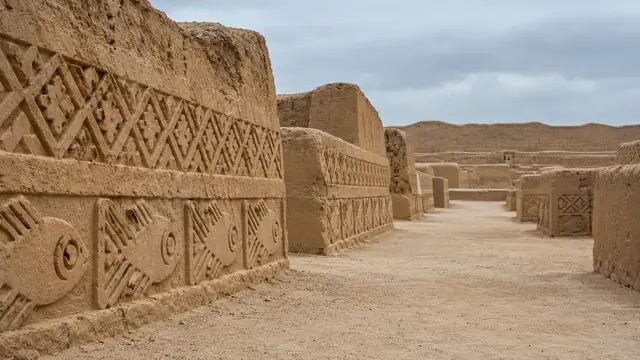
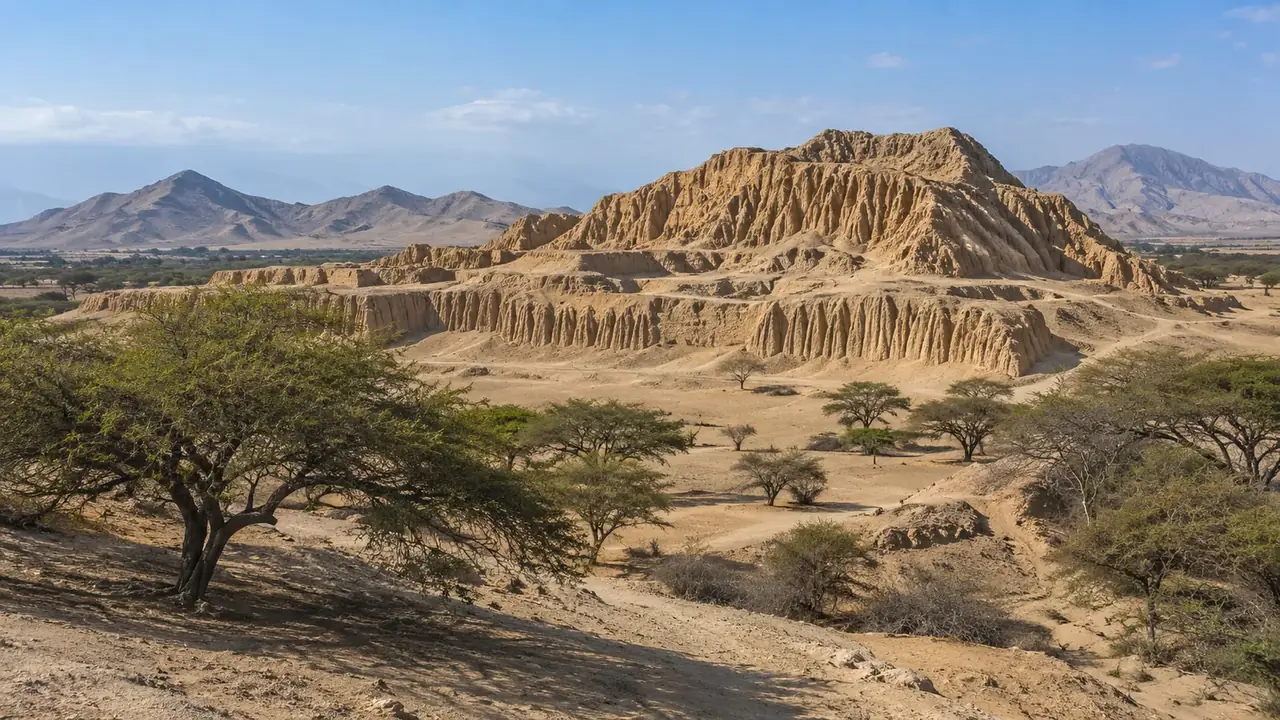
Two days are enough for the essentials, three to see everything without rushing. Day 1: in Lambayeque, the Royal Tombs of Sipán museum then the Brüning museum. Day 2: Túcume and its pyramids, then the Sicán museum in Ferreñafe. Day 3: the Huaca Rajada site, in Sipán. All these museums and sites close on Mondays.
Four cultures in order
| Period | Culture | What it left here | Where to see it |
|---|---|---|---|
| About the 1st to the 8th century | Moche | Adobe pyramids, tombs of lords covered in gold, silver and gilded copper | Huaca Rajada (Sipán), Tumbas Reales museum |
| Around 750 to 1375 | Lambayeque, also called Sicán | Great truncated pyramids, goldwork, the “tumi” ceremonial knife, funerary masks with almond-shaped eyes | Sicán museum, Pómac forest (Batán Grande), Túcume, Brüning museum |
| Around 1375 to 1470 | Chimú | Conquest of the valley by the kingdom of Chan Chan, which absorbed the Sicán goldsmiths | Túcume, Brüning museum |
| Around 1470 to 1532 | Inca | Reoccupation of existing centres | Túcume |
Local tradition tells the myth of Naylamp, a founder who came from the sea and is said to have given rise to the dynasty of the lords of Lambayeque; the tumi is often associated with him. It is a story passed down by a colonial chronicler, not an established historical fact.
Tumbas Reales and Huaca Rajada: do not confuse museum and site
The discovery. At the beginning of 1987, looters digging into the small pyramid of Huaca Rajada, near the village of Sipán, found gold objects; a dispute among them alerted the police, who called in the archaeologist Walter Alva. The excavations uncovered an intact royal tomb, something extremely rare: that of the Lord of Sipán, a man of about 35 to 45, buried with headdresses, a mask, pectorals, necklaces, nose and ear ornaments, and several companions. About fifteen tombs have been identified since.
The Royal Tombs of Sipán museum, in Lambayeque, brings together most of the objects. The building evokes a Moche pyramid: you go up by an outside ramp and come down level by level, from the tomb of the lord and of a priest to that of the older “Old Lord of Sipán”.
The Huaca Rajada site, in Sipán, shows the two badly eroded adobe pyramids, the location of the tombs and a site museum opened in 2009, devoted to the most recent excavations and the members of the Moche nobility they have revealed.
| Tumbas Reales museum | Huaca Rajada site | |
|---|---|---|
| Where | Lambayeque, 12 km from Chiclayo | Sipán, 30 km east of Chiclayo |
| What you see | The objects from the royal tombs, staged | The place of the discoveries, the pyramids, a site museum |
| Length | Two hours | An hour and a half to two hours |
Opening hours and entry fees for all the museums: Tuesday to Sunday from 9:00 to 17:00, closed on Mondays; Tumbas Reales de Sipán S/ 10; Brüning, Sicán (Ferreñafe) and Huaca Rajada S/ 8 each; Túcume S/ 8 (routes A and B) or S/ 12 (full route).
Brüning, Sicán and Túcume: three other readings
The Brüning museum, in Lambayeque, a few streets from Tumbas Reales, is the oldest museum in the region (1966). It grew out of the collection of the German engineer Hans Heinrich Brüning, gathered at the end of the 19th and the beginning of the 20th century and bought by the Peruvian state in 1924. Its four levels present all the Lambayeque cultures, with a gold room, textiles and Chimú and Vicús ceramics. It is the best place to understand the succession of cultures before or after Sipán.
The Sicán National Museum, in Ferreñafe, is devoted to the Lambayeque (Sicán) culture, its goldwork and the excavations at Batán Grande, its great religious centre.
The Pómac forest, east of Ferreñafe, is a historic sanctuary that protects a dry forest of algarrobo trees and some thirty pyramids of Batán Grande: a landscape more than a developed site, to be explored with a local guide.
Túcume, north of Lambayeque, is the “Valley of the Pyramids”: twenty-six large adobe pyramids and mounds over 220 hectares, around Cerro La Raya. The site was a major centre for the Lambayeque, Chimú and then Inca cultures. A site museum presents these successive occupations, and a viewpoint lets you see all the pyramids. The site offers two short routes (A and B) or a longer full route.
Two or three days, by area
The most practical base: Chiclayo, the big city, with its airport and bus stations; Lambayeque, smaller, is closer to the museums. Distances: Trujillo–Huanchaco 17 km; Trujillo–Chan Chan 12 km; Trujillo–Huaca de la Luna 11 km; Trujillo–El Brujo 46 km; Trujillo–Puerto Malabrigo (Chicama) 70 km; Trujillo–Pacasmayo 90 km; Trujillo–Chiclayo 198 km; Chiclayo–Lambayeque 12 km; Chiclayo–Ferreñafe (Sicán museum) 22 km; Chiclayo–Huaca Rajada 30 km; Chiclayo–Túcume 35 km; Chiclayo–Piura 215 km; Piura–Catacaos 12 km; Piura–Chulucanas 55 km; Piura–Máncora 189 km; Máncora–Los Órganos 20 km; Máncora–Punta Sal 24 km; Máncora–Tumbes 105 km.
- Day 1, Lambayeque. Tumbas Reales in the morning, lunch, Brüning in the afternoon. The two museums are a few minutes from each other.
- Day 2, the north and east. Túcume in the morning, before the heat, then the Sicán museum in Ferreñafe in the afternoon. With a driver, the Pómac forest can be added.
- Day 3, Sipán. Huaca Rajada in the morning, back to Chiclayo for lunch and the afternoon in town.
Short version in two days: day 1 as above, day 2 Huaca Rajada in the morning and Túcume in the afternoon. Do not put any of these days on a Monday.
Food gives another map of the north
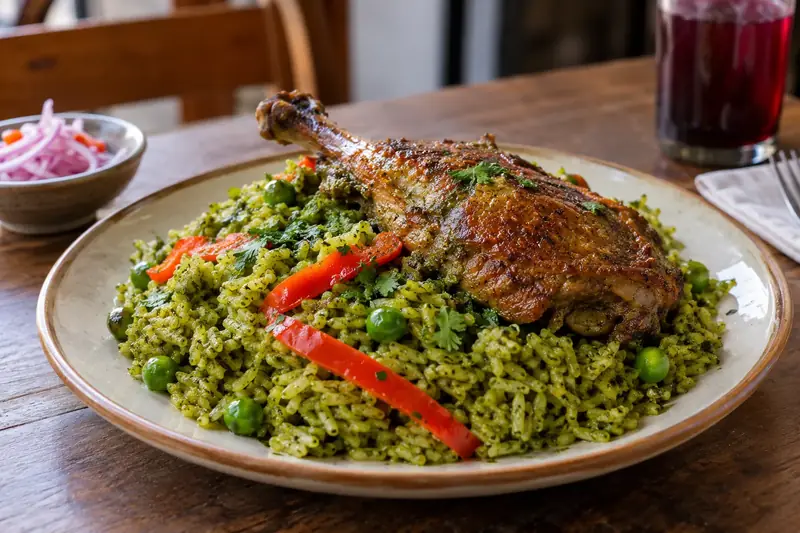
Lambayeque’s cooking is one of the most generous in the country. Two dishes sum it up: arroz con pato, green rice with coriander and marinated duck, and cabrito, slow-cooked kid goat, served with beans, rice and yuca. Midday is the time for the big dishes; ask for the house specialities and the days they are served.
The north is not just about eating the same ceviche in a new city. To choose a table, we want to know what the kitchen really does: family cooking, a weekend speciality, a fine-dining restaurant or an everyday lunch. Our addresses in the north will come from real visits.
Frequently asked questions
Why is the Sipán treasure not displayed at the site?
For its conservation and security, most of the objects from the royal tombs have been brought together at the Royal Tombs of Sipán museum, in Lambayeque, about thirty kilometres away. The Huaca Rajada site shows the pyramids, the location of the tombs and a site museum devoted to the more recent excavations.
Should you see Brüning if you have seen Tumbas Reales?
Yes, if you have time: Tumbas Reales focuses on the Moche tombs of Sipán; Brüning, the oldest museum in the region, presents all the Lambayeque cultures, with a goldwork room. The two are a few streets from each other.
Can you visit on a Monday?
Not the Ministry of Culture museums and sites (Tumbas Reales, Brüning, Sicán, Huaca Rajada, Túcume), which are closed on Mondays except on a few public holidays. Keep Monday for the road or for Chiclayo itself.
Sources and dates
5 sources
Prices, opening hours and rules change: every piece of information cited links to its source, with the date it was consulted.
Figures and rules cited
- Tuesday to Sunday from 9:00 to 17:00, closed on Mondays; Tumbas Reales de Sipán S/ 10; Brüning, Sicán (Ferreñafe) and Huaca Rajada S/ 8 each; Túcume S/ 8 (routes A and B) or S/ 12 (full route): Museums and sites in Lambayeque run by the Ministry of Culture: opening hours and adult entry (Lambayeque, Ferreñafe, Sipán, Túcume) . Exceptional openings on some public-holiday Mondays (29 June, 27 July, 2 November).
Official source: Ministry of Culture, register of museums (records for Tumbas Reales, Brüning, Sicán, Huaca Rajada, Túcume) (new tab) · consulted on 2 October 2026 - Trujillo–Huanchaco 17 km; Trujillo–Chan Chan 12 km; Trujillo–Huaca de la Luna 11 km; Trujillo–El Brujo 46 km; Trujillo–Puerto Malabrigo (Chicama) 70 km; Trujillo–Pacasmayo 90 km; Trujillo–Chiclayo 198 km; Chiclayo–Lambayeque 12 km; Chiclayo–Ferreñafe (Sicán museum) 22 km; Chiclayo–Huaca Rajada 30 km; Chiclayo–Túcume 35 km; Chiclayo–Piura 215 km; Piura–Catacaos 12 km; Piura–Chulucanas 55 km; Piura–Máncora 189 km; Máncora–Los Órganos 20 km; Máncora–Punta Sal 24 km; Máncora–Tumbes 105 km: Road distances on the north coast (North coast, from Trujillo to Tumbes) . Centre-to-centre distances or to the site entrance.
Press or reseller: Road routes calculated on OpenStreetMap (FOSSGIS routing server) (new tab) · consulted on 2 October 2026
Sources consulted
- Ministry of Culture, register of museums (Tumbas Reales de Sipán, Brüning, Sicán, Huaca Rajada, Túcume) (new tab) (consulted on 2 October 2026)
- Wikipedia (English), Lord of Sipán, Royal Tombs of Sipán Museum, Brüning Museum, Túcume, Bosque de Pómac, Chiclayo (new tab) (consulted on 2 October 2026)
- PROMPERÚ, Museo Tumbas Reales de Sipán (new tab) (consulted on 25 September 2026)
- PROMPERÚ, Huaca Rajada (new tab) (consulted on 25 September 2026)
- PROMPERÚ, cooking of the north coast (new tab) (consulted on 25 September 2026)
How we choose and date our information: our method. Has something changed? Let us know.