In short
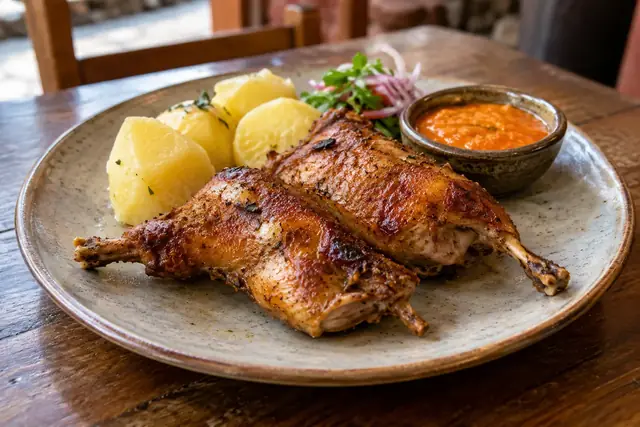
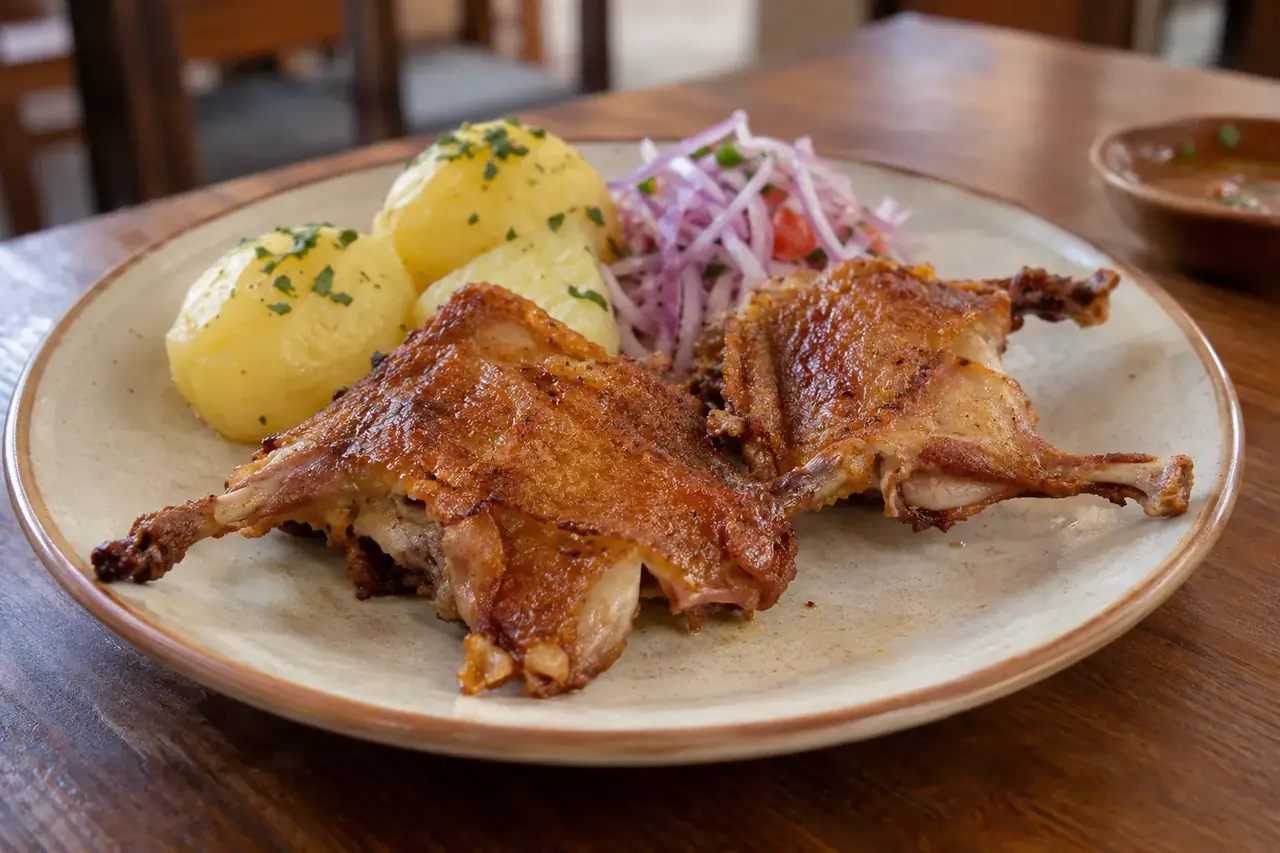
Cuy chactado (fried under a stone) is the Arequipa preparation, cuy al horno (in the oven) the one from Tipón, near Cusco. In Arequipa, La Nueva Palomino’s menu lists it; in Lima, Panchita’s. It often arrives whole, head included: ask about the presentation, the portion and the day’s availability before ordering.
A domestic animal of the Andes
Cuy is a domestic animal that originated in the Andes: according to Wikipedia, remains of cuyes appear in archaeological deposits 9,000 years old, and the animal was domesticated by around 2500 BCE at the latest. It was also used as a ritual offering, as at the temple of Kotosh, in the Huánuco region.
Even today, it is raised mainly on small family farms. According to Agraria.pe (2022), more than 817,000 producers raise it in Peru, particularly in Cajamarca, Junín, Cusco, Arequipa, Apurímac and Puno, and the Ministry of Agriculture devotes a national day to it, the second Friday in October (9 October in 2026). The animal’s place in Andean culture is such that the Last Supper painted in Cusco Cathedral shows Christ and the apostles in front of a cuy.
The cuy served in Peru is a farm animal, raised for food: it is not a pet diverted from its purpose.
The preparations, side by side
Wikipedia lists many: roasted in the oven, fried, stewed, in soup, as chicharrón, in a spicy sauce. The main ones:
| Preparation | What it is | Region | Presentation |
|---|---|---|---|
| Cuy chactado | Fried in plenty of oil under a stone that acts as a lid, until crisp | Arequipa and the southern Andes | Whole, flattened |
| Cuy al horno | Roasted in the oven, sometimes stuffed (cuy relleno) | Cusco, notably Tipón | Whole |
| Chicharrón de cuy | Fried in pieces | Arequipa and elsewhere | In pieces |
| Pepián de cuy | Cuy stew, with potatoes and rice; in Arequipa, made with peanuts and ground corn | Arequipa, Andes | In pieces, in sauce |
| Picante de cuy | In a sauce of rocoto and coriander | Andes | In pieces, in sauce |
| Pachamanca | Cooked with other meats on hot stones, underground | Andes | In pieces |
| Chiri uchu | Cold festive dish bringing together cuy, hen, charqui, corn, seaweed and fish roe | Cusco, in June (Corpus Christi, Inti Raymi) | On a platter |
The side dishes recur: boiled or golden potatoes, corn, broad beans, a hot sauce or a huacatay cream.
What arrives on the plate
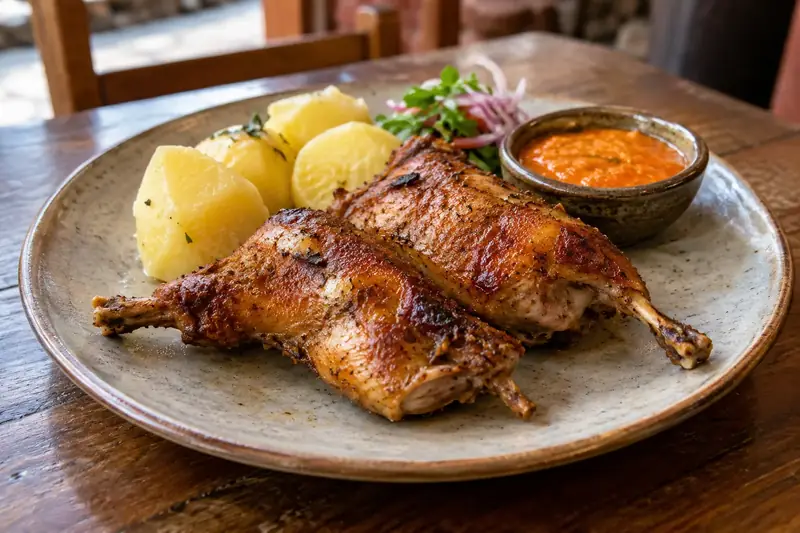
A whole cuy is a small animal: you can recognise the head and the feet. The skin of the chactado is crisp, the meat not very thick, around many small bones.
If the presentation puts you off, choose a preparation in pieces (chicharrón, pepián) or ask the restaurant to cut up the cuy in the kitchen. The useful questions:
- “¿Viene entero o en presas?” Whole or in pieces?
- “¿Para cuántas personas es?” For how many people?
- “¿Hay cuy hoy?” Is there cuy today?
Where to try it: places whose menu lists it
A published menu proves that the restaurant offers the dish, not that there is any left on the day of your visit. Always ask.
| Place | Preparation on the menu | Status |
|---|---|---|
| La Nueva Palomino, Arequipa | Whole cuy chactado, chicharrón de cuy; pepián de cuy on Saturday and Sunday | On the menu consulted on 3 October 2026; ask about the day’s availability |
| Panchita, Lima (Miraflores) | Whole fried cuy, potato picante with peanuts | On the menu consulted on 3 October 2026; ask about the day’s availability |
| Tipón, south of Cusco | Cuy al horno, pepián, chactado | The village cuyerías are well known according to El Comercio (2019); no place in the guide yet |
In Arequipa, the picanterías serve cuy chactado among their à la carte dishes: it is the simplest place to discover it.
Around Cusco, the village of Tipón, in the district of Oropesa, is known for its cuy al horno; El Comercio also mentions pepián and chactado there. The village is next to the Inca site of Tipón: you can combine the visit and lunch. We do not name any cuyería until we have either a published menu or a visit.
In Lima, a few criollo restaurants put it on their menu, such as Panchita; it is first and foremost a dish of the Andes.
Making it at home?
Our oven-roasted cuy is an adaptation, not a cuy chactado, with a farmed cuy raised for food and prepared by a professional. If the product is not available, it is better to discover the dish in Peru than to present another animal as an identical recipe.
Frequently asked questions
Do I have to eat cuy to have really experienced Peru?
No. It is a culinary tradition you can discover if it interests you; many other dishes also tell the story of the Andes. Ask about the preparation and the presentation before ordering, then choose freely.
Does cuy arrive whole on the plate?
Often, yes: cuy chactado and cuy al horno are served whole, head included. Chicharrón de cuy and pepián are served in pieces. Ask “¿Viene entero o en presas?” (whole or in pieces?).
Sources and dates
8 sources
Prices, opening hours and rules change: every piece of information cited links to its source, with the date it was consulted.
Sources consulted
- Wikipedia (Spanish), Cavia porcellus (domestication, family farming, preparations in Peru) (new tab) (consulted on 3 October 2026)
- Agraria.pe, more than 817,000 cuy producers in Peru (13 October 2022) (new tab) (consulted on 3 October 2026)
- Wikipedia (Spanish), Cuy chactado (new tab) (consulted on 3 October 2026)
- Marca Perú (PROMPERÚ), the cuisine of Arequipa (cuy chactado) (new tab) (consulted on 3 October 2026)
- PROMPERÚ, Andean cuisine (pachamanca, cuy chactado) (new tab) (consulted on 3 October 2026)
- El Comercio, the food route south of Cusco (Tipón, 15 June 2019) (new tab) (consulted on 3 October 2026)
- Wikipedia (Spanish), Gastronomía del Cusco (chiri uchu) (new tab) (consulted on 3 October 2026)
- Wikipedia (English), Guinea pig (the Last Supper in Cusco Cathedral) (new tab) (consulted on 3 October 2026)
How we choose and date our information: our method. Has something changed? Let us know.