
Briefing · area advised against by the FDFA
From Iquitos to the tri-border area: a briefing, not an itinerary
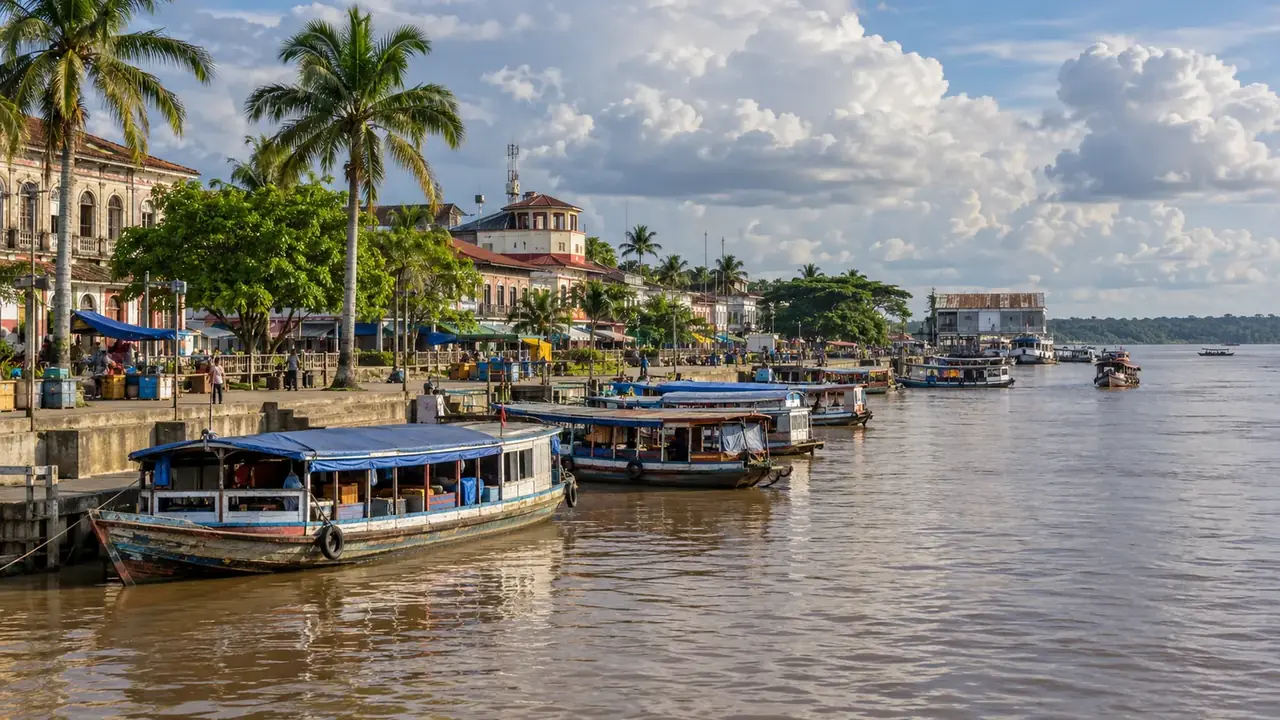
This briefing does not recommend this journey: it explains what it involves, for people who are finding out about it or who have already decided to make it, with the most recent official advice in front of them.
- Length
- Variable: depends on the river service and the formalities
- Pace
- At the pace of the river, the stops and the checks
- Regions
- Northern Amazon
Who is it for? People who are finding out about this journey or who have already decided on it, with time, a margin and trustworthy local support.
A briefing, not a suggested itinerary
This route crosses a region the FDFA advises against. SwissLima does not organise it and does not recommend it. This page explains the geography, the formalities and the questions to ask, for people who are finding out about it or who have already decided, with full knowledge of the facts, using the most recent advice.
To discover the river without this border: Iquitos and the rainforest in seven days.
Official advice first
The FDFA’s advice for Peru (published on 2 March 2026 and shown as valid on 12 October 2026) contains a section devoted to the border region with Colombia: it advises against going there, because of active smuggling groups, particularly along the Putumayo River. The tri-border area, where Peru, Colombia and Brazil meet, lies on this border. For the Amazon region as a whole, the same document recommends travelling with guides who know the region well and only boarding tourist boats on the Amazon with a tour operator or trustworthy guides, because of attacks on these boats. It also mentions possible blockades of river traffic during social conflicts.
That is why this journey appears in this guide as a briefing, outside the catalogue of itineraries. We do not organise it and do not recommend it. If you are considering it nonetheless, read the most recent version of the advice the day before departure, ask for a local assessment of your specific journey and let someone know your plans.
The geography: three towns, three countries, one river
Downstream from Iquitos, the Amazon flows east for several hundred kilometres, with no parallel road: the river is the thoroughfare for riverside villages, goods and passengers. At the border, three places face one another:
- Santa Rosa (Peru), a village on an island in the river, where the Peruvian immigration checkpoint is located;
- Leticia (Colombia), capital of the Colombian department of Amazonas, on the north bank;
- Tabatinga (Brazil), in the Brazilian state of Amazonas, right next to Leticia: you go from one to the other simply by crossing a street.
This closeness is misleading. Going from Santa Rosa to Leticia or Tabatinga means leaving Peru and entering another country, with two separate formalities. And moving freely between Leticia and Tabatinga does not count as an official entry into either country for continuing your journey.
What is known, and what needs confirming
| Item | What the sources establish | To confirm just before departure |
|---|---|---|
| Existence of a river service | In 2024, the Ministry of Transport published a review of a subsidised Iquitos–Santa Rosa service | That the service is running on your date, with which boat and which operator |
| Timetable, duration, fare | Not published here | Directly with the operator, in writing |
| Peruvian immigration control | Migraciones has announced stronger controls at Santa Rosa | Opening hours and the order of the procedures for your nationality |
| Entry into Colombia or Brazil | The responsibility of the country of entry’s immigration service (Migración Colombia, the Brazilian Federal Police) | The documents required for your nationality, on those countries’ official websites |
| Safety conditions | The FDFA advises against going to the border region with Colombia | The most recent version of the advice, and a local assessment |
An old source describes a service as it existed, not as it is today. A commercial contact does not replace reading the official advice.
Three separate preparations
The boat journey. Who operates the boat, where it leaves from, how long the journey takes, where you are put (seat, hammock, cabin), what is served on board, how the luggage is stored, what safety equipment there is (enough life jackets). What happens if the departure is postponed. Do not apply another traveller’s account, or the photo of another boat, to your own departure.
The formalities. The FDFA points out that entry and exit stamps matter and that a land or river crossing requires you to report to the immigration office; an incorrectly recorded entry can prevent your next exit. So you need to obtain your exit from Peru at Santa Rosa, then your entry into the next country from its own service. For what comes next, see Borders and documents.
The arrival. Where exactly do you land? Where do you sleep the first night? How do you continue: a flight from Leticia, a boat downstream into Brazil? No non-changeable connection should follow closely after the planned arrival.
The eight questions to ask the operator
- Which boat is it, and who operates it?
- Which departure is confirmed, from which pier?
- How long does the journey take, with which stops?
- Where do you sleep, and what does the ticket include (meals, water, bedding)?
- What are the rules for luggage, and where is it stored?
- What safety equipment is there on board?
- What happens if the departure is postponed or the river is blocked?
- Does the boat stop at Santa Rosa long enough for the exit formalities?
Discovering the river without crossing this border
If it is the river that attracts you, more than the border crossing, other stays make it possible in Loreto, outside the border region: a few nights in a forest lodge from Iquitos, or a boat trip to the Pacaya Samiria National Reserve from Nauta, upstream. The flooded forest, the oxbow lakes and the life of the riverside villages can be discovered there with an identified operator and nights really spent in the forest. The itinerary Iquitos and the rainforest in a week explains this choice in detail.
What to arrange in advance
- First of all: read the FDFA’s advice for Peru again, and that of the country of entry (Colombia or Brazil), the day before departure.
- The river service: operator, departure pier, type of boat and departure confirmed in writing.
- The formalities for leaving Peru and entering Colombia or Brazil, checked for your nationality.
- The next part of your journey, with no non-changeable booking just after the planned arrival.
What this route leaves out
- Timetables, fares and operators’ names: we do not publish them without a recent check, and this briefing is not for booking.
- Any guarantee of arrival or of safety.
Sources and dates
4 sources
Prices, opening hours and rules change: every piece of information cited links to its source, with the date it was consulted.
Figures and rules cited
- published on 2 March 2026 and shown as valid on 12 October 2026: FDFA travel advice for Peru: publication date and validity date shown (Peru)
Official source: FDFA, Conseils pour les voyages – Pérou (travel advice, in French) (new tab) , published on 2 March 2026 · consulted on 12 October 2026
Sources consulted
- FDFA, Conseils pour les voyages – Pérou (travel advice, in French) (new tab) : Border region with Colombia: “Travel to the border region with Colombia is not recommended” (our translation). Tourist boats on the Amazon only with a tour operator or trustworthy guides. (consulted on 1 October 2026)
- MTC: 2024 review of the subsidised Iquitos–Santa Rosa river service (new tab) : confirms that a service existed in 2024; confirms neither current timetables nor prices. (consulted on 25 September 2026)
- Migraciones: border control at Santa Rosa, tri-border area (new tab) : consulted on 25 September 2026. (consulted on 25 September 2026)
- Migraciones: essential information for tourists (new tab) (consulted on 25 September 2026)
How we choose and date our information: our method. Has something changed? Let us know.