
In short
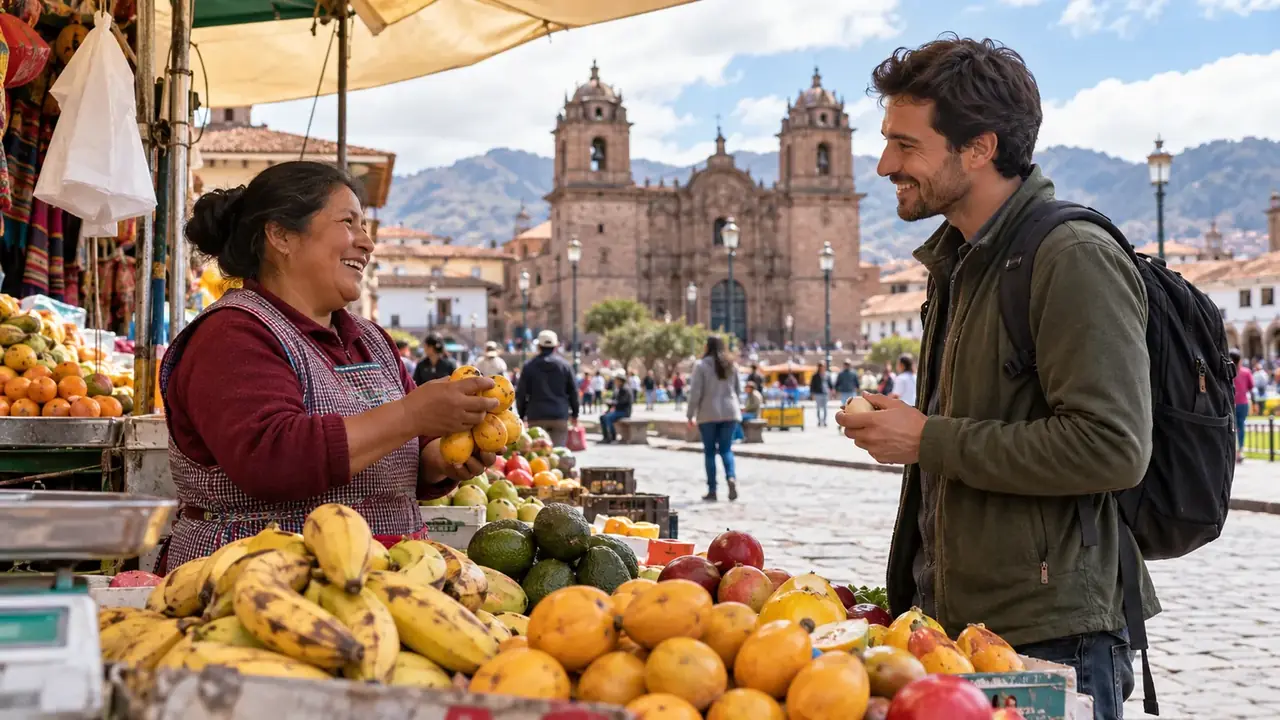
Distinguish four kinds of encounter: an artisan’s workshop, a visit to a farm or producer, a night with a family, a public festival. For each one, ask who organises it, who is paid and how much, and what may be photographed. A few ideas: Lamas and its Quechua neighbourhood, Titicaca (Uros, Taquile, Amantaní), Yarinacocha and Shipibo kené, Chincha and Afro-Peruvian culture, the artisans of Ayacucho, the Mantaro valley and Catacaos.
Four encounters, four agreements
| Encounter | What you do | What must be agreed | Who is paid |
|---|---|---|---|
| An artisan’s workshop | You watch a technique, sometimes try it, buy | The length, what may be filmed, the price of the demonstration or introduction | The artisan, directly, for their time and their pieces |
| The farm or producer | Cocoa, coffee, potatoes, quinoa, fishing: you follow one stage of the work | The programme, the actual harvest season, any meal | The family or cooperative, not just the transport provider |
| The homestay | You share a meal, an evening, sometimes a task | The bedding, the meals, the participation expected, the house rules | The family, with a known share if an agency is involved |
| The public festival | You watch a procession, a dance, a festival market | Nothing, except discretion: you do not step into the circle, you do not block a passage | Nobody: buy on the spot, from the festival vendors |
A demonstration organised for visitors is not a fake encounter, provided it is presented as such and paid for.
Before booking: three questions
- Who organises, and who decides the programme? Does the community or family choose what it shows, the times, the number of visitors?
- Who receives the money, and how much? An agency may very well pay a family properly; it must be able to say how.
- What is expected of you? Taking part in some work, clothing, a gift, a rule about photos.
See community visits: who organises, who receives the money?.
What you can learn, place by place
Lamas and the Wayku (San Martín). Near Tarapoto, the Wayku neighbourhood is the main centre of the Lamista Quechua-speaking community, part of which, according to tradition, is said to descend from Andean peoples who took refuge in the forest in the 15th century. You learn about pottery and weaving there, paying the person who runs the workshop. See Lamas.
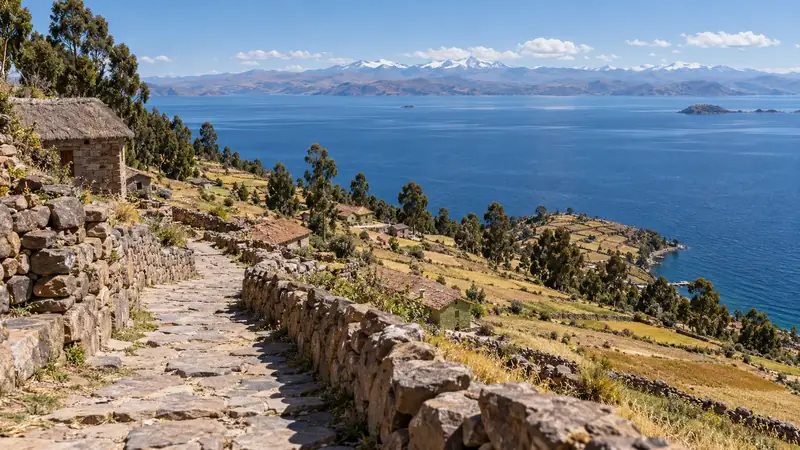
Lake Titicaca: three ways of experiencing the lake.
- The Uros live on about a hundred floating islands of totora reeds, near Puno; they have spoken Aymara and Spanish for centuries, their original language having died out. You learn how an island is built and maintained; the visit is short.
- On Taquile, the textile art is inscribed by UNESCO: the men knit the hats (chullos), the women weave the wide belts whose patterns follow the farming calendar. The community has built a reception system that it controls (accommodation, meals, guides).
- On Amantaní, there is no hotel: families host visitors for the night, generally through guides and agencies. You share the meal and the evening.
See Puno and Titicaca.
Yarinacocha and the Shipibo-Konibo (Ucayali). This Panoan-speaking people, 34,152 people according to the 2017 census, lives along the Ucayali and around Lake Yarinacocha, near Pucallpa. The women draw kené, geometric patterns recognised as cultural heritage of the Nation in 2008, on textiles and ceramics. You learn to read these patterns and to tell an embroidered piece from a printed copy, buying directly from the artists. In Lima, Shipibo families live in Cantagallo, where you can buy at fairs open to the public. See Pucallpa and Yarinacocha and the Rímac.
Chincha and El Carmen (Ica). One of the great centres of Afro-Peruvian culture, heir to the Africans enslaved on the valley’s haciendas. You learn about zapateo and music, the Christmas dances of the Hatajo de Negritos, inscribed by UNESCO in 2019, and a cuisine of its own: sopa seca, carapulcra. The festivals are experienced on their dates, not on demand. See Chincha.
The artisans.
- In Catacaos, near Piura: gold and silver filigree jewellery, including the “dormilonas” earrings, and toquilla straw hats, woven mainly by women.
- In Chulucanas, near Piura: the black pottery of La Encantada, protected by a designation of origin since 2006.
- In Ayacucho: the retablo, a painted box filled with figurines, born of the “cajón de San Marcos” carried to protect livestock; and sculpture in piedra de Huamanga, a local alabaster.
- In the Mantaro valley, near Huancayo: mates burilados, gourds engraved with a burin, especially in Cochas Chico and Cochas Grande; one piece takes two to three days of work.
- In Lima, Gamarra shows the other side of textiles: that of industry and workshops. See Gamarra.
Ask each artisan about the material, the time spent and what the piece represents: the answer is part of what you are buying. See crafts: the material, the origin, the maker.
Using the right names
- Peru recognises indigenous or original peoples; the Ministry of Culture presents them one by one in its database of indigenous peoples (BDPI), with their language and territory. Reading it before a visit is the best preparation.
- Quechua and Aymara refer to languages and peoples; there are several varieties of Quechua (Lamista, Cusco, Ayacucho…).
- Shipibo-Konibo (Panoan language), Asháninka and Yanesha (Arawakan languages) are different Amazonian peoples. “Yanesha”, which means “we, the people”, replaced the colonial name “Amuesha” around 1980: use the name the people chose for itself.
- Afro-Peruvian culture refers to the heritage of the Africans brought to Peru.
A few words in your hosts’ language are always well received. See local customs and the glossary.
What SwissLima offers, and does not offer
At present, we do not sell any community visits: the places above are ideas, not partnerships. We will never sell automatic encounters, photographs of people included in a price, or visits to a producer who has not agreed to it. If we ever offer encounters, it will be with people who have agreed to it, and we will say so clearly.
Frequently asked questions
Should you bring gifts?
For a homestay, as on Amantaní, the custom is to bring basic foodstuffs (rice, oil, fruit) or school supplies rather than sweets. For a workshop visit, the best gift is a direct purchase, at the price asked.
Can you visit a community without being invited?
No. A neighbourhood or a village is a place where people live. Go through a visit arranged in advance, paid for, where you are told what is possible. A public festival is different: you attend it as a spectator, discreetly.
Sources and dates
5 sources
Prices, opening hours and rules change: every piece of information cited links to its source, with the date it was consulted.
Sources consulted
- UNESCO, Taquile and its textile art (2008) (new tab) (consulted on 2 October 2026)
- Ministry of Culture, database of indigenous peoples: Shipibo-Konibo (new tab) (consulted on 2 October 2026)
- Ministry of Culture, database of indigenous peoples: Yanesha (new tab) (consulted on 2 October 2026)
- PROMPERÚ, the sopa seca of Chincha (new tab) (consulted on 2 October 2026)
- Wikipedia, Uru people, Taquile, Amantaní (English); Retablo ayacuchano, Piedra de Huamanga, Mate burilado, Catacaos, Cerámica de Chulucanas (Spanish) (new tab) (consulted on 2 October 2026)
How we choose and date our information: our method. Has something changed? Let us know.