In short
Four nights in Tarapoto are enough for a first discovery: the Ahuashiyacu waterfall, Lamas and its Quechua quarter of the Wayku, a cacao visit, and a day at the Laguna Azul in Sauce. Add two to three nights in Moyobamba for the Alto Mayo, its orchids and the flooded forest of Tingana. A base in town limits changes of accommodation.
One gateway, several directions
Tarapoto, at an altitude of about 350 metres, is one of the towns most visited by Peruvian travellers, with an airport linked to Lima. It stretches between the wooded hills of the Cordillera Escalera Regional Conservation Area, to the north, and a farming valley of rice, corn, coffee and cacao, to the south. Distances: Iquitos–Nauta 103 km (the only road out of Iquitos); Tarapoto–Ahuashiyacu waterfall 14 km; Tarapoto–Lamas 39 km; Tarapoto–Sauce 57 km; Tarapoto–Moyobamba 114 km; Moyobamba–Rioja 25 km; Tarapoto–Yurimaguas 127 km.
The places around the town do not form a single excursion: Ahuashiyacu is half a day, Lamas a day, Sauce and its lagoon a long day or two, Moyobamba and the Alto Mayo a separate stay. Trying to visit everything in two days mostly means multiplying the journeys.
| Outing | Distance from Tarapoto | Format | What you do there |
|---|---|---|---|
| Ahuashiyacu waterfall | 14 km | Half a day | A short walk, a swim in the pool |
| Lamas and the Wayku | 39 km | A day | Town and Quechua quarter, crafts |
| Sauce and the Laguna Azul | 57 km | A long day or two days | Lagoon, rest, a boat |
| Moyobamba, Rioja, Tingana | 114 km | Two to three days | Orchids, hot springs, flooded forest by canoe |
Ahuashiyacu, the nearest waterfall
14 km from the town, on the road to Yurimaguas, the Ahuashiyacu waterfall (“the water that laughs” in Quechua) falls in two drops: a first of about 60 metres, with no developed access, and a second of about 40 metres, which ends in a pool about twelve metres across, from 30 cm deep at the edges to 2.5 metres in the middle. It lies in the buffer zone of the Cordillera Escalera; its conservation is entrusted to a local association. Come early or on a weekday: the site is very busy at weekends.
Lamas: a visit based on meeting people
Lamas, the “three-storey town”, is spread over a hill between 310 and 920 metres. It calls itself the “folklore capital” of the Amazon. Its history is unusual: according to tradition, part of its population is descended from the Chancas and the Pocras who, defeated by the Inca Pachacútec around 1438, are said to have left the Andes for the forest; the Spanish founded the town in 1656.
Today, the Wayku, a quarter close to the town, is the main centre of the Lamista Quechua-speaking community, who live there and celebrate their festivals there. It is a place where people live, not an open-air museum. Look for a visit arranged in advance in which the residents and their work have a real place: a pottery or weaving workshop, paid to the person who runs it. Ask permission before taking photos, and buy directly from the craftspeople.
Sauce and the Laguna Azul
Sauce, 57 km to the south-east, lies on a large lagoon surrounded by hills, the Laguna Azul. People come for the water, the calm, a boat ride and a fish meal.
A day or two nights? In a day, you see the lagoon between two journeys of about an hour each according to the road calculation, often more. With two nights, what you buy above all is time: dawn on the water, swimming, reading. Before choosing, ask what is really accessible from the accommodation: the shore, whether swimming is allowed, a boat, food, and the return journey. The useful question is: “what can I do without paying for another transfer once I have arrived?”.
Moyobamba, Rioja and the Alto Mayo
Moyobamba, 114 km to the north-west, at about 860 metres, is the capital of the San Martín region and the first town founded by the Spanish in the Peruvian Amazon, in 1540. It is nicknamed the “city of orchids”: some 3,500 species grow in the region. Around it: the former river port of Tahuishco on the Mayo, the San Mateo hot springs, the Gera waterfalls and the Cave of the Huácharos.
Rioja, 25 km from Moyobamba, founded in 1782, opens onto the upper Mayo Valley and its rice fields.
Tingana is the most unusual experience in the Alto Mayo: a swamp forest of aguaje palms and renaco trees, managed by a community association, ADECARAM, which takes care of its conservation. You explore it by canoe, in silence, to watch monkeys, birds and fish. from Moyobamba, about 45 minutes by road to Puerto Boca de Huascayacu, then 20 minutes by boat; a day visit; best period from May to November.
Give the Alto Mayo nights of its own, in Moyobamba, rather than piling up detours from Tarapoto. Choose a theme (orchids, birds, flooded forest, producers), then the right contact person: a general guide and a bird specialist do not meet the same need.
Cacao and coffee, from the bean to the cup
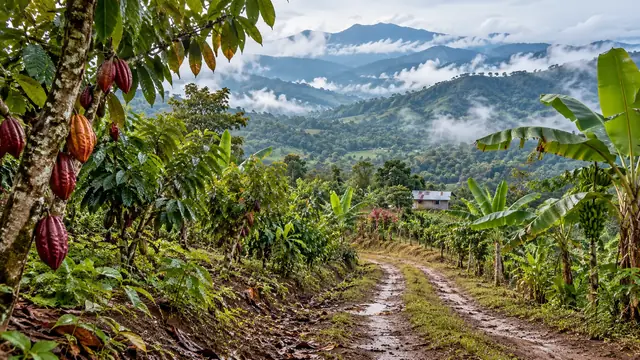
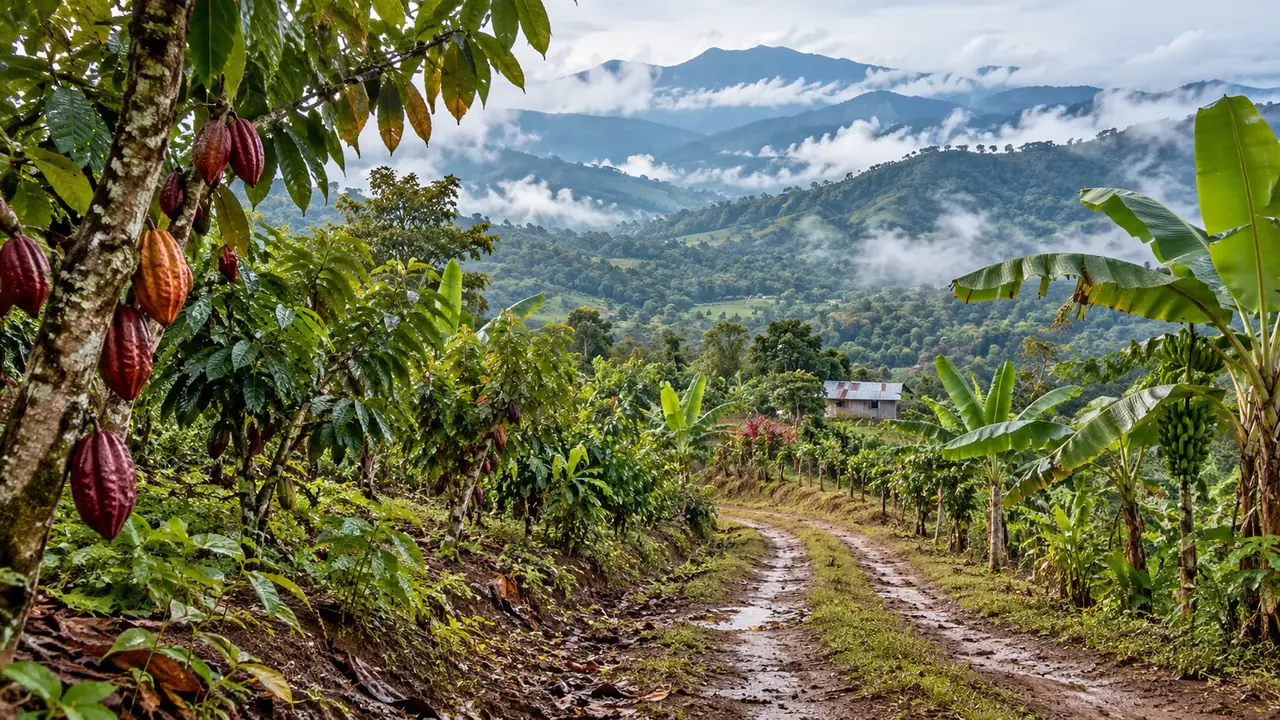
The valleys around Tarapoto, Lamas and Moyobamba produce cacao and coffee. A visit to a farm or a cooperative lets you follow the whole chain: the pod picked by hand, the fermentation of the beans, drying in the sun, roasting, then chocolate or coffee in the cup. Ask who is welcoming you, what you will taste and whether what you buy on the spot goes to the producer. See Amazonian cooking for juane, tacacho con cecina and patarashca.

Three typical stays
Version 1: a first discovery, without changing accommodation. Four nights in Tarapoto: a quiet arrival, Ahuashiyacu, Lamas, and a free day or a cacao visit.
Version 2: Sauce to slow down. Two nights in Tarapoto, then two nights by the Laguna Azul.
Version 3: the Alto Mayo. Two nights in Tarapoto, then two to three nights in Moyobamba, with Tingana, the orchids and the hot springs; back to Tarapoto or on to Chachapoyas.
Three concrete days
- A quiet nature day: Ahuashiyacu in the morning, lunch in town, a free late afternoon.
- A cultural day: Lamas in the morning, with a visit to the Wayku arranged in advance, lunch there, a cacao visit in the afternoon if one is arranged.
- A water day: an early departure for Sauce, a boat and a swim, back in the late afternoon.
Do not string all three together without a free day: it is hot and humid, and the roads are tiring.
Tarapoto or accommodation in the middle of nature?
| Tarapoto town | Accommodation in nature (Cordillera Escalera, by the lagoon) | |
|---|---|---|
| Advantages | Restaurants, services, easy departures, evenings | Calm, birds, waking up in the forest |
| Limits | Noise from mototaxis, heat | A journey for every outing, meals on site, access sometimes by track |
| Who it suits | Short stays, first discoveries | Long stays, wildlife watchers, rest |
For accommodation in town, ask for a specific room: street side or courtyard side, ventilation, noise in the evening. The word “centre” does not tell you everything.
What we will not sell you
No automatic meeting with communities, no photographing of people included in a price, no unannounced visit to a producer who has not agreed to anything. A community is not an attraction open by default.
According to the CDC, yellow fever vaccination is recommended for the Amazonian regions, and malaria is present east of the Andes below 2,500 metres: see a travel medicine centre. The FDFA recommends caution in the Amazon region, where road blockades linked to local conflicts may occur.
Frequently asked questions
Is Tarapoto really the Amazon?
It is the “selva alta”, the forest of the first foothills, cooler and more accessible than the plain around Iquitos. You see waterfalls, wooded hills and farmed valleys rather than the great flooded forest.
Can you swim at Ahuashiyacu?
Yes, in the pool at the foot of the second fall, from 30 cm to 2.5 metres deep depending on the spot. The first, higher fall is not accessible.
How can you visit Lamas respectfully?
Go through a visit arranged in advance, with a paid workshop or exchange, ask before taking photos and buy directly from the craftspeople of the Wayku.
Sources and dates
7 sources
Prices, opening hours and rules change: every piece of information cited links to its source, with the date it was consulted.
Figures and rules cited
- Iquitos–Nauta 103 km (the only road out of Iquitos); Tarapoto–Ahuashiyacu waterfall 14 km; Tarapoto–Lamas 39 km; Tarapoto–Sauce 57 km; Tarapoto–Moyobamba 114 km; Moyobamba–Rioja 25 km; Tarapoto–Yurimaguas 127 km: Road distances in the northern Amazon (Loreto and San Martín) . Iquitos is linked to the rest of the country only by air and by river.
Press or reseller: Road routes calculated on OpenStreetMap (FOSSGIS routing server) (new tab) · consulted on 2 October 2026 - from Moyobamba, about 45 minutes by road to Puerto Boca de Huascayacu, then 20 minutes by boat; a day visit; best period from May to November: Tingana (Alto Mayo): access and season (Tingana, Alto Mayo, Moyobamba) . Site run by the community association ADECARAM (aguaje palm swamps and renaco swamps of the Alto Mayo).
Official source: PROMPERÚ, the Tingana experience (new tab) · consulted on 2 October 2026
Sources consulted
- Wikipedia (Spanish), Catarata de Ahuashiyacu, Lamas (new tab) (consulted on 2 October 2026)
- Wikipedia (English), Tarapoto, Moyobamba (new tab) (consulted on 2 October 2026)
- PROMPERÚ, the Tingana experience (access, management, season) (new tab) (consulted on 2 October 2026)
- PROMPERÚ, five places around Tarapoto (new tab) (consulted on 26 September 2026)
- PROMPERÚ, San Martín region (new tab) (consulted on 25 September 2026)
- CDC Yellow Book, Peru (yellow fever, malaria) (new tab) (consulted on 2 October 2026)
- FDFA, Conseils pour les voyages – Pérou (travel advice, in French: Amazon region) (new tab) (consulted on 1 October 2026)
How we choose and date our information: our method. Has something changed? Let us know.