In short
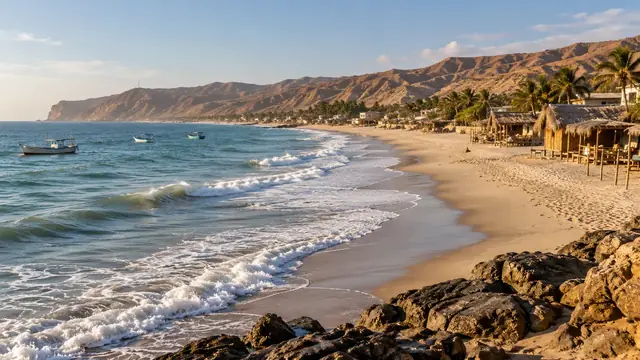
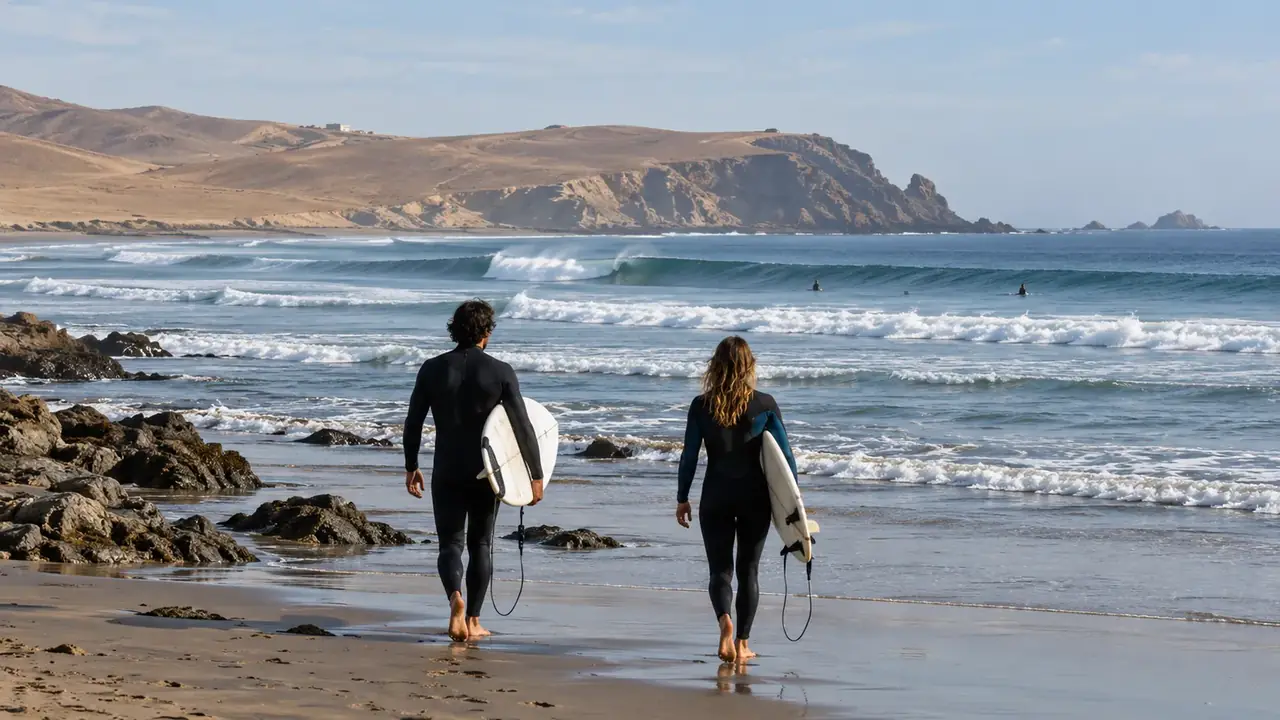
Beginner: Huanchaco or Punta Hermosa, with a school that chooses the beach of the day. Experienced surfer: Chicama, Pacasmayo and Lobitos, from April to October when the south swell comes in. Warm water: Máncora and the north of Piura. South of Máncora, the water stays cool all year round: bring a wetsuit. Keep one main base rather than a tour of five beaches, and days out of the water for companions.
Six bases compared
| Base | Wave | For what level | Best period | Water | Out of the water |
|---|---|---|---|---|---|
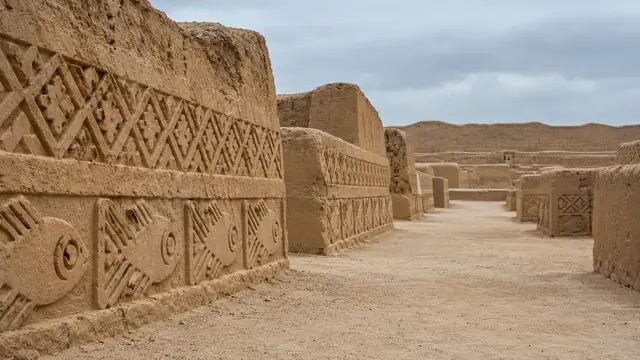
| Huanchaco (17 km from Trujillo) | Left-hand point break over sand, in the centre of the village; several beaches around | From beginner (with a school) to experienced | More consistent from April to October, with a swell of 1 to 3 m, according to Save The Waves | Cool | Chan Chan, Huacas de Moche, caballitos de totora |
| Chicama (Puerto Malabrigo, 70 km from Trujillo) | Very long left-hand point break, the main section about a kilometre long | Experienced, self-sufficient | From Holy Week to September; flat without swell | 17 to 22 °C | El Brujo less than an hour away; very quiet port |
| Pacasmayo (90 km from Trujillo) | Long left at El Faro; steady wind | Experienced; kitesurfing and windsurfing | With the south swell | Cool | Historic pier and station; stop on the way to Chiclayo |
| Lobitos (Talara province) | Several waves depending on the swell and the tide | Several levels depending on the wave: ask on site | With the swell | Milder | Very quiet village, few facilities |
| Máncora | Waves for surfers, beaches for swimming on some days | All, depending on the spot and the day | Warmest water from December to May | 24 to 26 °C from December to May, 21 to 23 °C afterwards | Turtles at El Ñuro, whales, from July to the end of October |
| Punta Hermosa (36 km from Lima) | Several beaches: Señoritas, Caballeros, Pico Alto offshore for very big waves | Beginner (with a school) to expert | Swell all year round; beach in the southern summer | Cool all year round | Lima, Pachacámac |
Distances are by road. The levels and seasons come from published sources and do not describe the state of the sea on a given day. See the north coast and Punta Hermosa.
Five words for understanding a wave
- Swell: the energy that comes in from the open ocean. Its height is not enough; its period (the time between two waves) and its direction matter just as much. In Peru, the big swells come mainly from the south, during the southern winter.
- Wind: light or blowing offshore, it smooths the waves, often in the morning; onshore, it chops them up. The steady afternoon wind delights the kitesurfers of Pacasmayo, not the surfers.
- Tide: some waves only work at high tide, others only at low tide.
- Current: next to the waves, a rip current (“corriente de retorno”) carries water back out to sea; a school teaches you to spot it and get out of it.
- The bottom: sand, pebbles or rock. A point break peels along a headland, consistently; a beach break changes with the sandbanks.
These pointers help you understand what an instructor says; they do not replace their opinion on the wave of the day.
School, rental or guide?
| Option | What it includes | For whom | What to ask |
|---|---|---|---|
| Lessons at a school | Suitable board, wetsuit, instructor in the water, choice of beach | Beginners, coming back after a long break | Number of students per instructor, time in the water, cancellation if the sea is not suitable |
| Rental only | Board, sometimes wetsuit | Self-sufficient surfers | Condition of the equipment, deposit, opening hours, advice on the day’s spots |
| Guide or accompaniment | Choice of spots according to the swell, transport, sometimes photos | Experienced surfers who want the good sessions | Areas covered, transport included, level required |
Ask for proof of payment (boleta) and the cancellation conditions in writing. See what to book.
The north or Punta Hermosa: two kinds of logistics
- The north is reached by plane from Lima: Trujillo for Huanchaco, Chicama and Pacasmayo; Talara, Piura or Tumbes for Lobitos and Máncora. People come for a week or more, with one main base.
- Punta Hermosa is 36 km from Miraflores along the southern Panamericana: a day trip from Lima, or a few nights on the spot. On summer weekends, the road and the beaches are busy.
Wetsuit, board, luggage
- The wetsuit. South of Máncora, the water stays cool all year round: a full wetsuit is the rule. In Máncora and further north, from December to May, a lycra top or a shorty is often enough. Ask the school what it provides and in what sizes.
- The board. Schools and rental shops have boards for hire. If you bring your own, check the price of sports luggage for each flight, domestic ones included, and use a hard case.
- The rest. Water-resistant sun cream, a lycra against the sun, booties if the bottom is rocky, a small kit for cuts.
Days out of the water
A surf trip includes days without waves, and sometimes a companion who does not surf. Plan:
- around Trujillo: Chan Chan, the Huacas del Sol y de la Luna, El Brujo and the Cao museum;
- around Máncora: the turtles at El Ñuro, the whales, from July to the end of October, Vichayito for resting;
- around Lima: Pachacámac, the museums, a day in Barranco.
See Trujillo and the surfing in the north itinerary.
One base, not a tour
For a week of surfing, choose one main base and keep a second as an option. A tour of five beaches gives the impression of covering the north, but takes away a good part of your time in the water. The waves often justify staying longer in the same place.
The tradition of the caballitos de totora
In Huanchaco, fishermen still use caballitos de totora, reed boats that are ridden astride to get past the waves. Save The Waves sees it as one of the places where people were riding waves more than 2,500 years ago, and it is one of the reasons Huanchaco was designated a World Surfing Reserve, in 2013.
Frequently asked questions
Can you learn to surf in Peru?
Yes, with a school. Huanchaco, near Trujillo, and Punta Hermosa, south of Lima, have schools that choose a suitable beach each day. PROMPERÚ also mentions Mejía (Arequipa) and Boca del Río (Tacna) as beaches for beginners. Chicama and the big waves of Punta Hermosa are not.
Do you need a wetsuit?
South of Máncora, yes: the water rarely exceeds 22 °C, and in Chicama it ranges from 17 to 22 °C. In Máncora and further north, the water is warmer, from 24 to 26 °C from December to May. Ask the school what it provides.
Sources and dates
4 sources
Prices, opening hours and rules change: every piece of information cited links to its source, with the date it was consulted.
Figures and rules cited
- from July to the end of October: Humpback whale-watching season on the Piura and Tumbes coast (El Ñuro, Cabo Blanco, Los Órganos (Piura), Punta Sal (Tumbes)) . No sighting is guaranteed.
Press or reseller: Infobae (agencies), whale watching in the Mar Tropical de Grau reserve (25 June 2026) (new tab) , published on 25 June 2026 · consulted on 2 October 2026
Sources consulted
- PROMPERÚ, why Peru is a surfing destination (Chicama, Huanchaco, beaches for beginners) (new tab) (consulted on 2 October 2026)
- Save The Waves, Huanchaco World Surfing Reserve (2013) (new tab) (consulted on 2 October 2026)
- PROMPERÚ, Huanchaco (new tab) (consulted on 26 September 2026)
- Indecopi, rights of users of tourist services (proof of payment, complaints) (new tab) (consulted on 2 October 2026)
How we choose and date our information: our method. Has something changed? Let us know.