In short
Chicha morada is a non-alcoholic drink made from purple corn; chicha de jora, a fermented drink of sprouted corn, slightly alcoholic. Pisco is a grape brandy with a designation of origin, the base of pisco sour (with egg white) and chilcano. Emoliente is a hot drink of barley and herbs. Avoid tap water and ice.
With or without alcohol: the table
| Drink | What it is | Alcohol |
|---|---|---|
| Chicha morada | Infusion of purple corn, fruit and spices, sweetened | No |
| Chicha de jora | Fermented drink of sprouted corn (the “jora”) | Yes, low |
| Chicha de guiñapo | Fermented chicha of sprouted purple corn, in Arequipa | Yes, low |
| Emoliente | Hot drink of toasted barley and herbs | No |
| Pisco | Grape brandy, with a designation of origin | Yes, strong |
| Pisco sour, chilcano | Pisco cocktails | Yes |
| Masato | Fermented cassava drink, in the Amazon | Yes, variable |
| Inca Kola | Yellow soft drink | No |
The word “chicha” on its own does not tell you whether there is alcohol: ask “¿Es chicha morada o chicha de jora?”.
Chicha morada, non-alcoholic
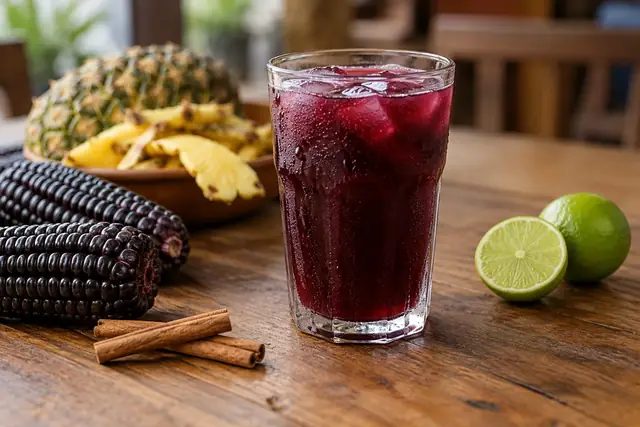
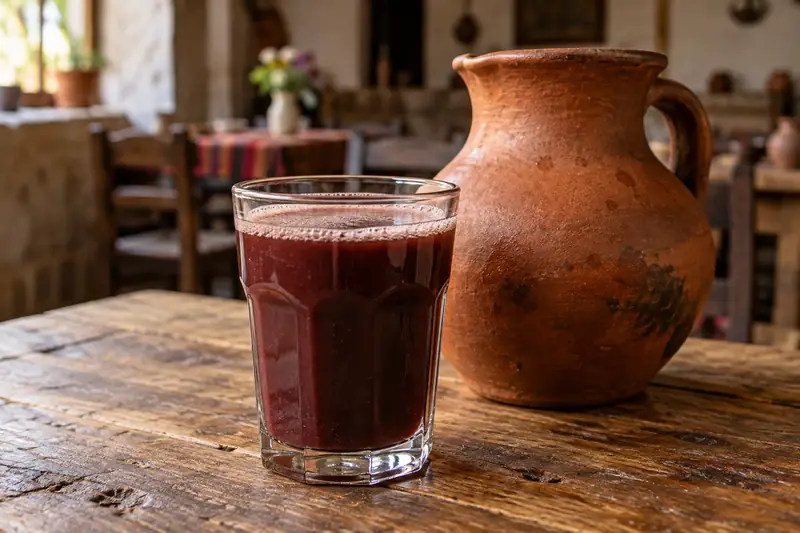
Chicha morada is made with purple corn (maíz morado), a variety grown in the Andes. According to Wikipedia, the homemade version boils the cobs with pineapple peel, pieces of quince, cinnamon and cloves; it is strained, left to cool, then sugar or chancaca (unrefined cane sugar), chopped fruit and lime are added. There is no fermentation: it is a non-alcoholic drink.
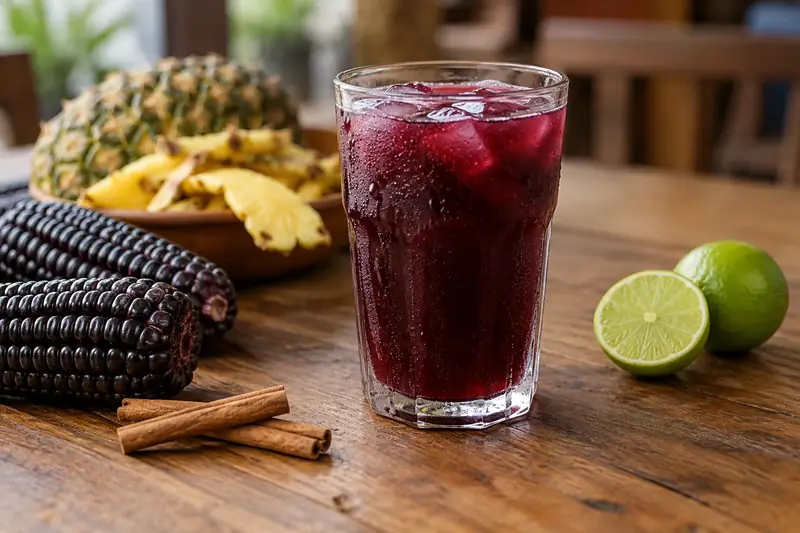
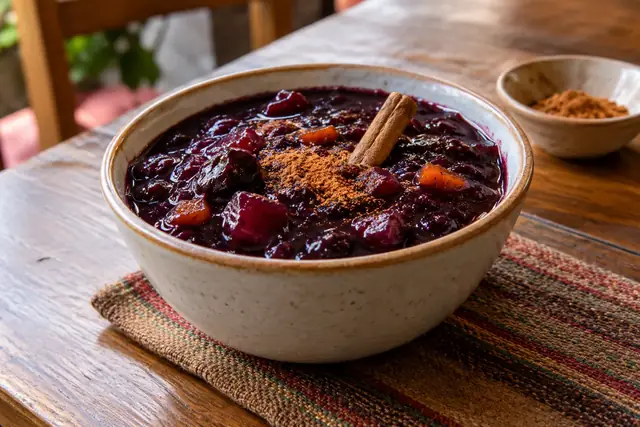
It comes in three forms: homemade, as a powder to dilute (sugar, acidifiers, flavourings), or in industrial bottles. In a restaurant, ask whether it is homemade: “¿Es casera?”. Thickened with starch, the same base gives mazamorra morada, a dessert.
The formats: by the glass (“vaso”), by the jug (“jarra”) or by the litre. A menu that announces a jug without saying how much it holds does not let you compare: ask how many glasses it serves. See our chicha morada recipe.
Chicha de jora, fermented
Jora is corn that has been sprouted, then dried and ground. According to Wikipedia, making it takes about a month: sprouting under leaves, drying in the sun, grinding, long cooking of the flour in water with herbs, sometimes chancaca, then fermentation for several days. The result is a cloudy, tangy corn beer, slightly alcoholic (from 1 to 3 % according to the same source), which varies according to the region and the person who makes it.
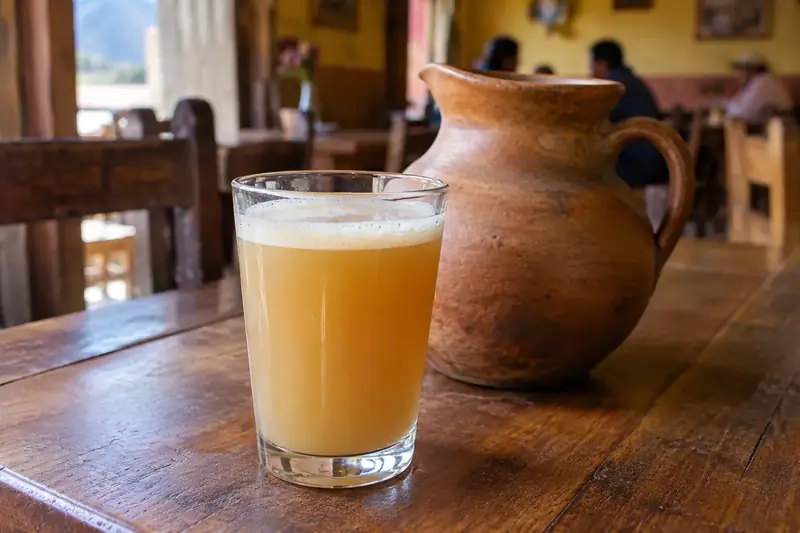
It is drunk in the chicherías and picanterías of the southern Andes and the north, and is also used in cooking: cabrito and northern seco are often simmered in chicha de jora. In Arequipa, chicha de guiñapo is made from sprouted purple corn; a picantería such as La Nueva Palomino sells it by the half-litre, by the litre or by the jug.
Pisco: a protected grape brandy
Pisco is a grape brandy. A decree of January 1991 made it a Peruvian designation of origin, reserved for brandies distilled on the coast of the departments of Lima, Ica, Arequipa and Moquegua and in the Locumba, Sama and Caplina valleys, in Tacna. The Peruvian technical standard defines it as a brandy obtained exclusively by distilling fresh, recently fermented musts of “pisquero” grapes. PROMPERÚ stresses that no ingredient other than fresh must goes into making it.
The eight grape varieties fall into two families: the non-aromatic ones (Quebranta, Mollar, Negra criolla, Uvina) and the aromatic ones (Italia, Moscatel, Torontel, Albilla).
The three categories:
- Puro: a single grape variety. Pisco puro made from Quebranta is the classic base for pisco sour.
- Acholado: a blend of several grape varieties or several piscos.
- Mosto verde: distilled before fermentation has finished; it takes more grapes per litre, which makes it more expensive. It is not sweet for all that.
Pisco is also produced, under this name, in Chile: both countries claim its origin. The fourth Sunday in July has been pisco day in Peru since a ministerial resolution in 1999.
Pisco sour and chilcano
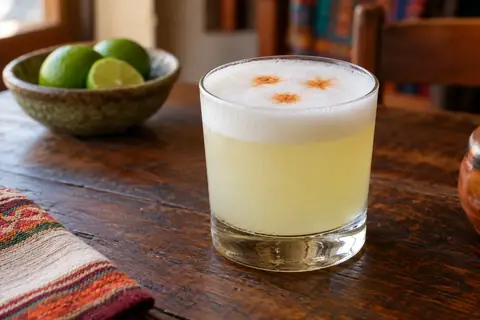
- Pisco sour: pisco, lime juice, sugar syrup (“jarabe de goma”), beaten egg white and a few drops of Angostura bitters. The first written mentions date from Lima magazines of 1920 and 1921, according to Wikipedia; Peru devotes a day to it, the first Saturday in February. Some menus also offer a more expensive “catedral” pisco sour: ask what sets it apart.
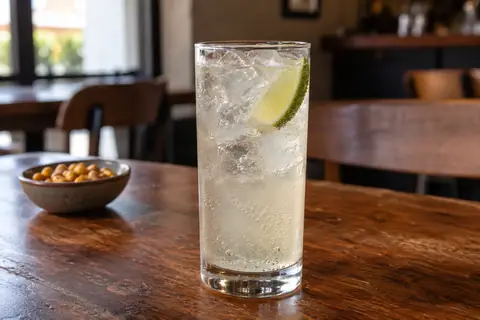
- Chilcano: pisco, lime and ginger ale over ice, with a few drops of Angostura; a long cocktail, simple to make.
- The others: pisco punch (pisco, lime and pineapple), algarrobina (pisco, evaporated milk, carob syrup), capitán (pisco and vermouth), macerados (pisco macerated with fruit or herbs).
Allergies: pisco sour contains raw egg white, algarrobina contains milk. Mention it or choose a chilcano.
In moderation: a pisco sour is drunk like a strong cocktail, not like a drink with your meal. At altitude, in Cusco or Puno, the CDC advises avoiding alcohol for the first 48 hours: see altitude.
Emoliente, the hot street drink
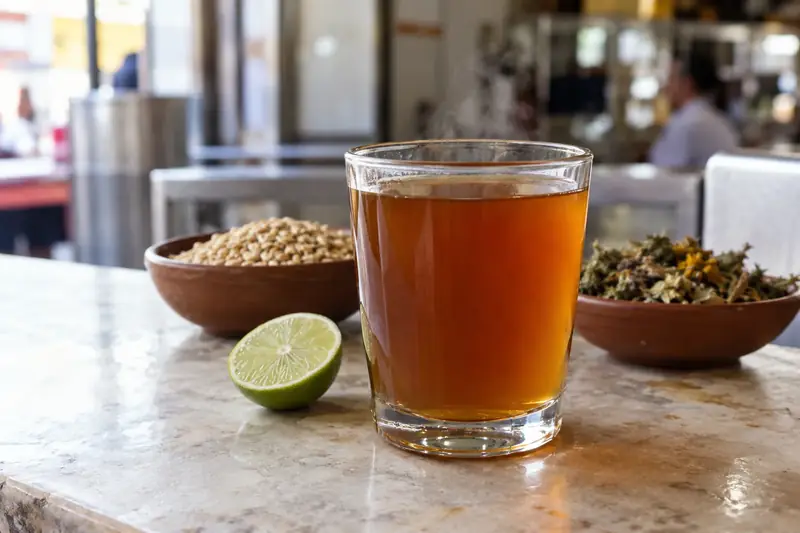
Emoliente is a hot drink sold in the morning and evening by emolienteros, with their carts, on the street corners of Lima. According to Wikipedia, it is made with toasted barley, plant extracts (horsetail, linseed, alfalfa, plantain, boldo), sugar and lime juice; the “especiales” versions add honey, pollen, carob syrup or other plants. It is drunk hot, more or less sweet: ask for “poco dulce”.
Medicinal properties are attributed to it; this guide repeats none of them. If you are pregnant, breastfeeding or taking medication, ask for the list of plants before drinking it.
Juices, lemonades and soft drinks
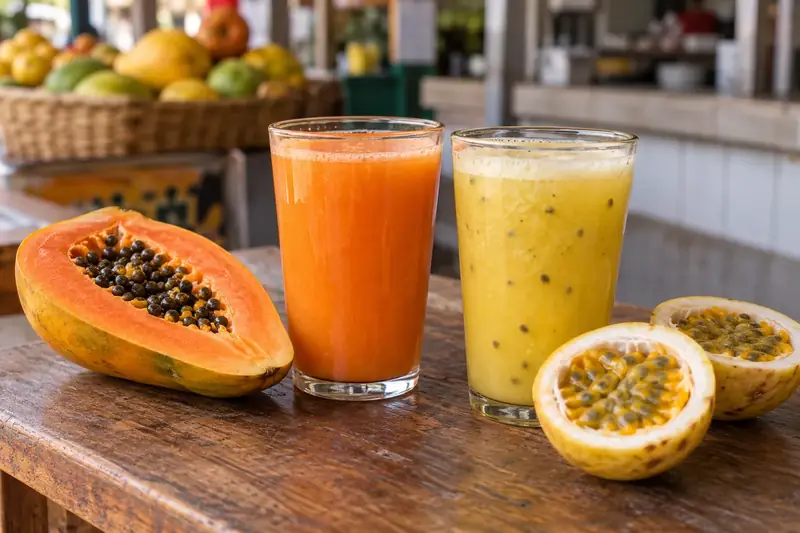
- Juices (“jugos”): papaya, pineapple, orange, “surtido” (mixed), strawberry with milk. They are often served sweetened: ask for “sin azúcar” or “poco azúcar”, and specify “sin hielo” (without ice).
- Limonada: lime, water and sugar, sometimes blended with ice (“frozen”).
- In the Amazon: aguajina, juice of the aguaje fruit, cocona juice, and fermented drinks such as masato, most often made from cassava, which contain alcohol.
- Inca Kola: a sweet yellow soft drink, sold since 1935, whose main ingredient is lemon verbena (hierba luisa), according to Wikipedia, the formula remaining secret. It is the drink that often goes with a chaufa or a pollo a la brasa.
The CDC points out that drinks in sealed bottles and soft drinks are generally safe, but not ice or tap water. A juice squeezed in front of you with treated water reduces the risk, without eliminating it.
Coffee, tea and chocolate
Peru is a major coffee producer: according to Wikipedia, it grows in the valleys where the Andes meet the forest, in the north (Cajamarca, Amazonas, San Martín, Piura), the centre (Junín, Pasco, Huánuco) and the south (Cusco, Puno, Ayacucho), mostly by smallholders who farm less than five hectares.
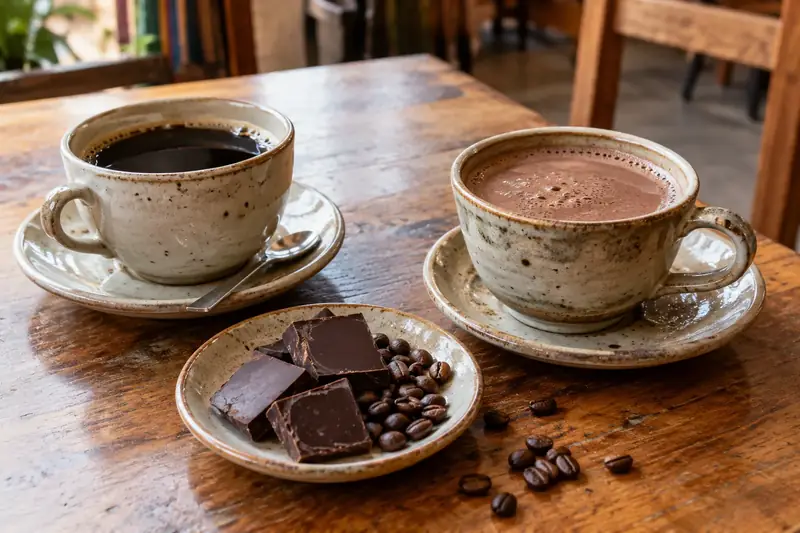
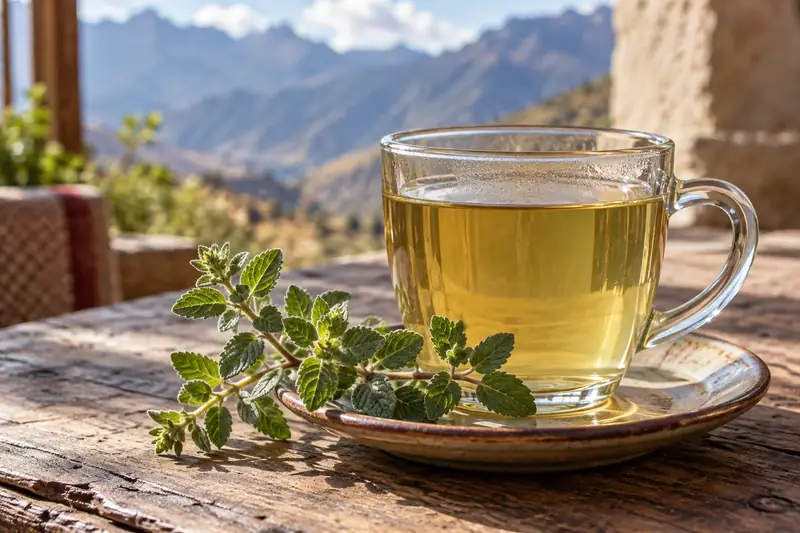
In a sanguchería, you are more likely to be served a café pasado: a very concentrated drip-filtered coffee, topped up with hot water. Infusions (“mates”) are everywhere: the menu at La Nueva Palomino, in Arequipa, offers camomile, coca, lemon verbena, anise, citron or muña, an Andean mint; in Arequipa, té piteau is a tea served with a small glass of anise. Cocoa grows on the north coast and in the Amazon, according to PROMPERÚ; in December, “chocolatadas” bring people together over hot chocolate and panettone.
And coca tea?
Coca leaf is drunk as an infusion (“mate de coca”) in the Andes, and many people there say it helps them cope with the altitude. It is a traditional aid, not a medicine, and it does not travel everywhere: importing coca-based products is prohibited in Switzerland according to the FDFA. See coca leaf.
What a few drinks cost in a restaurant
The table below shows prices noted on restaurant menus, with their format. A glass of chicha morada and a jug cannot be compared; nor can a “simple” pisco sour and a “catedral”.
Sources and dates
12 sources
Prices, opening hours and rules change: every piece of information cited links to its source, with the date it was consulted.
Sources consulted
- Wikipedia (Spanish), Chicha morada (homemade, powdered, industrial) (new tab) (consulted on 3 October 2026)
- Wikipedia (Spanish), Chicha de jora (sprouting, fermentation, 1 to 3 % alcohol) (new tab) (consulted on 3 October 2026)
- PROMPERÚ, chicha de jora (new tab) (consulted on 26 September 2026)
- PROMPERÚ, pisco (eight grape varieties, puro, acholado, mosto verde) (new tab) (consulted on 3 October 2026)
- Wikipedia (Spanish), Pisco del Perú (1991 designation, technical standard, pisco days) (new tab) (consulted on 3 October 2026)
- Wikipedia (Spanish), Pisco sour and Chilcano (new tab) (consulted on 3 October 2026)
- Wikipedia (Spanish), Emoliente (bebida) (new tab) (consulted on 3 October 2026)
- Wikipedia (Spanish), Café de Perú (growing areas) and Inca Kola (new tab) (consulted on 3 October 2026)
- Wikipedia (Spanish), Chocolatada navideña (new tab) (consulted on 3 October 2026)
- PROMPERÚ, the cuisine of the Amazon (masato, aguajina, cocona) and cocoa (new tab) (consulted on 3 October 2026)
- CDC Yellow Book, high-altitude travel (“avoid alcohol for the first 48 hours”; updated 23 April 2025) (new tab) (consulted on 3 October 2026)
- CDC Yellow Book, Peru (water, ice, drinks; updated 23 April 2025) (new tab) (consulted on 3 October 2026)
How we choose and date our information: our method. Has something changed? Let us know.